The European Union's Markets in Crypto-Assets (MiCA) regulation has ushered in a new era for digital asset firms, with major implications for market access and operational compliance. The July 1, 2026, deadline for MiCA transition saw significant shifts, most notably with Binance, the world's largest cryptocurrency exchange by trading volume, halting most spot and margin trading services for users in France and several other EU member states [7] [10] [12]. This move followed Binance's failure to secure the necessary MiCA authorization, including the withdrawal of its application in Greece prior to the deadline [1] [7].
Binance's operational adjustments in affected European markets are extensive. French clients, for instance, received notifications detailing the immediate cessation of open spot orders, new spot trades, trading bots, and various margin products after July 1 [7] [10]. While customers can still withdraw their crypto and euro balances, the exchange has advised users to transfer assets to self-custody wallets or MiCA-authorized platforms [7] [10] [12]. The company also plans to discontinue additional products like Binance Pay, Launchpool, and staking through a phased timetable extending until October [7]. This regulatory setback impacts millions of European users, including approximately 2 million in France alone [10] [12]. In the month leading up to the deadline, Binance reportedly experienced $1.6 billion in net capital outflows, with Ethereum withdrawals reaching a three-year high [12]. Competitors such as Coinbase and OKX have actively launched marketing campaigns to attract displaced Binance customers across key European nations [10] [12]. Despite these challenges, Binance has affirmed its commitment to the European market and stated its intention to seek MiCA authorization through another EU jurisdiction [7] [10].
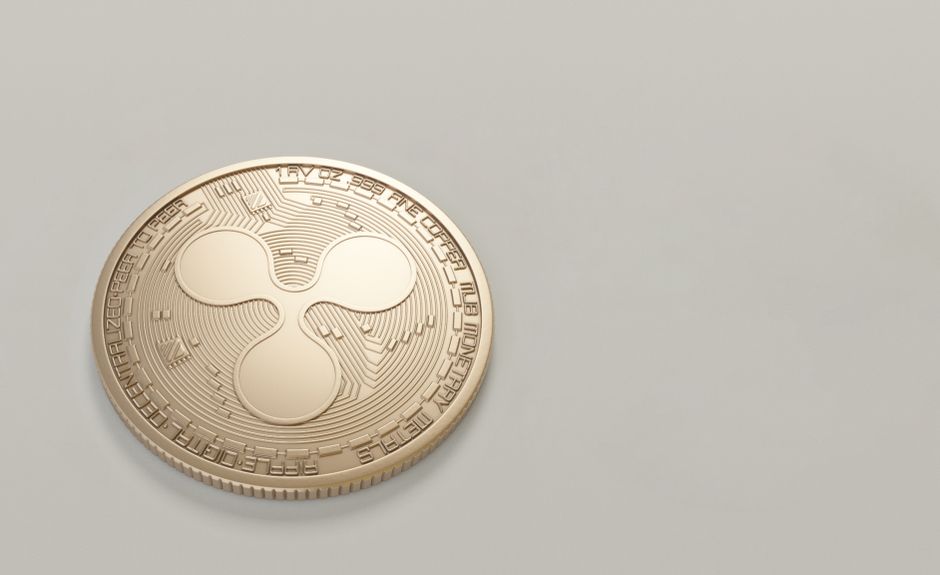
In stark contrast to Binance's situation, other prominent crypto firms have successfully navigated the MiCA framework. Ripple, for example, achieved complete regulatory approval within the EU's MiCA structure after Luxembourg's Commission de Surveillance du Secteur Financier (CSSF) granted it a Crypto Asset Service Provider (CASP) credential [1] [6]. This authorization, combined with Ripple's existing Electronic Money Institution credential, enables the company to deliver regulated cryptocurrency payment solutions across all 30 European Economic Area (EEA) nations without requiring individual country-specific approvals [1] [6]. Similarly, Circle announced it secured the first European electronic money institution license for a global stablecoin issuer under MiCA, providing a clear regulated path for its USDC and EURC stablecoins across the region [2]. The European Securities and Markets Authority (ESMA) reported a registry of 280 authorized crypto-asset service providers by July 3, an increase from 243 the previous week, including additions like Standard Chartered and Sygnum Europe [1] [6].
MiCA's implementation has also significantly impacted the stablecoin market. The regulation categorizes stablecoins similarly to e-money, imposing strict requirements on their issuance and distribution [15]. Tether's USDT, the world's most traded stablecoin, did not pursue MiCA e-money authorization [12] [15]. Consequently, platforms like Revolut, which is a MiCA-authorized CASP, are winding down USDT services for European customers. Revolut's timeline includes disabling USDT buys by July 6, rejecting incoming USDT deposits from July 30, and automatically converting any remaining USDT balances to fiat by August 31 [15]. This demonstrates how the new regulatory environment is compelling licensed entities to restrict access to non-compliant digital assets [15]. Furthermore, national authorities are actively enforcing the new rules; Belgium's Financial Services and Markets Authority (FSMA) identified six cryptocurrency companies operating without proper authorization and added them to its warning database, underscoring the shift from framework development to active compliance enforcement [1] [3].
Beyond MiCA, the global regulatory landscape for digital assets continues to evolve with diverse approaches. In the European Union, prediction markets are facing increased scrutiny. The ESMA issued a public statement on July 3, 2026, clarifying that event contracts qualifying as financial instruments under MiFID II Annex I are considered derivatives and are subject to retail prohibitions, similar to binary options [5]. This effectively restricts mass-market access to many popular prediction markets in Europe, impacting platforms like Kalshi and Polymarket [5]. Concurrently, nine European gambling regulators have signed a joint declaration to coordinate enforcement against unlicensed prediction market platforms [5]. In South Korea, authorities have postponed enforcement measures against Polymarket to conduct a more comprehensive investigation into its gambling classification [4]. The country is also developing one of the tightest judicial frameworks for seizing digital assets for civil debts, with proposed amendments to the Rules of Civil Execution outlining procedures for freezing, transferring, and liquidating virtual assets, including illiquid tokens [8].
Further regulatory developments include South Korean banks actively piloting won-backed stablecoin payment and settlement systems, such as BNK Busan Bank's proof of concept on the Kaia blockchain, even as the legal framework for won stablecoins remains unclear due to disagreements between the Bank of Korea and the Financial Services Commission [11]. Meanwhile, in the United Kingdom, new election funding rules have been announced to curb foreign money in politics. These measures extend a £100,000 cap on overseas donations to cover a donor's first year of UK residency and build on a previous ban on crypto donations until they can be regulated [9]. These rules could potentially impact crypto billionaires who have previously donated to political parties, although their past donations were not made in cryptocurrency [9].
The current regulatory environment highlights a significant bifurcation in the crypto market, with compliant entities gaining clear pathways for expansion while others face severe restrictions. Binance's ongoing efforts to secure MiCA authorization in another EU jurisdiction will be a key development to watch, as will the continued enforcement actions by national regulators across Europe. The evolving regulatory clarity, or lack thereof, in areas like stablecoins and prediction markets will continue to shape market access and operational strategies for digital asset firms globally.