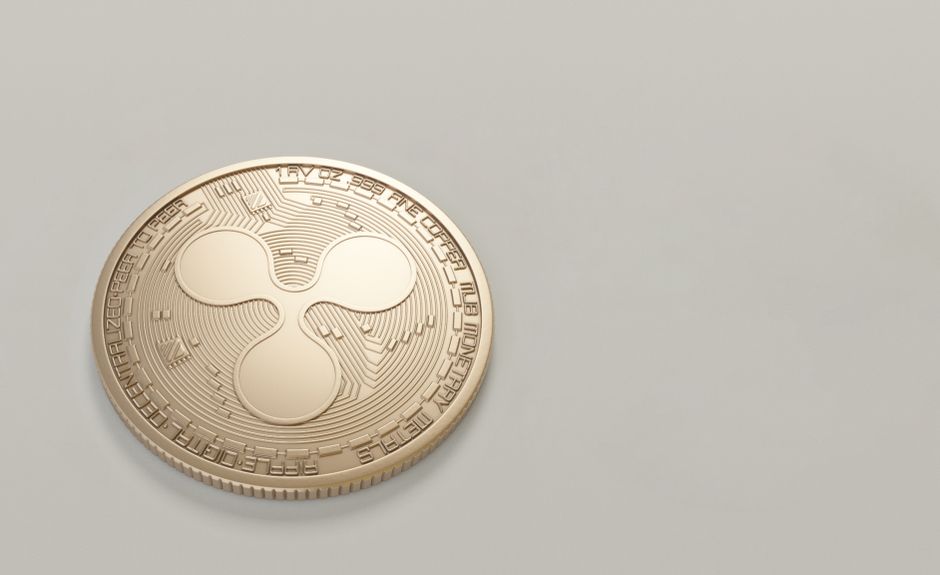
The landscape of the European digital asset market has undergone a fundamental transformation as the Markets in Crypto-Assets (MiCA) regulation moves from a theoretical framework into an active enforcement phase. Central to this shift is Ripple’s recent achievement of full regulatory compliance, a milestone that grants the blockchain enterprise comprehensive access to 30 nations within the European Economic Area (EEA) [4] [5]. This development occurs as the broader industry faces a decisive moment: the July 1, 2026, deadline for MiCA transition has passed, effectively bifurcating the market into authorized entities and those operating outside the new legal perimeter [5] [8]. While Ripple secures its foothold through a dual-licensing strategy, other major players like Kraken and Circle are similarly fortifying their regulatory infrastructure to bridge the gap between decentralized protocols and traditional financial systems [1] [7].
Ripple’s Strategic Regulatory Consolidation in the EEA
Ripple has solidified its operational status in Europe by obtaining a Crypto Asset Service Provider (CASP) license from Luxembourg’s Commission de Surveillance du Secteur Financier (CSSF) [4] [5]. This authorization is not merely a localized permit; it serves as a gateway to the entire European Union and the broader EEA through "passporting" privileges [5]. Under the MiCA framework, a CASP designation allows a firm to offer its services across all 30 member nations without the necessity of seeking individual authorizations from each national regulator [5].
This latest credential complements Ripple’s existing Electronic Money Institution (EMI) license, positioning the company within a select group of digital asset firms that hold both comprehensive MiCA credentials and electronic payment authorizations [5]. Analysts observe that this combined licensing framework provides Ripple with a more expansive scope of financial capabilities than many of its competitors, enabling it to serve a diverse client base including banking institutions, large corporations, and commercial enterprises [4] [5]. Globally, Ripple’s regulatory footprint now extends to more than 75 licenses, including a significant authorization from the United Kingdom’s Financial Conduct Authority (FCA) granted in early 2026 [4] [5].
The Mechanics of MiCA Enforcement
The transition window for the European Union’s MiCA regulations concluded on July 1, 2026 [5]. Following this date, any cryptocurrency enterprise lacking the mandatory CASP authorization was required to cease operations within the bloc or face potential regulatory sanctions [5] [8]. The European Securities and Markets Authority (ESMA) recently updated its registry to reflect this new reality, documenting 280 authorized crypto-asset service providers as of early July 2026 [5]. This represents a notable increase from the 243 providers listed just one week prior, as 37 additional enterprises—including institutional names like Standard Chartered, FalconX, and Sygnum Europe—secured their credentials to meet the deadline [5].
However, the transition has not been seamless for all market participants. Binance, currently the world’s highest-volume cryptocurrency exchange, reportedly retracted its MiCA submission in Greece prior to the July deadline, indicating a shift in strategy to seek authorization through a different EU member state [5]. Meanwhile, national regulators have begun active enforcement. Belgium’s Financial Services and Markets Authority (FSMA) recently identified six entities—Aurum Foundation, Bank Bit, Bithf Pro, Dxago, Global Dynamic Trade, and ZeriaFunding—operating without proper authorization [8]. These platforms have been added to an official warning database for fraudulent operations, as the FSMA emphasizes that any organization providing services such as asset custody, exchange platforms, or investment management must hold a valid CASP designation [8].
Institutional Infrastructure: Banking and Fiat Rails
The competition among digital asset firms is increasingly moving beyond token listings and trading fees toward the mastery of banking access and payment rails [6]. Kraken, a global exchange, is actively pursuing a full banking license in Europe, with Lithuania identified as the preferred jurisdiction for this milestone [1]. If successful, Kraken would become the first cryptocurrency exchange to secure comprehensive banking authorization in the region, enabling it to offer consumer credit products, checking accounts, and enhanced payment capabilities throughout the EEA [1].
This strategy mirrors the path taken by digital banking platforms like Revolut, which obtained specialized banking credentials from Lithuanian regulators in 2018 [1]. Lithuania has established itself as a fintech hub, granting similar licenses to institutions such as Mano Bank, PayRay, and EMBank [1]. For Kraken, a banking license would represent a significant advancement in integrating cryptocurrency operations with conventional financial infrastructure, including institutional-grade services and asset custody [1]. This initiative is part of a broader ten-year roadmap by Kraken’s parent company, Payward, to secure regulatory licenses across all major global regions [1].
The Role of EMI Licenses in Fiat Connectivity
While banking licenses represent the pinnacle of regulatory integration, Electronic Money Institution (EMI) licenses serve as critical infrastructure for fiat-to-crypto connectivity [6]. Payward Europe recently secured an EMI license in Lithuania, providing Kraken with a regulated route for euro-denominated services [6]. Such licenses allow firms to support payment services and e-money activities within a regulated framework, reducing reliance on third-party providers and making fiat onboarding more resilient for users [6].
Similarly, Circle has leveraged the MiCA framework to gain a regulatory advantage for its stablecoins, USDC and EURC [7]. Circle recently secured the first European EMI license for a global stablecoin issuer under MiCA [7]. This move is particularly significant for EURC, as Europe’s new regulatory environment may provide a more stable foundation for euro-denominated products than has existed in previous market cycles [7]. By securing these credentials early, Circle positions its products as institution-friendly options for exchanges and fintech partners navigating the new compliance landscape [7].
XRP Ledger Development and Ecosystem Growth
While regulatory headlines often dominate the narrative surrounding Ripple and XRP, the underlying technology continues to evolve. Recent updates to the XRP Ledger (XRPL) suggest that the ecosystem remains in a "build mode" focused on protocol-level enhancements [2]. A recent release of the "rippled" software included upgrades to the network’s Automated Market Maker (AMM) functionality [2]. These refinements addressed execution bugs and pool behavior, which are critical for maintaining usability and trust in on-chain liquidity structures [2].
The development team’s focus on tightening market structure highlights the importance of long-term protocol relevance, which analysts suggest is decided by more than just courtroom outcomes or regulatory filings [2]. The AMM functionality is central to how modern on-chain liquidity operates, and ongoing maintenance ensures the network can support sophisticated financial applications [2].
Supply Dynamics and Escrow Management
The supply side of the XRP ecosystem remains a point of interest for market participants. On July 1, 2026, the XRPL escrow system released 1 billion XRP as part of its established monthly cycle [3]. This release, valued at approximately $1.04 billion at the time, consisted of three large transfers of 200 million, 300 million, and 500 million XRP [3]. Historically, a significant portion of these monthly releases is re-escrowed, which tends to mitigate the net impact on circulating supply [3]. Nevertheless, traders monitor these events as potential supply overhang risks, particularly when market support levels are being tested [3].
Market Analysis: XRP Price Structure and Institutional Flow
Technical analysis of XRP’s recent price action reveals a critical testing phase for the asset’s market structure. After pushing through a resistance band between $1.11 and $1.15, the price has returned to retest this zone as potential support [3]. Market observers are watching to see if this area becomes a "floor" for future price action or if the breakout was a temporary fluctuation [3].
- Support Zone ($1.11 - $1.15): This area saw significant intraday participation on July 7, with volume running approximately 16.19% above the seven-day average [3]. Near the $1.1110 low, roughly 106.5 million XRP were traded, a figure 129% above the 24-hour average [3].
- Resistance Level ($1.20): This level remains a significant hurdle for bulls. In June 2026, a rally toward $1.20 failed on heavy selling volume, with approximately 128.7 million XRP traded during the rejection on June 17 [3].
- Upside Targets ($1.28 - $1.30): Should the $1.20 level be reclaimed with conviction, analysts identify the high $1.20s as the next likely area of interest where rally attempts may encounter friction [3].
Data suggests that institutional interest may be providing a quiet tailwind for the asset. Spot XRP ETFs recorded their ninth consecutive week of net inflows, adding $17.19 million even as the price fluctuated within the $1.11 to $1.15 range [3]. While these inflows are modest compared to total daily turnover, they indicate persistent demand from institutional sources, which can assist in stabilizing support levels during periods of market stress [3].
Public Advocacy and Philanthropic Initiatives
Ripple has also expanded its efforts in public relations and philanthropy, aiming to position itself as a transparent and socially responsible actor within the digital asset space. In July 2026, the company launched a physical advertising campaign at Union Station in Washington D.C., a major transportation hub frequented by lawmakers and corporate leaders [4]. The campaign features slogans such as "It’s happening with Ripple" and "More certainty for crypto," signaling a strategic push for regulatory clarity in the United States [4].
Simultaneously, Ripple has engaged in philanthropic efforts, committing to match up to $10,000 in XRP for donations made to the Call of Duty Endowment [4]. This organization focuses on assisting unemployed veterans in finding high-quality civilian employment, having already facilitated over 165,000 job placements with a goal of reaching 200,000 by 2030 [4]. Ripple’s donation platform accepts various assets, including cash, stocks, XRP, and its dollar-backed stablecoin, RLUSD [4]. As of early July, the fundraiser had accumulated $814.19, with XRP trading at approximately $1.14 [4].
Conclusion: A Regulated Path Forward
The implementation of MiCA marks the beginning of a new era for the European cryptocurrency market, characterized by rigorous compliance and institutional integration. Ripple’s successful navigation of the CASP and EMI licensing requirements provides it with a significant competitive advantage across the 30 nations of the EEA, allowing it to offer regulated services to a broad spectrum of financial actors [4] [5]. As other major entities like Kraken and Circle pursue similar paths through banking and stablecoin authorizations, the industry appears to be moving toward a more mature infrastructure that prioritizes regulatory transparency [1] [7]. While technical developments on the XRP Ledger and institutional inflows into ETFs suggest continued ecosystem growth, the active enforcement by national regulators in countries like Belgium serves as a reminder that the period of regulatory ambiguity in Europe has come to a close [2] [3] [8].




![[crypto] XRP Ledger's 'Missing Layer' Draws Closer as Developers Test Lending, Credit Features: Ripple](/uploads/thumbnails/crypto-xrp-ledger-s-missing-layer-draws-closer-as-developers-test-lending-credit-features-ripple-2.jpg)