The Geopolitical Catalyst: Gold Surges Past $5,400
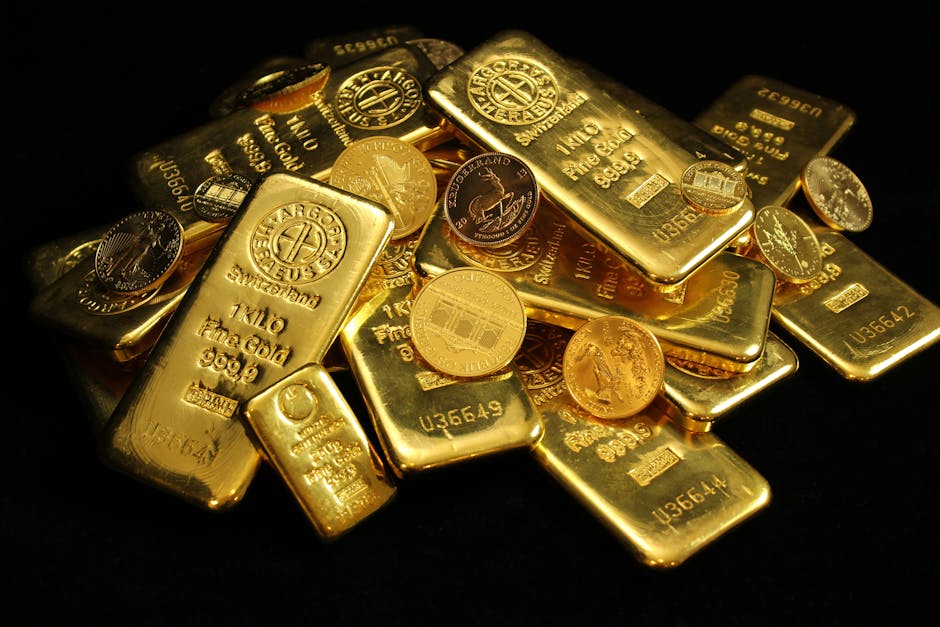
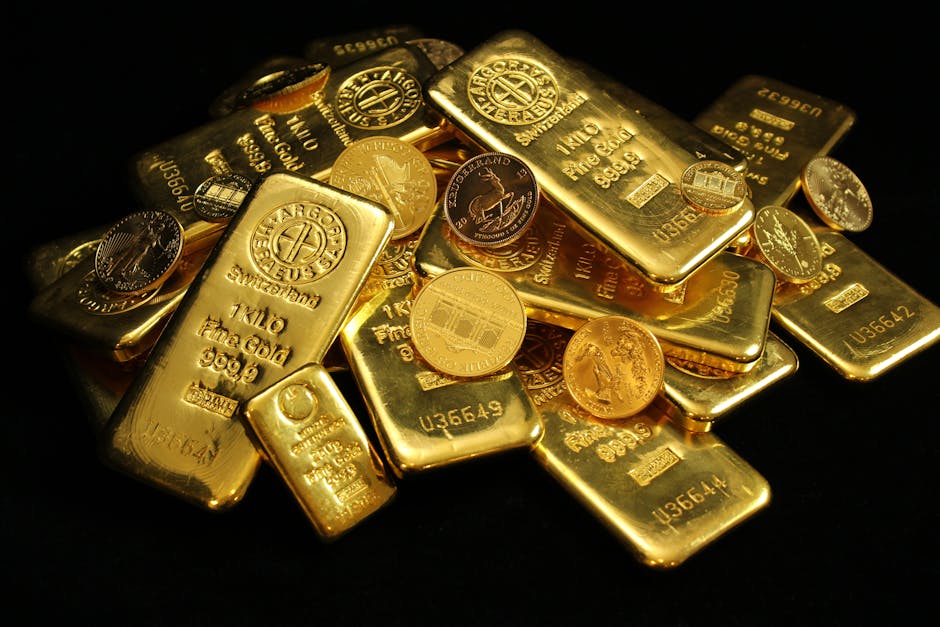
The global financial landscape underwent a seismic shift on March 2, 2026, as precious metals markets reacted with unprecedented volatility to a major military escalation in the Middle East. Following coordinated U.S. and Israeli military strikes against Iran—which reportedly resulted in the death of Supreme Leader Ayatollah Ali Khamenei—investors initiated a massive rotation into defensive assets [2, 6, 11]. Spot gold prices surged through the $5,350 per ounce threshold in early Asian trading, eventually touching intraday highs of $5,400 to $5,409.70 per ounce [1, 2, 3]. This rally represents a 22% year-to-date advance for the metal in 2026, reinforcing its status as the primary barometer of market anxiety during periods of extreme geopolitical tail risk [1].
The speed of the price action underscores a fundamental reality of modern markets: when sovereign risk and regional stability are threatened, capital seeks assets perceived as independent from the traditional financial system. Analysts noted that the strikes triggered immediate retaliatory missile attacks from Tehran targeting U.S. assets across the UAE, Bahrain, Kuwait, Qatar, Saudi Arabia, Jordan, Iraq, and Syria [2, 6]. This cycle of escalation has disrupted maritime traffic in the oil-rich Gulf, further stoking inflationary fears and driving demand for bullion as a hedge against both conflict and economic instability [2, 7].
Record-Breaking Momentum and Historical Context
The current surge is not an isolated event but the continuation of a historic bull run. In February 2026, gold logged its seventh consecutive monthly gain, marking the longest such winning streak since 1973 [2, 6, 23]. This sustained momentum follows a remarkable 2025, during which gold prices surged by 64% and set 53 new all-time highs [4, 15, 20]. To find a comparable period of performance, analysts point back to 1979—a year defined by oil shocks, the Iranian hostage crisis, and a collapse in dollar credibility [20].
Market participants are increasingly viewing gold's price not merely as a speculative play, but as a "real-time referendum on the dollar's staying power" [20]. Total global gold demand in 2025 exceeded 5,000 tonnes for the first time in history, generating an estimated $555 billion in value [20]. This demand is being driven by a trifecta of forces: aggressive central bank accumulation, robust inflows into exchange-traded funds (ETFs), and a structural shift away from sovereign bonds [4, 15].
Central Bank Reserves: The Great De-Dollarization
Perhaps the most significant structural floor beneath current gold prices is the systematic shift in how national treasuries manage their reserves. Central banks purchased 863 tonnes of gold in 2025, maintaining levels near multi-decade highs [20]. Since 2022—the year Western governments froze Russian foreign reserves—annual central bank gold purchases have more than doubled compared to the 2015–2019 average [20].
- Leading Buyers: China, India, Turkey, and Poland have been the primary actors moving reserves out of U.S. dollar-denominated assets and into physical gold [20].
- Reserve Parity: For the first time since 1996, gold's share of global central bank reserves has surpassed that of U.S. Treasuries [20].
- Future Outlook: A survey by the World Gold Council found that 76% of central bank officials expect gold to comprise a higher share of international reserves over the next five years [20].
This institutional realignment suggests that gold has reclaimed its role as a neutral, non-sovereign store of value. Analysts at J.P. Morgan suggest that roughly 350 tonnes of quarterly net demand is required to maintain price appreciation; currently, the bank projects average quarterly demand of 585 tonnes for 2026 [20].
The Impact of Trade Policy and Tariffs
Domestic U.S. policy has also played a critical role in the "Gold Rush" of 2026. Uncertainty surrounding the Trump administration's trade agenda has consistently driven safe-haven flows. In late February 2026, a new 10% global import tariff took effect, with the White House reportedly drafting orders to increase that rate to 15% [20, 26, 27].
Investors view these tariffs as inherently inflationary. Federal Reserve officials, including Chair Jerome Powell, have acknowledged upside inflation risks tied to these trade barriers [20]. As the U.S. dollar lost more than 10% from its 2025 high, eroding domestic purchasing power, gold has become the preferred vehicle for protecting wealth against currency debasement [20].
Silver and Industrial Metals: High Volatility Hedges
While gold serves as the primary barometer of anxiety, silver has exhibited even more explosive price behavior. On March 2, 2026, silver futures for May delivery jumped 4.3% to $97.30 per ounce on the Comex [2, 6]. In the Indian domestic market, silver futures on the Multi Commodity Exchange (MCX) soared by over ₹10,500 to reach ₹2,93,152 per kg [2, 6].
Silver's performance reflects its dual role as both a safe-haven asset and an essential industrial metal. Beyond the geopolitical premium, silver is benefiting from supply constraints and strong demand from the jewelry and electronics sectors [4, 13]. However, analysts warn that silver typically carries higher volatility than gold; while it tracks the same risk-driven flows, it is also susceptible to profit-booking after sharp spikes [1, 3, 8].
Regional Market Disruptions: The India-Dubai Connection
The escalation in the Middle East has practical implications for physical supply chains, particularly in India, the world's second-largest consumer of gold [4]. India imports between 800 and 850 tons of gold annually, with 50% to 60% of that volume typically passing through Dubai [13]. With regional airspace closures and disruptions at major hubs like Dubai International Airport, Indian traders are bracing for a potential supply crunch in both gold bars and rough diamonds [13, 22].
In Indian metro cities, 24-carat gold prices surged to approximately ₹1,73,370 per 10 grams on March 2, reflecting a single-day jump of over ₹4,300 [4]. These local price spikes are influenced not only by international spot rates but also by import duties and the relative strength of the Indian rupee, which stood at 91.24 against the U.S. dollar during the session [4, 8, 17].
Future Outlook: Is $6,000 the Next Frontier?
As the conflict between the U.S., Israel, and Iran enters a "whole new era of geopolitical uncertainty," major financial institutions are aggressively revising their price targets [15, 20].
- J.P. Morgan: Recently raised its end-of-2026 gold price target to $6,300 per ounce [4, 15, 20].
- Bank of America: Projects gold will reach $6,000 per ounce within the next 12 months, citing leadership changes at the Federal Reserve and tariff-related economic threats [4, 20, 25].
- Upside Scenarios: J.P. Morgan modeling suggests that if household gold allocations were to rise from the current 3% to 4.6% of assets under management, prices could theoretically reach between $8,000 and $8,500 per ounce [20].
While the immediate direction of the market hinges on whether Middle Eastern tensions stabilize or escalate into a broader regional war, the structural drivers—central bank de-dollarization, persistent inflation, and trade friction—appear firmly entrenched. For investors, the events of early 2026 confirm that gold remains the market's most immediate and reliable refuge in a chaotic global order [1].