Gold's New Monetary Role: A Response to Geopolitical Instability and Central Bank Diversification
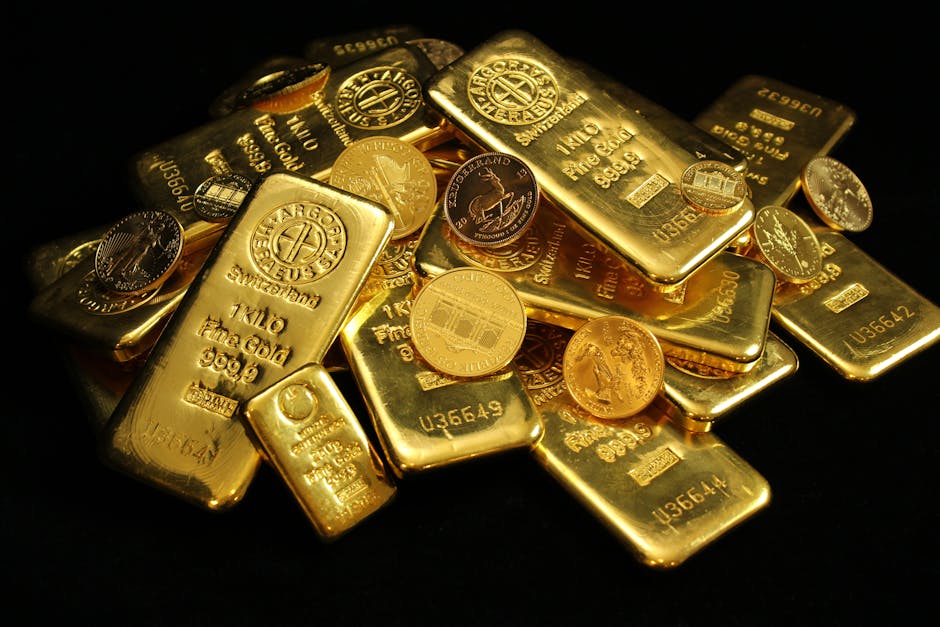
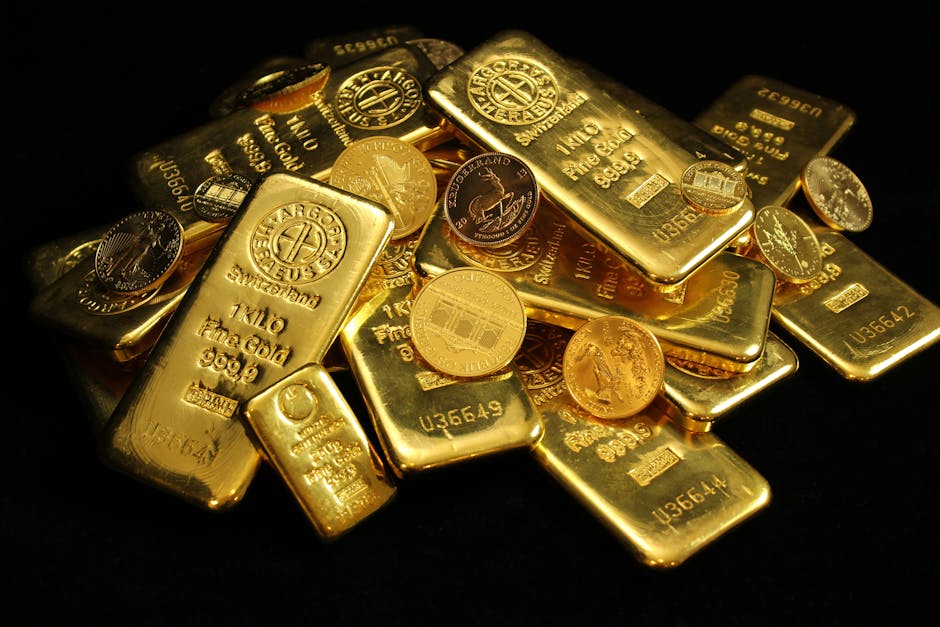
In the wake of escalating Middle East tensions and unprecedented central bank activity, gold has emerged as more than just a traditional safe-haven asset. The precious metal has transcended its historical role to become a cornerstone of modern monetary policy and geopolitical strategy. As of March 2, 2026, gold prices surged to record levels above $5,400 per ounce, driven by a complex interplay of factors including U.S.-Israeli strikes on Iran, the closure of the Strait of Hormuz, and a global shift away from dollar-denominated reserves seekingalpha.comseekingalpha.comgold.einnews.com. This article examines the multifaceted drivers behind gold's remarkable ascent and its evolving role in the international monetary system.
The Geopolitical Catalyst: Middle East Conflict and Energy Markets
The immediate trigger for gold's latest surge was the U.S.-Israeli military action against Iran, which resulted in the reported death of Supreme Leader Ayatollah Ali Khamenei . This dramatic escalation sent shockwaves through global markets, with investors rushing to safe-haven assets. Gold futures settled higher on Monday, March 2, 2026, after pulling back from an early 3% jump that briefly took prices above $5,400 per ounce seekingalpha.com.
The conflict's impact extended far beyond precious metals. Brent crude briefly pushed above $82 a barrel in Asian trading before easing back toward $78, still around 7% higher on the session gold.einnews.com. More critically, approximately 20 million barrels per day of oil—and nearly a fifth of global liquefied natural gas supply—transits through the Strait of Hormuz gold.einnews.com. Hakan Kaya, senior commodities portfolio manager at Neuberger Berman, emphasized that "if the Strait remains impaired for any meaningful duration, the price consequences become nonlinear" gold.einnews.com.
The energy market disruption has reignited inflation concerns at a time when central banks believed price pressures were coming under control. Nigel Green, chief executive of deVere Group, warned that "investors are now confronting a renewed inflation threat at a moment when price growth in major economies remains above or only just approaching central bank targets" gold.einnews.com. This inflationary pressure has further bolstered gold's appeal as a hedge against currency debasement.
Central Bank Gold Buying: A Strategic Shift
While geopolitical tensions provided the immediate catalyst, gold's sustained bull market is underpinned by a more fundamental shift in central bank strategy. As of early 2026, gold prices have soared to over $5,000 an ounce, representing a roughly 80% increase from the previous year gold.einnews.com. This remarkable performance is largely attributed to unprecedented buying from central banks aiming to diversify their reserves away from the U.S. dollar amid rising geopolitical tensions and inflation gold.einnews.com.
Uganda's central bank exemplifies this trend. The East African nation announced plans to begin its domestic gold purchasing program in March 2026, joining a growing number of central banks worldwide that are boosting their gold holdings gold.einnews.com. "If all goes as planned, we should be able to purchase at least 100 kg of gold between March and June 2026," Adam Mugume, a central bank official, told Reuters gold.einnews.com. Uganda exported $5.8 billion worth of gold last year, up 76% from 2024, though small-scale miners still dominate domestic production gold.einnews.com.
This central bank activity reflects a broader recognition that gold serves as an effective hedge against geopolitical risk and currency volatility. The metal's lack of counterparty risk and its historical role as a store of value make it particularly attractive in an era of increasing financial sanctions and economic warfare. As countries seek to reduce their exposure to the U.S. dollar system, gold has emerged as the primary alternative reserve asset.
Technical Analysis: Gold's Price Action and Market Dynamics
From a technical perspective, gold's price action in early March 2026 reveals both the strength of the underlying trend and the market's sensitivity to external shocks. On March 2, 2026, spot gold was little changed near $5,284 after earlier climbing as high as $5,419 seekingalpha.com. U.S. gold futures traded near $5,300, keeping bullion close to the upper end of its recent range seekingalpha.com.
However, the market's resilience was tested on March 3, 2026, when gold (XAU/USD) plunged 5%, surprisingly ignoring the escalating safe-haven demand from the Middle East conflict seekingalpha.com. This selloff was primarily driven by rising oil prices sparking inflation fears, which led to reduced Fed rate cut expectations and a surging U.S. dollar seekingalpha.com. The technical outlook focused on the $5,000/oz retest, raising questions about whether bulls would return seekingalpha.com.
Traders Union reported that spot gold moved near $5,030 after Monday's sharp spike above $5,400 seekingalpha.com. U.S. gold futures traded close to $5,040, leaving the market off its intraday highs seekingalpha.com. A firmer dollar and higher yields made it harder for bullion to hold the full geopolitical premium seekingalpha.com. This price action illustrates the complex interplay between safe-haven demand and macroeconomic factors in determining gold's trajectory.
Regional Perspectives: Gold in India and Emerging Markets
In India, gold holds cultural significance that amplifies its investment appeal during times of crisis. Gold prices in India surged by 5.34%, a Rs 8,471 jump to Rs 1,67,059/10g from the previous close of Rs 1,58,588/10g on March 2, 2026 gold.einnews.com. Silver prices skyrocketed by 9.09%, or Rs 24,181, to Rs 2,90,308/1kg gold.einnews.com.
Aksha Kamboj, vice president of the India Bullion & Jewellers Association (IBJA), noted that "rising tensions between the US and Iran have increased geopolitical risks, which are a major driver for safe-haven assets such as gold" gold.einnews.com. She added that "if the US-Iran conflict continues, the risk premium for investors would increase, pushing gold prices in India to new records" .
The Indian government has established guidelines for legal gold holdings. While there is no fixed legal cap on buying or owning gold, CBDT guidelines allow families to hold up to 950 grams of gold without proof . This regulatory framework provides clarity for investors while acknowledging gold's role in household wealth preservation.
Market Sentiment and the Fear & Greed Index
Market sentiment indicators reflect the extreme uncertainty driving gold's price action. As of March 3, 2026, the Fear & Greed Index stood at 14, indicating "Extreme Fear" [MARKET DATA]. This level of fear typically correlates with increased demand for safe-haven assets like gold.
The gold sentiment analysis shows an average score of 0.573 with a median of 0.800, based on 152 sources [MARKET DATA]. The VADER sentiment score of 0.027 suggests a slightly positive but cautious market outlook. These metrics indicate that while investors recognize gold's value as a safe haven, they remain concerned about potential volatility and the sustainability of current price levels.
Gold vs. Other Assets: Performance Analysis
Gold's performance relative to other assets in 2026 has been exceptional. The precious metal has topped the BEGOS Markets Standings for the seventh consecutive month, joined on the podium by Gold and Oil, while non-BEGOS assets have underperformed gold.einnews.com.
Silver has also performed strongly, trading at 94.39, which is +68.5% above its Fair Value of 56.03 gold.einnews.com. Gold, at 5296, is +36.4% above its Fair Value of 3884 gold.einnews.com. These valuations suggest that while both metals are trading at premiums to their historical averages, the geopolitical premium may justify current levels.
The equity markets have reacted negatively to the Middle East conflict, with the Dow Jones Industrial Average down 488 points, or 1%, at 48,489 points on March 2, 2026 . The broader S&P 500 index was also down 1%, while the tech-focused Nasdaq Composite fell by 1.53% at the opening bell . This risk-off sentiment has further supported gold's safe-haven status.
Central Bank Diversification Strategy
The shift toward gold by central banks represents a fundamental change in the international monetary system. Countries are increasingly viewing gold as an alternative to U.S. dollar reserves, particularly in light of sanctions and geopolitical tensions. This diversification strategy is not limited to emerging markets; even traditional dollar allies are reassessing their reserve allocations.
The scale of central bank buying has been unprecedented. While specific figures vary by source, the consensus is that 2025 and early 2026 saw record levels of official sector gold purchases. This demand has provided a floor for prices and created a structural support that goes beyond traditional investment demand.
Central banks are motivated by several factors: the desire to reduce exposure to dollar volatility, the need for assets that are not subject to sanctions, and the recognition that gold provides portfolio diversification benefits. As geopolitical tensions persist, this trend is likely to continue, providing ongoing support for gold prices.
Technical Challenges and Market Volatility
Despite the bullish fundamental backdrop, gold markets have experienced significant volatility. The 5% selloff on March 3, 2026, highlighted the market's sensitivity to macroeconomic factors such as interest rates and currency movements seekingalpha.com. Rising Treasury yields and a stronger dollar can offset safe-haven demand, creating headwinds for gold prices.
The technical analysis suggests that gold's path of least resistance remains to the upside, but the market faces resistance at psychological levels such as $5,500 per ounce. The All-Time High of 5586 may come into play if geopolitical tensions escalate further, but traders should be aware that "geo-political price spikes tend to return from whence they came," as noted in historical analysis gold.einnews.com.
Investors should also consider the potential for mean reversion. While current valuations reflect a geopolitical premium, historical patterns suggest that extreme price levels often correct over time. The challenge for investors is determining whether the current environment represents a paradigm shift or a temporary dislocation.
Investment Implications and Strategy
For investors, gold's evolving role presents both opportunities and challenges. The metal's function as a hedge against geopolitical risk and currency debasement remains valid, but the extreme price levels require careful consideration of entry points and position sizing.
Physical gold ownership continues to appeal to investors seeking direct exposure without counterparty risk. However, the high prices may make this approach less accessible for retail investors. Alternative vehicles such as gold ETFs, mining stocks, and futures contracts offer different risk-return profiles and liquidity characteristics.
Diversification remains key. While gold may continue to perform well in the current environment, portfolios should maintain balance across asset classes. The extreme Fear & Greed Index reading suggests that market sentiment may be overly pessimistic, potentially creating opportunities in other sectors as conditions normalize.
Future Outlook: Scenarios and Considerations
The trajectory of gold prices will depend on several key factors. First, the evolution of Middle East tensions will be crucial. A de-escalation could lead to profit-taking and price consolidation, while further escalation could drive prices to new highs.
Second, central bank policy will play a significant role. If inflation concerns lead to more aggressive monetary tightening, this could pressure gold prices despite geopolitical risks. Conversely, if central banks adopt a more accommodative stance, this would support gold's appeal.
Third, the broader shift away from dollar dependence could provide structural support for gold. If more countries follow Uganda's example and begin accumulating gold reserves, this could create sustained demand that supports higher price levels.
Finally, technical factors such as the strength of the U.S. dollar and Treasury yields will influence gold's short-term price action. The metal's historical negative correlation with real yields means that any shift in Federal Reserve policy could have significant implications for gold prices.
Conclusion: Gold's New Monetary Paradigm
Gold has entered a new era where its role extends beyond traditional safe-haven status to become a fundamental component of monetary policy and geopolitical strategy. The combination of unprecedented central bank buying, escalating geopolitical tensions, and concerns about currency stability has created a perfect storm for gold prices.
The events of March 2026 demonstrate that gold is no longer just a hedge against inflation or currency risk, but a strategic asset that countries are willing to accumulate as part of their reserve management strategy. Uganda's entry into the gold market, the surge in prices above $5,400 per ounce, and the extreme market sentiment all point to a fundamental shift in how gold is perceived and utilized.
While volatility is likely to remain high and prices may experience corrections, the underlying drivers of gold's bull market appear sustainable. The metal's unique properties—its lack of counterparty risk, its historical role as a store of value, and its independence from any single government or currency—make it particularly valuable in an era of increasing geopolitical uncertainty.
For investors, the challenge is navigating this new paradigm while managing risk appropriately. Gold's evolution from a traditional safe haven to a strategic monetary asset represents both an opportunity and a complexity that requires careful analysis and thoughtful portfolio management. As the international monetary system continues to evolve, gold's role is likely to remain central, making it an essential consideration for any comprehensive investment strategy.