Gold's New Era: Geopolitical Risk, Central Bank Demand, and the End of Dollar Dominance?
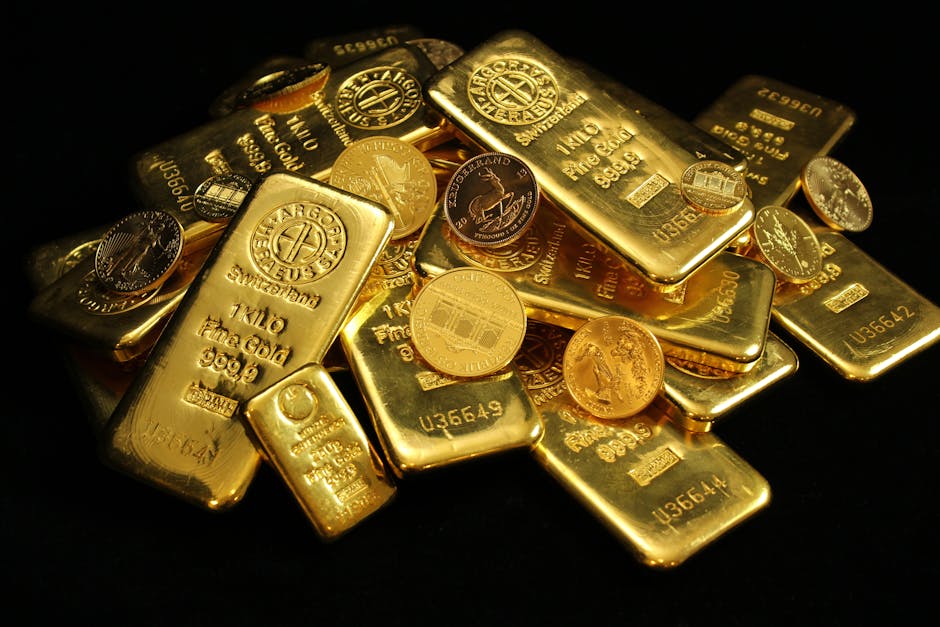
The global gold market is experiencing a seismic shift that few could have predicted just a few years ago. As of March 2, 2026, gold has surged past $5,400 per ounce, marking a staggering 25% year-to-date increase and continuing a rally that has seen the precious metal climb over 60% in 2025 alone gold.einnews.com. This extraordinary performance comes amid a perfect storm of geopolitical tensions, central bank demand, and growing skepticism about the U.S. dollar's role as the world's reserve currency.
The immediate catalyst for gold's latest surge is the dramatic escalation of conflict in the Middle East. Coordinated U.S. and Israeli military strikes on Iran, which resulted in the death of Supreme Leader Ayatollah Ali Khamenei, have sent shockwaves through global markets gold.einnews.com. Tehran's retaliatory closure of the Strait of Hormuz—the world's most critical oil chokepoint—has triggered a 7% spike in crude oil prices and sent investors rushing toward safe-haven assets gold.einnews.comseekingalpha.com.
But the current rally represents more than just a temporary flight to safety. According to J.P. Morgan, gold's end-of-2026 price target has been raised to $6,300 per ounce, while Bank of America projects $6,000 within twelve months . These forecasts suggest that market participants see fundamental, long-term drivers behind gold's ascent rather than a short-term geopolitical premium.
The Central Bank Gold Rush
One of the most significant developments in the gold market has been the unprecedented buying spree by central banks. In 2025, global gold demand exceeded 5,000 tonnes for the first time in history, generating an unprecedented $555 billion in value . Central bank purchases remained near multi-decade highs at 863 tonnes, with particularly strong demand from China, India, Turkey, and Poland .
This central bank demand represents a fundamental shift in how nations view gold's role in their monetary reserves. For the first time since 1996, gold's share of central bank reserves has surpassed U.S. Treasuries . More tellingly, 76% of central bank officials expect gold to make up a higher share of reserves over the next five years .
The motivation behind this shift appears to be a growing desire to reduce dependence on the U.S. dollar. Since Western governments froze Russian reserves in 2022, central banks have been systematically moving assets out of dollar-denominated holdings into physical gold . This de-dollarization trend represents a profound challenge to the post-World War II monetary order that has placed the dollar at the center of global finance.
Geopolitical Risk Premium
The current Middle East conflict has dramatically illustrated gold's role as a geopolitical hedge. When U.S. and Israeli forces launched strikes on Iranian targets, gold immediately surged through $5,350 per ounce, extending a powerful rally that has already pushed the metal roughly 22% higher in 2026 gold.einnews.com.
Market analysts note that this rally differs from previous geopolitical-driven price spikes. "Unlike previous escalations in this conflict, there is fairly strong incentive here for both sides to continue to escalate potentially—and that runs the risk of leading to a pretty chaotic, uncertain and therefore volatile environment for more than just a few days... the dynamic for gold is pretty positive," said Kyle Rodda, senior financial market analyst at Capital.com gold.einnews.com.
The conflict has also highlighted gold's role in a broader flight to safety. As military operations continue, capital has flowed away from equities toward defensive assets such as gold and other commodities gold.einnews.com. Oil prices experienced their steepest climb in four years as trading commenced Monday, with Brent crude futures climbing to US$82.37 a barrel, the highest since January 2025 gold.einnews.com.
Silver's Parallel Surge
Gold's rally has been accompanied by an equally impressive surge in silver prices. Silver futures for May jumped 6.5%, ending at $93.64 per troy ounce, with monthly gains exceeding 18%, making it the 10th consecutive month of upward momentum . On the Multi Commodity Exchange (MCX), silver's May contract closed at Rs 2,82,644 per kilogram, up 5.48% on Friday .
Market experts suggest that if COMEX silver breaks above $95 per troy ounce, prices could return to $100 per ounce, with Indian silver rates potentially touching Rs 3,00,000 per kg . This parallel rally in silver reflects both its role as a precious metal safe haven and its industrial demand characteristics.
The Tariff Factor
Another significant driver of gold demand has been tariff uncertainty under the Trump administration. The implementation of a new 10% global import tariff, with proposed increases to 15%, has consistently driven safe-haven demand for gold . These trade tensions have added another layer of uncertainty to an already volatile global economic environment.
The tariff situation has created a complex dynamic where gold serves multiple purposes: as a hedge against geopolitical risk, as a store of value in uncertain monetary conditions, and as a protection against potential currency devaluation resulting from trade conflicts.
Market Structure and Technical Analysis
From a technical perspective, gold's sustained rally above key psychological levels suggests strong underlying demand. The metal's ability to maintain prices above $5,300 per ounce, despite periodic profit-taking, indicates that buyers remain confident in higher prices gold.einnews.com.
Analysts note that gold's performance has been particularly impressive given the strength in other asset classes. While technology stocks have experienced volatility and rotation, gold has continued its upward trajectory, suggesting that its rally is driven by fundamental factors rather than simply being a byproduct of weakness in other markets.
Physical Market Disruptions
The current conflict has also disrupted physical gold markets. Dubai, a key transit hub for gold shipments, is experiencing significant delays as airlines have suspended flights in the wake of U.S. and Israeli strikes on Iran and Tehran's retaliation . This disruption highlights the interconnectedness of geopolitical events and physical commodity markets.
Physical market disruptions can create additional price pressure as buyers compete for available inventory, potentially accelerating price increases beyond what might be justified by paper market fundamentals alone.
The Dollar's Diminishing Role
Perhaps the most profound implication of gold's current rally is what it suggests about the future of the U.S. dollar. The systematic movement of central bank reserves from dollar assets into gold represents a vote of no confidence in the dollar's long-term stability as the world's reserve currency.
This trend has been building for years but has accelerated significantly since 2022. The freezing of Russian reserves demonstrated that dollar holdings could be weaponized for geopolitical purposes, prompting other nations to seek alternatives. Gold, with its history as a neutral store of value, has emerged as the primary beneficiary of this search for alternatives.
The implications extend beyond gold prices. A sustained shift away from dollar reserves could lead to higher borrowing costs for the U.S. government, reduced demand for dollar-denominated assets, and potentially a gradual decline in the dollar's purchasing power relative to a basket of currencies and commodities.
Investment Implications
For investors, the current gold market presents both opportunities and challenges. The metal's strong performance suggests that geopolitical and monetary risks remain elevated, supporting continued demand for safe-haven assets. However, the parabolic nature of recent price increases also raises questions about potential corrections.
Investment strategies should consider several factors:
- Gold's role as portfolio insurance against geopolitical and monetary risks
- The potential for continued central bank demand to support prices
- The impact of rising interest rates on gold's opportunity cost
- The relationship between gold and other safe-haven assets like the Japanese yen and Swiss franc
- The potential for physical market disruptions to create price dislocations
Looking Ahead
The trajectory for both gold and silver in the coming months will depend heavily on several factors:
- The duration and intensity of the current Middle East conflict
- The pace of central bank diversification away from dollar assets
- The evolution of U.S. trade policy and its impact on global economic growth
- The Federal Reserve's monetary policy stance and its effect on real interest rates
- The performance of alternative safe-haven assets and their relative attractiveness
If the current conflict follows a pattern similar to the Russia-Ukraine war, with prolonged uncertainty and periodic escalations, gold could approach or exceed the Rs 1,80,000 per 10 grams level in India and potentially reach the $6,000 per ounce level in COMEX trading .
Conclusion
Gold's current rally represents more than just a response to immediate geopolitical tensions. It reflects a fundamental reassessment of the metal's role in a world where traditional monetary anchors are being questioned, where central banks are seeking alternatives to dollar reserves, and where investors are increasingly concerned about systemic risks.
The convergence of these factors—geopolitical risk, central bank demand, de-dollarization trends, and physical market disruptions—has created a perfect storm for gold prices. Whether this represents a temporary spike or the beginning of a new era for gold remains to be seen, but the fundamental drivers suggest that elevated prices may be sustainable for an extended period.
As markets continue to digest the implications of the Middle East conflict and monitor central bank actions, gold's role as both a safe-haven asset and a potential alternative to traditional reserve assets will likely remain in focus. For investors, the current environment underscores the importance of understanding gold's multiple roles and the complex interplay of factors driving its price.