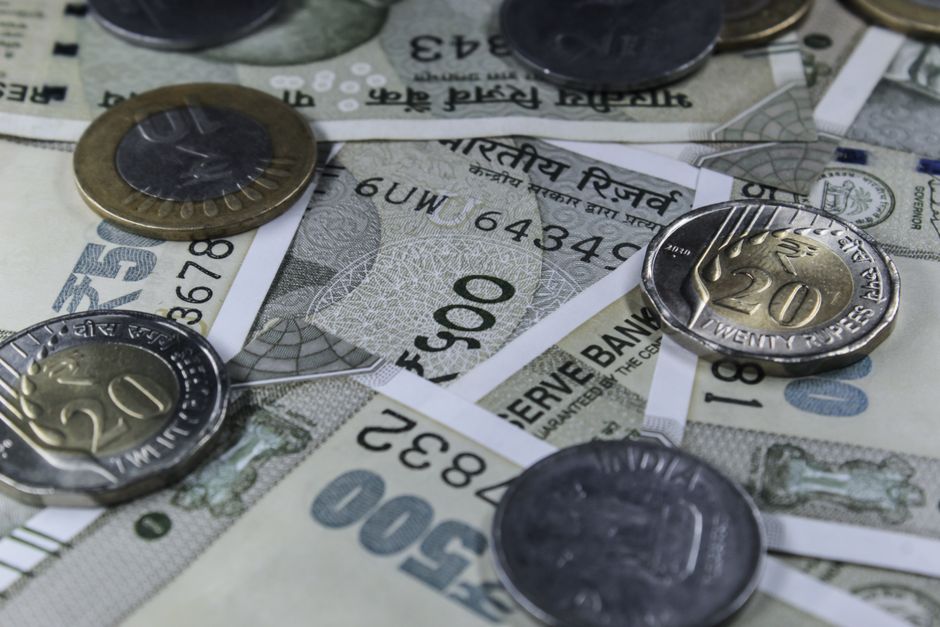
The latest policy recommendations regarding crypto india s central bank suggest a deepening divide between regulated financial infrastructure and the digital asset ecosystem. The Reserve Bank of India (RBI) has recently intensified its advocacy for a strict containment framework, urging lawmakers to prevent banks and supervised entities from engaging with cryptocurrencies or stablecoins [85] [96]. This move coincides with a broader global trend of regulatory tightening, as seen in the European Union’s enforcement of the Markets in Crypto-Assets (MiCA) framework, which has already prompted major fintech platforms to prune their digital asset offerings to maintain compliance [1] [28]. While institutional flows into exchange-traded funds (ETFs) have shown signs of recovery, the structural barriers between traditional banking and decentralized finance continue to rise [42] [83].
The RBI’s Containment Strategy for Digital Assets
During a recent session with the Parliamentary Standing Committee on Finance, officials from the crypto india s central bank, including Deputy Governor Rohit Jain and Executive Director P. Vasudevan, presented a case for institutional isolation [85] [96]. The central bank’s position is that prohibition remains a legitimate policy tool to protect the broader financial ecosystem from the perceived vulnerabilities of virtual digital assets [75] [85]. The RBI recommended that banks and supervised financial entities be explicitly barred from purchasing, holding, or maintaining any exposure to digital assets [85].
A primary concern for the crypto india s central bank involves the potential for privately issued stablecoins to undermine monetary policy transmission and fragment the national payment infrastructure [85]. Officials argued that widespread adoption of these assets could threaten monetary independence and financial stability [85]. However, the RBI has requested that lawmakers distinguish between speculative cryptocurrencies and regulated tokenized instruments [85] [96]. This distinction suggests that while the bank remains opposed to private digital currencies, it may permit controlled tokenization of government debt, corporate bonds, and other authorized financial products within supervised markets [85] [96].
European Regulatory Shifts: The MiCA Enforcement Era
The restrictive stance of the crypto india s central bank mirrors developments in Europe, where the MiCA transition period officially concluded on July 1, 2026 [1] [60]. This regulatory milestone has forced a significant reconfiguration of the stablecoin market. European crypto-asset service providers (CASPs) must now be fully authorized or cease offering restricted assets [1]. As a result, the European Securities and Markets Authority (ESMA) has updated its interim register, adding 37 newly licensed firms, including Standard Chartered and FalconX, bringing the total number of authorized providers to 280 [60].
The Impact on Retail Stablecoin Access
The practical consequences of these rules are visible in the actions of major retail platforms. Revolut has announced a phased wind-down of Tether (USDT) for its European and EEA users [1] [28]. The timeline for this removal is strict: USDT purchases will be disabled on July 6, deposits will be rejected starting July 30, and any remaining balances will be automatically converted to fiat on August 31 [1] [51]. This decision stems from Tether’s choice not to pursue MiCA e-money authorization, rendering the asset incompatible with licensed EU exchanges [28] [51]. In contrast, MiCA-compliant alternatives like Circle’s USDC and EURC are expected to gain market share as regulated venues shift their support [28].
Furthermore, infrastructure firms like Bridge have secured dual regulatory licenses in Luxembourg, allowing them to scale euro-denominated stablecoin payment systems across all 27 EU territories [90]. These licenses cover capital reserve requirements and asset custody protocols, providing a unified framework for commercial entities to deploy compliant stablecoin solutions [90].
Institutional Sentiment and Market Resilience
Despite the regulatory "walls" being erected by the crypto india s central bank and European authorities, market data suggests a period of stabilization for major digital assets. Bitcoin (BTC) recently surged beyond the $62,000 threshold, reaching $62,295 on July 3, 2026 [42]. This recovery followed a 10-day period of capital outflows from U.S. spot Bitcoin ETFs, which had drained over $2.7 billion in June [42] [83]. On July 2, these ETFs recorded $221.7 million in net inflows, the strongest single-session performance in two months [42] [83]. Fidelity’s Wise Origin Bitcoin Fund (FBTC) led the activity with $166 million in inflows, while BlackRock’s iShares Bitcoin Trust (IBIT) saw a modest withdrawal of $40.4 million [42] [83].
Ethereum (ETH) also reclaimed the $1,700 mark, gaining over 6% in a single day following renewed interest in U.S. spot Ethereum ETFs [41]. BlackRock’s ETHA dominated this activity with $29.74 million in inflows on July 2 [41]. Analysts observe that ETH generated a monthly TD Sequential buy signal, a technical occurrence that has historically preceded significant rallies [41]. Similarly, XRP reclaimed the $1.10 threshold, supported by $7 million in fresh ETF inflows and Ripple’s expansion into European territories under provisional MiCA authorization [29] [37].
The Evolution of Stablecoin Economics
As traditional stablecoins face regulatory pressure, new models are emerging to challenge the established dominance of USDT and USDC. The "Open USD" consortium, announced on June 30, 2026, includes over 140 partners such as Visa, Mastercard, Stripe, and Ripple [18] [24]. Unlike traditional models where the issuer retains reserve yield, Open USD plans to share reserve earnings with its distribution partners [18] [24]. This model aims to align incentives for payment processors and wallets, potentially eroding the long-standing distribution moats of incumbent stablecoins [18].
However, the transition to these new models is not without friction. Some firms, including several South Korean financial institutions, have questioned their inclusion in the Open USD partner list, suggesting that formal consultations had not yet taken place [79]. Additionally, the rise of automated trading on shared digital ledgers has prompted warnings from the IMF regarding potential market fragmentation and the need for robust regulatory oversight [36].
Compliance, Ethics, and Political Scrutiny
The intersection of digital assets and political ethics has also come under fire. In the United States, President Trump revealed $1.4 billion in cryptocurrency-related income for 2025, including $636 million from a memecoin project [27]. This disclosure has led Senator Kirsten Gillibrand to call for a ban on elected officials and their spouses issuing or promoting meme coins [59]. In the United Kingdom, Reform UK leader Nigel Farage has been reported to the Parliamentary Standards Commissioner over allegations of lobbying the Bank of England on cryptocurrency policy [47] [86]. The complaint focuses on whether Farage’s advocacy against a central bank digital currency (CBDC) was influenced by major donors with significant stakes in stablecoin issuers [47] [86].
On the compliance front, Tether recently froze 131 TRON-based addresses linked to ISIS-K following an update to the U.S. Treasury’s OFAC sanctions list [80]. These wallets had collectively received over $1.4 million since 2023 [80]. This action highlights the speed at which centralized issuers can now execute sanctions compliance at the token level, though privacy-focused assets like Monero remain outside the reach of such issuer-level freezes [80].
Investors and institutions should monitor the upcoming full Senate floor vote on the CLARITY Act in the United States, as its passage could formally classify certain digital assets as commodities and unlock significant institutional capital [91]. Simultaneously, the continued implementation of MiCA in Europe and the final policy report from the Indian Parliament will likely define the boundaries of the regulated crypto market for the remainder of 2026 [32] [90].