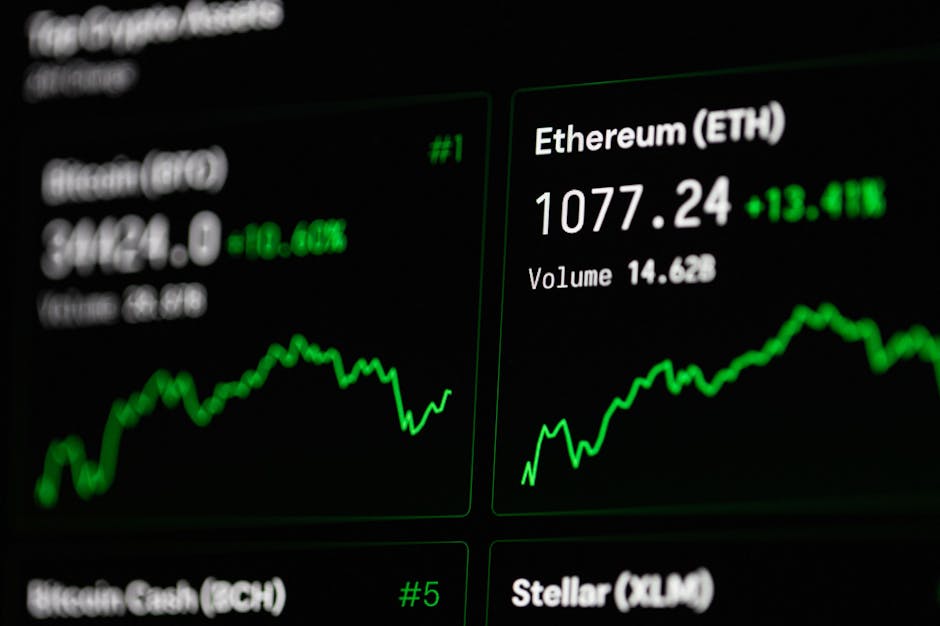
The global cryptocurrency market is navigating a high-stakes intersection of geopolitical brinkmanship and institutional adoption as the crisis in the Strait of Hormuz reaches a critical juncture. Following a deadline set by President Donald Trump, Bitcoin (BTC) has demonstrated intense sensitivity to diplomatic signals, surging past the $78,000 threshold on Saturday [3]. This price action comes as the Pentagon officially recasts Bitcoin as a national security asset, with Defense Secretary Pete Hegseth confirming the existence of classified programs designed to provide the United States with strategic leverage against adversaries like China and Iran [1][10]. With the Fear & Greed Index currently sitting at 39 (Fear), investors are bracing for heightened volatility as the U.S. naval blockade continues to squeeze Tehran’s economy [3][13].
Diplomatic Breakthroughs and Market Reactions
Bitcoin’s recent ascent to approximately $78,800—a more than 3% increase from its intraday bottom of $76,000—was triggered by reports that Tehran delivered an updated peace proposal to United States mediators via Pakistan [3]. This development followed President Trump’s rejection of a previous Iranian offer, which had proposed reopening the Strait of Hormuz in exchange for ending the American naval blockade [3]. Trump remarked to the press that Iran "wants to reach a deal badly," while White House special envoy Steve Witkoff transmitted new requirements focused on reintegrating nuclear concerns into the agreement framework [3].
The market's reaction to these headlines underscores a shift in Bitcoin's behavior. While traditionally viewed by some as "digital gold," analysts note that the asset is currently trading more like a high-beta risk asset, reacting instantaneously to geopolitical news [7]. This sensitivity was further evidenced when oil prices reacted in tandem; Brent crude futures declined to approximately $106, shedding more than 4% as traders factored in a potential reduction in geopolitical risk [3].
The Pentagon’s Classified Bitcoin Strategy
In a landmark testimony before the House Armed Services Committee on April 30, Defense Secretary Pete Hegseth revealed that the Pentagon is running classified Bitcoin programs on two operational tracks: enabling the technology and countering it [1]. Hegseth, a self-described "long enthusiast" of crypto potential, stated that these efforts provide the U.S. with leverage against China in various scenarios [1][10].
Key details from the defense establishment include:
- Power Projection: Admiral Samuel Paparo, commander of US Indo-Pacific Command, confirmed the command is running a live Bitcoin node and conducting operational protocol tests [1][10].
- National Security Domain: Rep. Lance Gooden (R-TX) argued that Bitcoin has evolved into a matter of national security, citing Iran’s use of Bitcoin tolls at the Strait of Hormuz and North Korean ransomware activity [1][10].
- Strategic Reserves: Earlier in 2026, President Trump signed an executive order establishing a U.S. strategic Bitcoin reserve, seeded with approximately 200,000 government-held coins from forfeitures [1].
The joint framing by Hegseth and Paparo represents the most explicit public acknowledgement of Bitcoin as a defense instrument in U.S. history [1]. This comes as Russia now accounts for roughly 16% of the global Bitcoin mining hashrate, with China retaining 12% through offshore operations, making mining geography a direct strategic variable [1].
Operation Economic Fury: Seizures and Sanctions
While diplomatic talks continue, the U.S. Treasury is aggressively targeting Iran’s digital financial lifelines. Treasury Secretary Scott Bessent confirmed that authorities have seized nearly $500 million in Iranian-linked cryptocurrency assets under "Operation Economic Fury" [6][12]. This campaign, ordered by President Trump in March 2025, aims to sever Tehran’s access to the global financial system [6].
The financial offensive has included:
- Tether Freezes: Approximately $344 million in frozen Tether (USDT) stablecoins held on Tron addresses [6][12].
- Shadow Banking Crackdown: The Office of Foreign Assets Control (OFAC) recently sanctioned 35 entities and individuals connected to Iran’s shadow banking network [6].
- Currency Collapse: The Iranian rial has lost between 60% and 70% of its value against the U.S. dollar, further driving Iranian citizens toward crypto exchanges like Nobitex to preserve wealth [2][6].
An investigation into Nobitex, Iran’s largest exchange with 11 million users, suggests it has processed transactions worth hundreds of millions of dollars for sanctioned groups, including the IRGC [2]. Despite government-imposed internet shutdowns, the exchange reportedly handled over $100 million in transactions during recent periods of conflict [2].
Institutional Demand and ETF Inflows
Despite the geopolitical turmoil, institutional appetite for Bitcoin remains robust. U.S. spot Bitcoin ETF products recorded $1.97 billion in inflows during April 2026, marking the strongest monthly intake of the year [3]. BlackRock’s iShares Bitcoin Trust (IBIT) led the surge with approximately $2 billion in net contributions [3].
However, the market remains bifurcated. While Bitcoin saw gains, Ethereum (ETH) spot ETFs experienced their heaviest single-day bleed of the month on April 29, with $88 million in outflows [14]. Furthermore, the broader crypto market cap rose to $2.57 trillion on Friday, driven in part by a short squeeze that liquidated over $150 million in positions, 70% of which were shorts [9][11].
Macroeconomic Headwinds and the Fed
The Federal Reserve’s internal dynamics are adding another layer of complexity for crypto investors. The FOMC recently held the federal funds target range at 3.50% to 3.75% in a highly contested 8-4 vote [14][15]. White House National Economic Council Director Kevin Hassett has warned that the potential reappointment of Jerome Powell to the Fed Board could delay the pace of rate cuts favored by the Trump administration [15].
For crypto markets, this tug-of-war over monetary policy is vital. High interest rates and a strong dollar typically reduce demand for non-yielding assets [5]. Traders are currently monitoring whether the Fed will pivot toward easing, which historically triggers inflows into high-beta assets like Bitcoin and DeFi tokens [15].
Conclusion: A New Era of Geopolitical Finance
The convergence of the Strait of Hormuz blockade, the Pentagon’s weaponization of blockchain technology, and aggressive U.S. Treasury seizures marks a new era for digital assets. Bitcoin is no longer merely a speculative vehicle; it is a central pillar of 21st-century statecraft. While the recent peace proposal from Tehran has provided a temporary price rally to $78,800, the underlying tension remains high [3]. Investors must navigate a landscape where a single diplomatic cable or military briefing can trigger massive liquidations, even as institutional ETF demand provides a structural floor for the market [3][13][14].