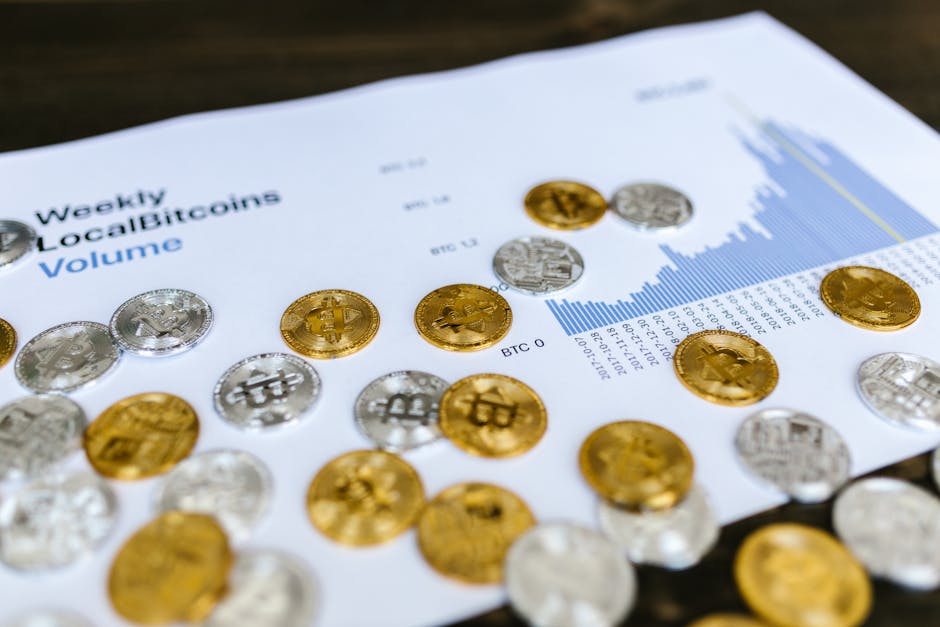
The cryptocurrency market has entered a high-stakes phase of institutional accumulation, characterized by a significant surge in capital inflows and a shift in the global geopolitical narrative surrounding digital assets. Bitcoin (BTC) recently pushed above the $78,000 threshold, fueled by reports of updated peace proposals between Tehran and United States mediators [1]. This price action coincides with a record-breaking month for U.S. spot Bitcoin ETFs, which saw nearly $2 billion in net contributions during April 2026, marking the strongest monthly performance of the year [4]. As institutional actors and nation-states increasingly view Bitcoin as a strategic financial tool, the market is witnessing a complex interplay between spot-driven demand and high-leverage derivatives activity.
Institutional Inflows: A Record-Breaking April for Bitcoin Accumulation Strategy
The month of April 2026 proved to be a pivotal period for institutional adoption of Bitcoin. According to data from SoSoValue, U.S. spot Bitcoin ETF products accumulated a net $1.97 billion during the month [1]. This figure represents a substantial increase from the $1.37 billion recorded in March, establishing April as the peak month for intakes in 2026 [4].
The distribution of these inflows highlights the dominance of major financial players:
- BlackRock’s iShares Bitcoin Trust (IBIT): Dominated the market with approximately $2 billion in net contributions [1]. By the end of the month, IBIT's assets reached approximately $61.91 billion [9].
- Morgan Stanley Bitcoin Trust ETF (MSBT): Debuting on April 8, this fund attracted $194 million in its first few weeks without recording a single session of outflows [1].
- Grayscale Bitcoin Trust (GBTC): Conversely, GBTC continued to experience significant withdrawals, totaling roughly $280 million in April [1].
Aggregate net contributions across all Bitcoin ETF products since their inception have now exceeded $58 billion [1]. Despite periods of volatility, the year-to-date net positive flows for 2026 stand at approximately $1.47 billion, successfully offsetting the withdrawal periods seen in January and February [1].
Geopolitical Catalysts and the 'National Security' Narrative
Bitcoin's recent climb to $78,800 was closely tied to shifting geopolitical dynamics in the Middle East. Reports that Tehran delivered an updated peace proposal to U.S. mediators via Pakistan provided a "risk-on" signal for markets [1]. As diplomatic progress was reported, commodity markets saw Brent crude futures decline to approximately $106, shedding more than 4% as geopolitical risk premiums were factored out [1].
Simultaneously, a new narrative is emerging within the U.S. government. Defense Secretary nominee Pete Hegseth recently characterized Bitcoin as a "national security asset" during testimony before the House Armed Services Committee [7]. Hegseth noted that Bitcoin projects within the Pentagon are "classified and ongoing," stressing that the cryptocurrency serves as a tool for American power amid technological expansion by Russia and China [7]. This reframing from a speculative asset to a strategic national interest reflects the maturing perception of Bitcoin on the global stage [5].
Market Structure: Spot Demand vs. Derivatives Leverage
While the price appreciation is evident, analysts are divided on the sustainability of the current rally. Bitcoin's Cumulative Volume Delta (CVD) exploded by 199.1% over a recent one-week period, signaling aggressive spot-market buying [10]. This spot-led move is viewed by some as a healthier foundation than previous futures-driven spikes [10].
However, the derivatives market shows signs of significant overheating:
- Open Interest: Total BTC contract open interest jumped 5.92% in 24 hours to approximately $57.621 billion [6].
- Short Liquidations: More than $150 million in crypto positions were liquidated within a 24-hour window, with 70% of those being short positions [8].
- Funding Rates: Bitcoin funding rates remained negative for 46 consecutive days, the longest such stretch since 2023, creating the conditions for a massive short squeeze as prices pushed toward $80,000 [8].
Data firm CryptoQuant has issued a cautionary note, suggesting that the April surge may have been "built on sand" [11]. Their analysis indicates that while perpetual futures demand rose, "apparent demand" (on-chain spot buying activity) remained in negative territory throughout the surge [11]. Historically, such divergences have preceded sharp market corrections, similar to the onset of the 2022 bear market [11].
The Rise of the Stablecoin Era and On-Chain Finance
Beyond Bitcoin, the broader digital asset ecosystem is undergoing a structural transformation. The market has officially entered what analysts call the "stablecoin era," with over $1 trillion in stablecoins moved across the sector in April alone [3]. Currently, over 247 million unique wallet addresses hold stablecoins, signaling massive adoption of digital dollars [3].
This liquidity is fueling the growth of tokenized assets. There are now over 1.2 million unique addresses holding tokenized assets, with tokenized funds commanding a 57% market share [3]. Networks like Solana are benefiting from this trend, recording a record 708,900 active stablecoin users in a single day on April 27, 2026 [3].
Technical Outlook and Long-Term Projections
From a technical perspective, Bitcoin is currently testing critical resistance. Analysts identify a resistance cluster between $78,000 and $79,000 [14]. If Bitcoin can maintain a weekly close above $75,000, the path toward $80,000 and $82,000 remains open [10]. Conversely, a break below $75,000 could see the price retreat to a "real floor" near $72,000 [10].
Long-term projections remain aggressively bullish among institutional researchers. Ark Invest projects that Bitcoin could reach a $16 trillion market capitalization by 2030, driven by institutional allocations and its role as a "digital gold" [5]. The firm estimates that if Bitcoin captures 40% of gold's market value, it could add $10 trillion in valuation, potentially pushing the price per coin to over $730,000 [5].
Conclusion: A Market at a Crossroads
The current state of the Bitcoin market is a study in contrasts. On one hand, institutional adoption via ETFs is at an all-time high for 2026, and the asset is being integrated into national security frameworks [1, 7]. On the other hand, the reliance on leveraged futures and the lack of consistent on-chain spot demand growth present risks of a significant "liquidation cascade" [10, 11]. As the Fear & Greed Index sits at 39 (Fear), investors remain cautious despite the price being near $78,800. The coming weeks, particularly the 13F filing period in May where institutions disclose their holdings, will be critical in determining if this accumulation phase has the foundation to support a move into uncharted price territory.