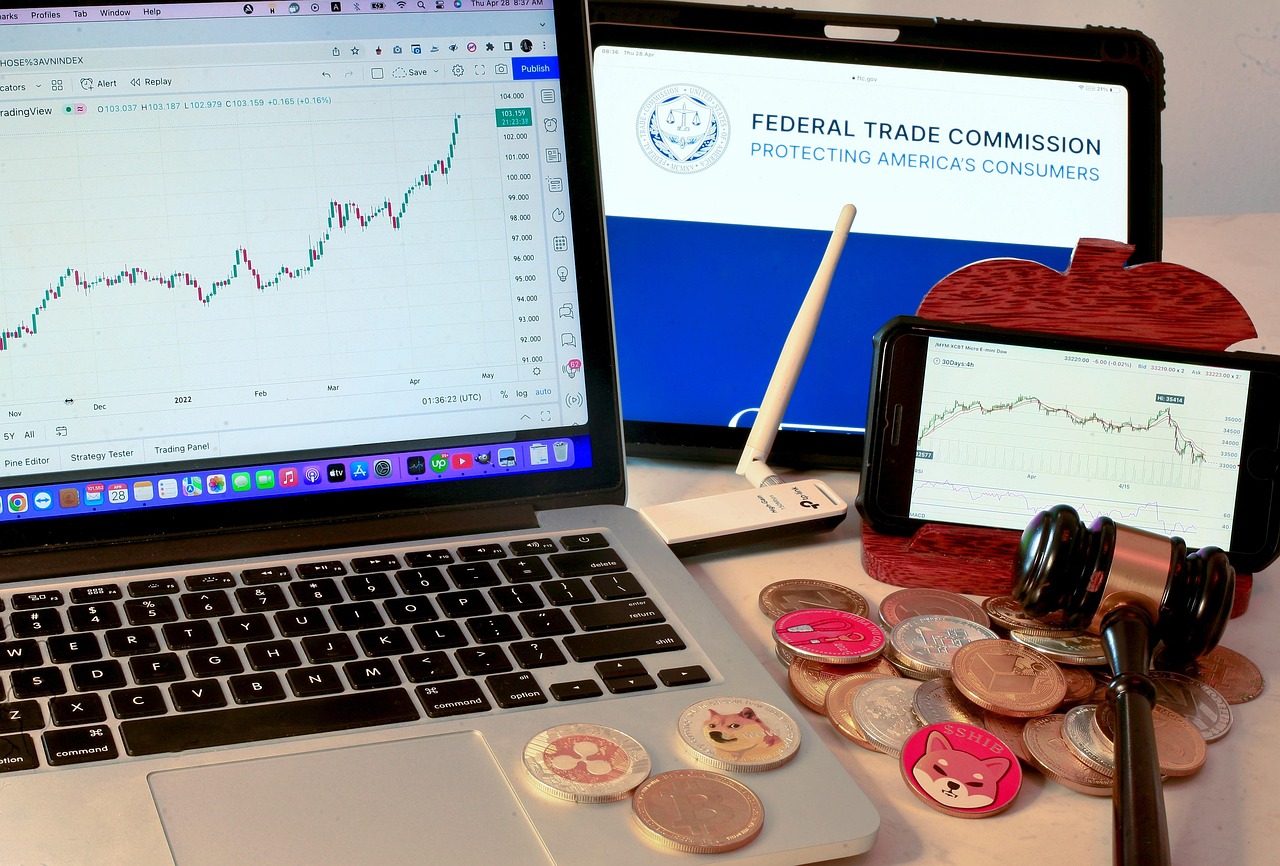
The landscape of digital asset regulation in the United States is undergoing a fundamental transformation as federal agencies and legislative bodies move to replace enforcement-led oversight with a structured legal framework. At the heart of this shift is a dual-track effort: the Securities and Exchange Commission (SEC) is beginning a comprehensive review of how blockchain-based systems fit within legacy securities laws, while the Senate Banking Committee prepares for a pivotal vote on the CLARITY Act cryptopolitan.com blockonomi.com. This movement comes at a time when market sentiment remains in a neutral state, with the Fear & Greed Index holding at 47 as of May 10, 2026, reflecting a cautious wait-and-see approach from investors as the rules of the road are finally drafted [MARKET DATA].
The SEC’s Structural Pivot: From Enforcement to Infrastructure
Under the leadership of Chair Paul Atkins, the SEC has signaled a departure from the "regulation by enforcement" era that characterized much of the early 2020s. The agency is now embarking on a policy review aimed at determining whether decades-old securities rules are compatible with the unique architecture of blockchain-based trading and settlement blockonomi.com. This review is particularly focused on the definitions of exchanges, brokers, and dealers within the context of Decentralized Finance (DeFi).
Traditional financial markets rely on a segmented structure where brokers handle orders, exchanges match trades, and clearing agencies manage the risk of settlement blockonomi.com. However, blockchain protocols often compress these distinct functions into a single automated process. A decentralized exchange (DEX) can execute swaps, route liquidity, and settle trades programmatically within seconds blockonomi.com. The SEC is now investigating whether exemptive rulemaking could provide the flexibility needed for software-driven interfaces, such as wallet applications, which facilitate transactions without taking custody of user assets blockonomi.com.
A critical component of this review involves the concept of "atomic settlement." In legacy markets, clearinghouses are necessary because stock trades do not settle instantly, creating a window of counterparty risk blockonomi.com. Because blockchain networks allow for near-instant transfers, the SEC is questioning whether traditional clearing frameworks remain necessary for tokenized securities platforms blockonomi.com. Furthermore, the agency is assessing how crypto vaults and yield-bearing products fit under the Securities Act and Investment Advisers Act, seeking to establish where specific investor protections are required for products that combine lending and staking strategies blockonomi.com.
The CLARITY Act: A Legislative Battleground for Stablecoins
While the SEC focuses on technical definitions, the Senate Banking Committee is preparing for a May 14 markup of the CLARITY Act, a bill designed to establish federal guidelines for digital tokens and delineate authority between the SEC and the CFTC cryptopolitan.com blockonomi.com. The legislation has already cleared the House with a bipartisan vote of 294 to 134 in July 2025, but it has faced significant hurdles in the Senate due to disputes over stablecoin yield crypto.news ambcrypto.com.
The current compromise, drafted by Senators Thom Tillis and Angela Alsobrooks, attempts to balance the interests of the crypto industry and traditional banks. The proposed language would prohibit platforms from offering rewards on dormant stablecoin balances but would permit incentives tied to active transactions blockonomi.com. However, a coalition of major banking groups—including the American Bankers Association and the Bank Policy Institute—has launched a last-minute effort to stall the bill crypto.news. These groups argue that Section 404 of the Act contains loopholes that could allow crypto platforms to offer what effectively amounts to deposit interest, potentially triggering a flight of capital from traditional banks crypto.news. The banking lobby claims that yield-earning stablecoins could reduce consumer and small-business loans by 20% or more crypto.news.
Despite this opposition, the bill's sponsors, including Senator Cynthia Lummis, remain firm. Lummis has described the bipartisan text as the culmination of months of work to reach a viable compromise crypto.news. The urgency is high; analysts at Galaxy Research suggest that if the bill does not pass before the Memorial Day recess, the next viable window for such legislation might not open until 2030 crypto.news ambcrypto.com.
Institutional Adoption and the Infrastructure Gap
The push for regulatory clarity is being driven by a surge in institutional interest. Surveys from early 2026 indicate that 73% of institutional decision-makers plan to increase their crypto allocations this year, though most currently maintain cautious exposure levels of 1% to 2% of assets under management ambcrypto.com. The success of U.S. Spot Bitcoin ETFs, which have accumulated over $100 billion in assets, demonstrates a clear preference for regulated investment vehicles ambcrypto.com.
Major financial players are already positioning themselves for a regulated future. Morgan Stanley recently launched crypto trading on its E*Trade platform with a 0.5% fee, undercutting competitors like Schwab (0.75%) and Fidelity (approximately 1%) crypto.news. This pilot program allows 8.6 million users to hold Bitcoin, Ether, and Solana directly in their brokerage accounts crypto.news. Furthermore, more than a dozen firms, including Coinbase, Ripple, and Circle, have applied for or secured conditional national trust bank charters from the OCC to deepen their integration with the U.S. banking system cryptopolitan.com.
However, executives from MoonPay, Ripple, and Paxos warn that regulation is only the first step. At Consensus Miami 2026, these leaders noted that while the GENIUS Act and the pending CLARITY Act provide a framework, significant infrastructure gaps remain crypto.news. For stablecoins to achieve mainstream use, they must overcome hurdles in privacy and real-world usability, such as paying rent or buying coffee crypto.news. Currently, stablecoins represent a small fraction of global remittances, though projections suggest they could capture 10% of that market over the next five years as payment rails improve crypto.news.
The Political Stakes: PACs and Public Opinion
The regulatory debate is also playing out in the political arena. Crypto-backed Political Action Committees (PACs), such as Fairshake, have spent over $7.2 million in a single week on congressional races across five states bitcoinist.com. These groups, which include both Democratic-leaning (Protect Progress) and Republican-leaning (Defend American Jobs) arms, held more than $190 million as of early 2024 and are actively working to influence the composition of the next Congress bitcoinist.com.
Public opinion appears to be shifting in favor of regulation. A HarrisX poll found that 52% of registered U.S. voters support the CLARITY Act, and 62% favor stronger U.S. leadership in digital assets crypto.news ambcrypto.com. This political pressure is compounded by the entry of Big Tech into the space. Senator Elizabeth Warren has recently demanded transparency from Meta regarding its USDC pilot program, which allows creators in Colombia and the Philippines to receive payouts in stablecoins via the Solana and Polygon networks crypto.news decrypt.co. Warren argues that Meta’s vast user base of 3.5 billion people means any stablecoin integration could have systemic implications for financial stability and privacy decrypt.co.
The Evolution of Decentralized Governance
As the legal reality of crypto sets in, the industry is also re-evaluating the structure of Decentralized Autonomous Organizations (DAOs). Critics and observers note that many DAOs failed not because governance was a flawed concept, but because they ignored legal and operational necessities reddit.com. The "next version" of DAOs is expected to move away from the "no company, only code" mantra toward a three-layer framework: on-chain governance, transparent treasury management, and a clear legal wrapper to interact with banks, courts, and tax authorities reddit.com.
This shift toward "legibility" is mirrored by the actions of major stablecoin issuers. Tether, for instance, has taken an increasingly active role in compliance, freezing over $514 million in USDT across Ethereum and Tron addresses in a single 30-day window blockonomi.com reddit.com. While some critics view this as a compromise of decentralization, others see it as a necessary step for stablecoins to survive within a regulated global financial system blockonomi.com.
In conclusion, the U.S. crypto market is at a crossroads. The SEC’s move toward infrastructure-specific rulemaking and the Senate’s impending vote on the CLARITY Act represent a concerted effort to bring digital assets into the regulatory fold. While institutional demand is high and political momentum is building, the path forward remains fraught with challenges, from banking lobby opposition to the need for robust technological infrastructure. The coming weeks will likely determine whether the U.S. establishes a definitive line in the sand for digital assets or faces another period of prolonged legal ambiguity.