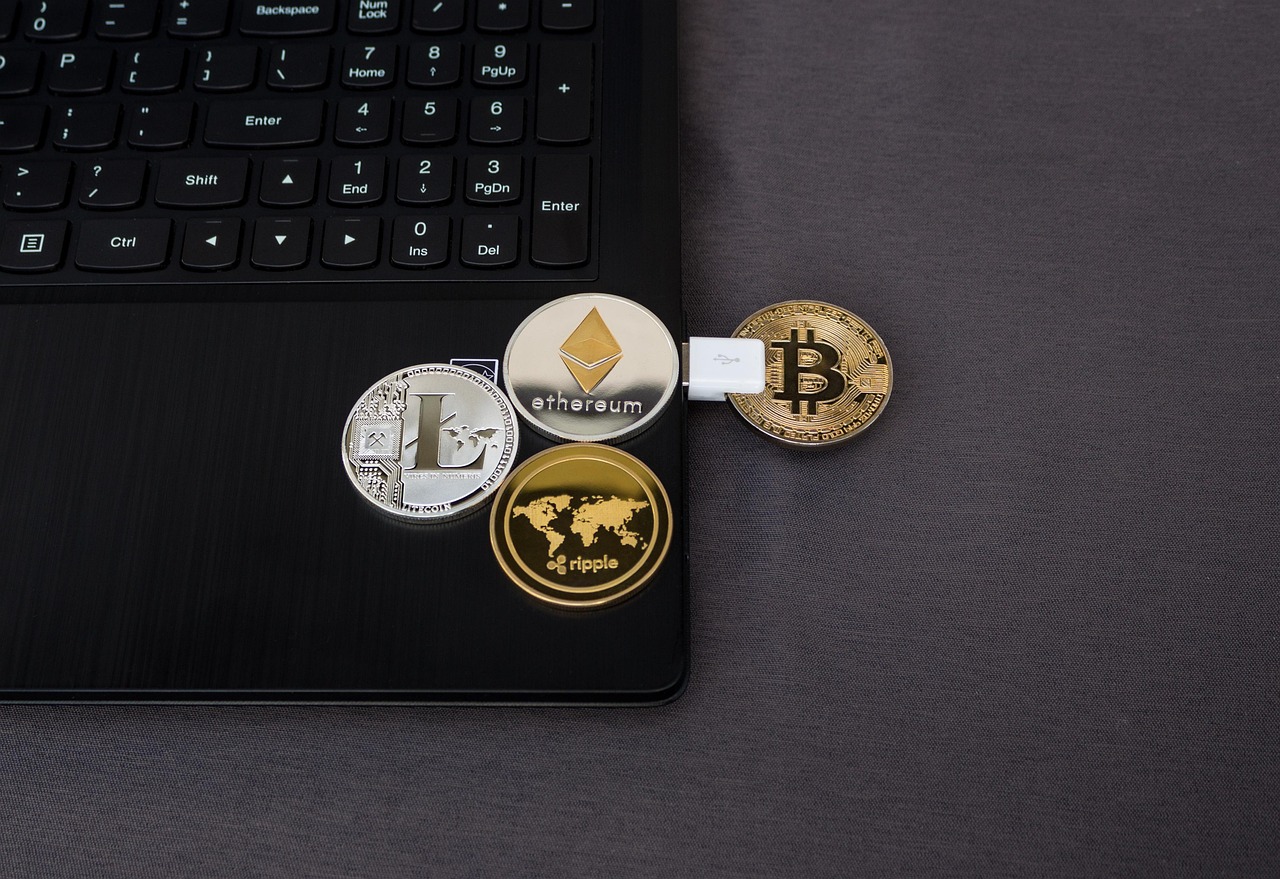
The cryptocurrency market is currently experiencing a profound shift, characterized by an unprecedented imbalance in Bitcoin's supply and demand dynamics, while other digital assets like XRP navigate their own complex paths toward institutional adoption and utility. A striking report reveals that institutional demand for Bitcoin is outstripping its mined availability by a staggering 500%, creating a scarcity squeeze that is reshaping market expectations and investment strategies. This intense institutional appetite for Bitcoin stands in contrast to the evolving narrative surrounding XRP, which, despite significant network growth and strategic initiatives aimed at institutional integration, faces unique challenges in translating adoption into price appreciation and fending off market criticisms.
\n\nBitcoin's Unprecedented Scarcity Squeeze: A 500% Demand Imbalance
\nThe Bitcoin market is currently demonstrating a phenomenal gap between demand and supply, with a fierce battle for scarcity defining the prevailing narrative. According to data from Capriole Investments founder Charles Edwards, institutional entities are acquiring Bitcoin at a rate five to six times faster than miners are capable of producing it u.today. This extraordinary imbalance underscores a pivotal moment in Bitcoin's market evolution, where the supply-side mechanics are struggling to keep pace with an escalating wave of institutional interest.
\nAs of mid-March 2026, the demand originating from corporations and exchange-traded funds (ETFs) has reached peak levels, a phenomenon not witnessed since October 2025. Over the past month alone, institutional investors have collectively absorbed more than 81,000 BTC, a figure approximately six times greater than the new supply introduced into the market through mining activities during the same period u.today. This aggressive accumulation by large players has led to a significant concentration of Bitcoin holdings, with public companies and ETFs now collectively controlling over 10% of the entire Bitcoin supply u.today.
\nProminent entities such as MicroStrategy continue to aggressively expand their Bitcoin positions, viewing BTC as a primary alternative to traditional fiat currencies amidst prevailing economic uncertainties u.today. This conviction is further amplified by the structural changes in Bitcoin's supply mechanism. Following the 2024 halving event, the daily output from Bitcoin mining was significantly reduced to just 450 BTC. When juxtaposed with the current daily demand, which hovers around 2,700 BTC, the market is confronting an acute shortage of liquid coins available on exchanges u.today. This fundamental imbalance creates significant upward pressure on Bitcoin's price, which, as of March 20, 2026, was trading in the range of $70,000-$74,000, even amidst geopolitical instability and selling pressure from short-term holders u.today.
\n\nBlackRock's Strategic Bitcoin and Ethereum Transfers Amidst ETF Dynamics
\nAdding another layer to the institutional landscape, BlackRock, the world’s largest asset management firm, recently executed a substantial transfer of Bitcoin and Ethereum tokens, sparking considerable discussion within the crypto community. Blockchain monitoring platform Lookonchain reported that BlackRock transferred 544 BTC and 47,728 ETH to a Coinbase Prime wallet u.today. This significant transaction involved over $140 million worth of tokens, with approximately $102.13 million in Ethereum and $38.3 million in Bitcoin, deposited within minutes u.today.
\nThese deposits are traceable to wallets associated with BlackRock’s spot crypto ETFs, specifically the IBIT Bitcoin ETF and the ETHA Ethereum ETF u.today. While BlackRock has maintained a dominant position in both the Bitcoin and Ethereum ETF markets, this latest move appears to have been influenced by recent underperformance in these markets. The crypto community is actively debating the precise purpose of these deposits. Some commentators suggest that the transfers were an attempt to liquidate funds withdrawn from the ETFs during recent negative trading sessions, while others posit that BlackRock might be preparing liquidity for a major strategic move u.today. This activity coincides with Bitcoin ETFs experiencing a second consecutive day of outflows, highlighting the dynamic and sometimes volatile nature of institutional engagement in the crypto market u.today.
\n\nXRP's Evolving Institutional Landscape and Strategic Push
\nWhile Bitcoin commands attention with its supply-demand crunch, XRP is carving out its own distinct path, characterized by ambitious institutional strategies and significant network development. A key development in this arena is the advancement of Evernorth Holdings' proposed merger with Armada Acquisition Corp. II. This process moved closer to market approval with the filing of an S-4 document, which will establish the legal framework for Evernorth to achieve a public listing on Nasdaq under the ticker XRPN ambcrypto.com.
\nEvernorth's strategy is notably ambitious, targeting the holding of approximately 473 million XRP at its launch, thereby establishing a substantial treasury base. The credibility of this capital is further bolstered by the backing of prominent entities such as SBI Holdings and Pantera Capital, with operational depth provided by leadership from Asheesh Birla, a veteran of Ripple ambcrypto.com. The company's approach extends beyond mere passive holding; it aims for active yield generation through strategic engagement in lending, DeFi yields, and validator participation to enhance XRP per share ambcrypto.com. This model signifies a new institutional framework that market participants are yet to fully price in, moving beyond traditional holding strategies towards dynamic asset utilization ambcrypto.com.
\n\nEvernorth's Vision: XRP as a Global Financial Infrastructure
\nEvernorth's XRP treasury model draws inspiration from MicroStrategy's successful Bitcoin strategy, yet it distinguishes itself in terms of depth and market positioning. While MicroStrategy holds a massive 761,068 BTC, valued at approximately $53.9 billion, and exhibits a strong conviction reflected in its multiple to Net Asset Value (mNAV) ranging between 0.96x and 1.18x, XRP's market dynamics present a different picture ambcrypto.com. As of the reporting period, XRP was trading near $1.45, with a daily volume of around $2.3–$2.4 billion, indicating steady liquidity but a comparatively lower institutional preference when benchmarked against Bitcoin ambcrypto.com.
\nDespite a massive surge in on-chain activity, with XRP transactions nearing 3 million per day—almost tripling the 1 million daily transactions recorded in mid-2025—the price of the asset has not mirrored this explosive growth u.today. Asheesh Birla, CEO of Evernorth, has offered insights into this disparity, attributing it to XRP not yet achieving scale as a liquidity bridge. Birla explained that the version of XRP capable of driving sustained utility demand would emerge when banks and businesses widely leverage it as working capital u.today. While acknowledging positive signals of growing institutional use, Birla noted that this growth is currently outpaced by traffic from everyday retail users. He emphasized that while millions of retail transactions contribute to network health and adoption metrics, sustained, large-scale price appreciation will necessitate the deep pockets and extensive engagement of institutional players u.today.
\nEvernorth is actively pursuing a $1 billion plan to institutionalize the XRP token, with a detailed vision for XRP's role in building a modern global financial infrastructure u.today, u.today. The company aims to reframe the perception of XRP, moving beyond its initial view as primarily a tool for cross-border payments. Evernorth now envisions XRP as a comprehensive solution for tokenization, lending, collateralization, and final settlement, unlocking massive liquidity by addressing the fundamental inefficiencies of the traditional financial system u.today. The company highlights that trillions of dollars remain idle in bank accounts to facilitate international transfers, a problem XRP could solve by enabling the same capital volumes to move within seconds at minimal cost u.today. Evernorth's strategy is built on the concept of “one ledger, one asset,” positioning XRP as uniquely capable of combining all necessary functionalities while maintaining regulatory clarity, a stance reinforced by the joint memorandum from the SEC and CFTC recognizing XRP and several other cryptocurrencies as digital commodities u.today.
\n\nRipple's Global Expansion and Regulatory Adherence
\nRipple itself is making significant strides in expanding its global footprint, particularly in emerging markets. The company has substantially broadened its operations in Brazil, signaling a dedicated effort to tap into Latin American markets, which represent one of the world’s most dynamic financial ecosystems crowdfundinsider.com. This expansion involves introducing an enhanced suite of enterprise solutions designed to meet diverse needs, including international remittances, asset safeguarding, brokerage services, and liquidity oversight for financial organizations within Brazil crowdfundinsider.com.
\nIn a move underscoring its commitment to regulatory adherence, Ripple has announced its intention to pursue a Virtual Asset Service Provider (VASP) license from the Central Bank of Brazil. This application is a direct response to Brazil’s updated regulatory guidelines for digital assets, further demonstrating Ripple’s long-standing priority on compliant and sustainable expansion crowdfundinsider.com. At the core of this initiative is the enhancement of Ripple’s cross-border payment infrastructure, which has already facilitated over $100 billion in transaction volume globally and operates in more than 60 markets. This system enables swift and transparent fund movements using both conventional money and digital currencies crowdfundinsider.com. Adoption among Brazilian clients has surged, with prominent local institutions like Banco Genial integrating Ripple’s platform for prompt USD transfers and planning to add further support crowdfundinsider.com. A broader Ripple survey also indicates that 72% of finance leaders globally believe the digital asset revolution is happening now, reflecting a growing industry-wide recognition of blockchain's transformative potential news.bitcoin.com.
\n\nXRP Network Growth and Market Dynamics
\nThe XRP Ledger (XRPL) continues to demonstrate robust network growth and increasing adoption, reflecting a vibrant ecosystem. Market intelligence platform Santiment highlighted that the number of XRP Ledger addresses holding 100,000 XRP or more has reached a new high of 32,054. This metric is significant as these holders, often referred to as whales, are typically large investors or early adopters, signaling active utility and capital concentration by institutional holders on the ledger u.today.
\nBeyond large investors, retail adoption of XRP is also expanding rapidly. Santiment observed that the count of retail XRP wallets, defined as those holding less than 100 XRP, has grown to 5.66 million. This represents an increase of almost 1 million wallets from the 4.7 million recorded in early 2025, indicating broad adoption at the grassroots level. This expansion suggests that small-time investors, new users, and individuals exploring the network are gaining confidence in XRP despite its price volatility, likely driven by positive developments within the Ripple ecosystem u.today. Overall, the XRP Ledger's payments have surged, crossing the crucial 1.5 million threshold, which can create both opportunities and provide bearish volatility u.today.
\n\nAI Agent Commerce and Whale Movements on XRPL
\nA significant technological advancement for the XRP Ledger is the introduction of “agent commerce” through a collaboration between Virtuals Protocol and t54. This initiative will enable AI agents to transact natively on the XRPL, utilizing escrowed jobs, evaluator-based verification, and programmable settlement bitcoinist.com. The announcement, delivered through coordinated posts from Virtuals, t54, and RippleX, highlights the XRPL's extension into agent commerce, leveraging its existing infrastructure built for payments. Specifically, t54’s x402 facilitator will allow agents to natively pay in XRP and RLUSD, with Virtuals providing the commerce logic via its Agent Commerce Protocol (ACP) bitcoinist.com. This development positions the XRPL at the forefront of integrating AI with blockchain for autonomous transactions.
\nIn terms of market behavior, recent on-chain data points to a notable shift in XRP whale activity. A report from CryptoQuant highlighted that significant XRP withdrawals are increasingly prevalent across various exchanges, with Binance notably serving as the primary hub for these large movements newsbtc.com. The Multi-Exchange Daily Outflow (>1M XRP) metric, which specifically tracks large transactions, revealed a clear trend of whale-driven flows shaping current market dynamics. The data consistently shows Binance recording the largest withdrawals, underscoring its central role in large-scale XRP activity, with a single-day surge seeing 530 million tokens exit the exchange newsbtc.com. This consolidation of XRP after days of volatility around the $1.50 level suggests traders are cautious, awaiting confirmation of either a continuation or a deeper retrace newsbtc.com.
\n\nXRP's Critical Juncture Against Bitcoin
\nFrom a technical analysis perspective, XRP is currently at a critical juncture against Bitcoin. The XRP-versus-Bitcoin chart presents a "make or break" situation for altcoin supporters, with the pair sitting in a crucial zone that could dictate its trend for the coming month. Specifically, XRP is attempting to hold above its 200-week moving average. In technical analysis, a weekly close below this significant level often signals a transition into a prolonged bearish cycle u.today.
\nAs of the end of the week, XRP was valued at 0.0000206 BTC. With only two days remaining until the weekly close, a failure to consolidate above the red line would confirm a technical breakdown-retest scenario. Should XRP follow this path, the next major support zone is considerably lower, at 0.00000722 BTC per XRP, a level last seen before the 2024 rally. A decline to these values would imply a further loss of more than 64% of XRP’s value relative to Bitcoin u.today. This precarious situation for XRP is occurring as capital continues to concentrate in Bitcoin, effectively draining liquidity from altcoins and making Bitcoin the sole asset of significant interest in the current crypto environment u.today. For XRP to reverse this trend, fundamental news capable of triggering a sharp buyback against Bitcoin above the moving average would be crucial, potentially including new regulatory guidance from the SEC and CFTC regarding cryptocurrencies u.today.
\n\nRipple's Stablecoin Initiatives and Community Engagement
\nRipple is also actively involved in the stablecoin market with its RLUSD offering, demonstrating a strategic approach to managing its supply. Recently, the blockchain payment firm permanently removed nine million RLUSD stablecoins from circulation through a process known as burning, where tokens are sent to a dead wallet address, effectively reducing the circulating supply forever u.today. This specific burn, executed via Ripple's treasury wallet, is part of a series of large treasury burns reported by the Ripple Stablecoin Tracker, a community-run account monitoring RLUSD on-chain activity u.today.
\nEarlier in March, Ripple had already destroyed 25 million RLUSD through burning on the Ethereum blockchain, preceded by the removal of 10 million RLUSD from circulation on the XRP Ledger (XRPL) u.today. These burns are routine for regulated stablecoins like RLUSD, typically occurring during redemptions or for rebalancing purposes to maintain a perfect 1:1 backing for audits. Ripple manages the supply surgically, minting new tokens when demand surges and burning them when demand cools, ensuring reserves remain fully backed u.today. Since its debut in December 2024, RLUSD has seen substantial activity and market cap growth, currently standing at $1.5 billion with a trading volume of $113.8 million, as it targets a two billion supply u.today.
\n\nFostering the XRP Ecosystem Through Community Events
\nBeyond its technological and financial endeavors, Ripple actively fosters its community and ecosystem. The XRP community is eagerly anticipating a notable event in April: the XRP Community Night in Paris. RippleX recently announced that this event will take place during Paris Blockchain Week, specifically on Wednesday, April 15, from 7:00 to 10:00 p.m. at Solum, Paris. This gathering provides a valuable opportunity for XRP users, builders, and projects to connect and strengthen bonds within the ecosystem u.today.
\nThis upcoming event follows a successful XRP Community Night held in February at ETHDenver, a prominent Web3 event that brought together builders and creators from across the crypto industry. The XRP Community Night has been a cultural staple in the XRP Ledger ecosystem since its inception in 2018. Ripple CEO Brad Garlinghouse revisited this history at the XRP Community Day event in February, recalling how American rapper Snoop Dogg headlined the inaugural XRP Community Night on May 15, 2018, in Manhattan, as part of the first-ever New York Blockchain Week u.today. These events underscore Ripple's commitment to nurturing its community, especially in a week significant for cryptocurrencies, which saw a regulatory win with the U.S. Securities and Exchange Commission (SEC) unveiling new classification details, declaring most mature tokens, including XRP, not to be securities u.today.
\n\nChallenges and Criticisms Facing Ripple and XRP
\nDespite its advancements and strategic initiatives, Ripple and XRP are not without their challenges and critics. A pressing concern has been the proliferation of fraudulent activities targeting the XRP community. Ripple has issued an urgent alert regarding a significant rise in scam accounts impersonating the company on Telegram. The company explicitly clarified that it does not operate an official Telegram channel and urged users to remain vigilant against potential fraud crypto.news, u.today.
\nRippleX, a division of Ripple, also warned the public about an increase in impersonation accounts across various social media platforms, including Telegram. Scammers have been setting up fake profiles, posing as Ripple personnel such as recruiters or customer support staff crypto.news, u.today. These scammers often leverage Ripple’s official branding and imagery, including photographs of CEO Brad Garlinghouse, to deceive potential victims crypto.news, u.today. Ripple has unequivocally stated that it does not conduct business through unofficial channels like Telegram and assured its community that it will never directly contact users to offer support, request personal information, or solicit payments. The company’s official stance, as conveyed in a tweet, is clear: “Any account claiming to be an official Ripple Telegram is not legitimate” crypto.news.
\nScammers employ various methods to gain trust and trick individuals into sending money. They frequently post fake cryptocurrency giveaways that appear to be associated with Ripple, often utilizing genuine videos from Ripple’s media interviews or public events. These fraudulent offers then direct victims to fake websites or crypto wallet addresses, asking them to send money crypto.news, u.today. The XRP community is advised to exercise extreme caution when approached through unofficial channels and to verify all opportunities and communications via official Ripple channels u.today.
\n\nCritiques from the Crypto Community
\nBeyond external threats, XRP also faces internal criticisms from within the broader crypto community. Zach Rynes, a notable Chainlink advocate, sparked considerable controversy by publishing a sharp criticism of XRP and Ripple, which drew strong reactions from supporters and former executives bitcoinist.com. Rynes positioned Chainlink’s native token, LINK, as a superior institutional investment, controversially labeling XRP an “obsolete ghost chain” bitcoinist.com.
\nRynes’s primary argument centers on Ripple’s corporate structure and recent share buybacks, suggesting that the company prioritizes its equity shareholders over XRP token investors. He contended that XRP holders are effectively funding a company that has openly stated its preference for equity shareholders. Rynes articulated that when a company issues both tokens and equity, it establishes two distinct groups of stakeholders whose financial interests can conflict bitcoinist.com. In situations of excess revenue, equity investors possess superior, legally enforceable rights, leaving XRP holders at a disadvantage bitcoinist.com.
\nFurthermore, Rynes asserted that Ripple sells XRP and uses the proceeds to acquire companies and fund stock buybacks, which exclusively benefit shareholders. He also highlighted that Ripple, even under oath in court filings, admitted that XRP’s bridge currency use case is demand-neutral and does not directly impact its price bitcoinist.com. Rynes further dismissed the XRP Ledger (XRPL) as an “obsolete ghost chain,” noting its position outside the top 40 chains by usage and its minimal market share—less than 1% in real-world assets and less than 0.01% in stablecoins bitcoinist.com. These criticisms underscore the ongoing debate within the crypto space regarding the utility, value proposition, and corporate governance of various digital assets.
\n\nConclusion
\nThe cryptocurrency market is currently a landscape of contrasting narratives and evolving dynamics. Bitcoin stands at the forefront of an unprecedented scarcity squeeze, driven by institutional demand that far outstrips new supply, a phenomenon intensified by the 2024 halving and aggressive accumulation by major players like MicroStrategy and ETFs. This intense institutional interest is reshaping Bitcoin's market structure, leading to an acute shortage of liquid coins and significant price pressure. Meanwhile, XRP is navigating its own complex journey toward institutional integration and broader utility. Companies like Evernorth are strategically positioning XRP for a future beyond cross-border payments, envisioning it as a foundational asset for tokenization, lending, and settlement within a modernized global financial infrastructure. Ripple's global expansion, particularly in Brazil, and its commitment to regulatory compliance further underscore its long-term vision. However, XRP faces challenges, including the need to translate growing network adoption into sustained price appreciation, criticisms regarding its value proposition relative to equity shareholders, and the persistent threat of scam accounts. As the market matures, the interplay between Bitcoin's scarcity-driven rally and XRP's strategic institutional push, alongside the broader challenges of market perception and security, will continue to define the trajectory of the digital asset economy.
", "title": "Bitcoin's 500% Demand Surge Outpaces Supply; XRP's Institutional Push", "subtitle": "Institutional appetite for Bitcoin creates unprecedented scarcity, while XRP navigates strategic growth, network adoption, and market criticisms.", "seo_meta": { "description": "Bitcoin demand outstrips supply by 500% due to institutional buying. XRP sees network growth, Evernorth's $1B plan, and faces market criticisms.", "keywords": ["Bitcoin", "XRP", "Institutional Demand", "Crypto Market Analysis", "Ripple", "Evernorth", "BTC Scarcity", "XRP Ledger"] } }![[crypto] Bitcoin Whales Buy $16.7B in BTC as ETFs Bleed Record $4B](/uploads/thumbnails/crypto-bitcoin-whales-buy-16-7b-in-btc-as-etfs-bleed-record-4b.jpg)
![[crypto] XRP Ledger's 'Missing Layer' Draws Closer as Developers Test Lending, Credit Features: Ripple](/uploads/thumbnails/crypto-xrp-ledger-s-missing-layer-draws-closer-as-developers-test-lending-credit-features-ripple-3.jpg)