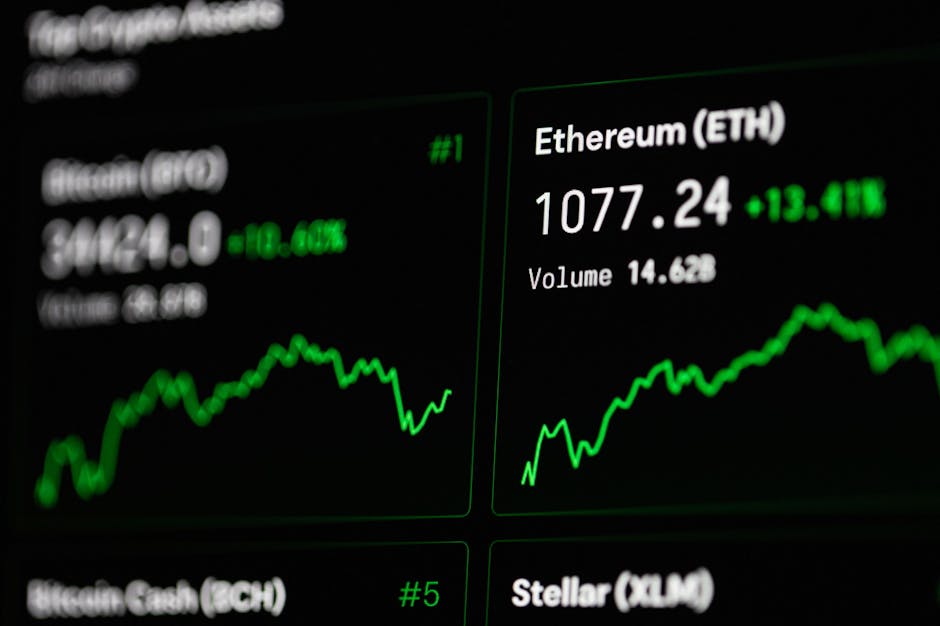
Global financial markets have entered a period of heightened sensitivity as shifting geopolitical tensions and macroeconomic uncertainty trigger volatility across both physical and digital asset classes. Following the collapse of high-stakes ceasefire negotiations in Islamabad, Pakistan, President Donald Trump ordered a naval blockade of the Strait of Hormuz, a critical chokepoint for 20% of the world's oil trade cryptonews.comcrypto.news. While traditional risk assets initially recoiled under the threat of a historic energy crisis, Bitcoin (BTC) demonstrated remarkable resilience, staging a massive short squeeze that pushed prices toward the $75,000 level news.bitcoin.com. This divergence between traditional equities and digital gold suggests a shifting paradigm in how investors hedge against geopolitical instability and the looming specter of "Stagflation 2.0."
The Islamabad Collapse: Diplomacy Reaches an Impasse
The current market turmoil traces back to the weekend of April 11-12, 2026, when Vice President JD Vance led a delegation to Islamabad for 21 hours of direct negotiations with Iranian officials thedefiant.ionews.bitcoin.com. Despite a brief period of optimism that saw the S&P 500 climb 3.6% the previous week, the talks ended without a deal blockonomi.com. According to reports, the fundamental disagreement centered on Iran’s uranium enrichment levels and long-term nuclear program crowdfundinsider.comcrypto.news.
Vice President Vance described the U.S. position as a "final and best offer," noting that Iran failed to demonstrate a commitment to abandoning nuclear weapons development news.bitcoin.com. Following the walkout, President Trump utilized Truth Social to announce an immediate escalation: a U.S. Navy blockade of any and all ships entering or leaving the Strait of Hormuz decrypt.coblockonomi.com. The President specifically noted that the nuclear issue was the only point that "really mattered" in the failed discussions crypto.news.
Oil Markets: From Surge to Stagnation
The immediate reaction to the blockade announcement was a violent spike in energy prices. Brent crude, which had been trading between $90 and $94 during the brief ceasefire, surged as much as 9% to hit $105 per barrel in early trading thedefiant.ioblockonomi.comnews.bitcoin.com. WTI crude similarly jumped 8% to reach $104.40 cryptonews.com.
The impact on global shipping was instantaneous. Before the conflict, the Strait of Hormuz handled approximately 130 daily crossings; by Saturday, that number had dwindled to just 17 ships crypto.news. Analysts at Capital Economics warned that the blockade risks creating new flashpoints, particularly regarding whether the U.S. Navy will target Chinese vessels or allied ships that had previously paid tolls to Iran crypto.news. While oil prices eventually settled back toward the $98 range by Monday afternoon, the 50% increase in WTI crude since late February has fueled fears of a prolonged inflationary shock thedefiant.iocrypto.news.
Bitcoin’s Resilience: The $75,000 Short Squeeze
While traditional markets faced downward pressure—with Dow Jones futures suggesting an opening decline of over 580 points—Bitcoin followed a unique trajectory blockonomi.com. After an initial dip to a morning low of $70,741 as the news of the blockade broke, the digital asset reversed course sharply news.bitcoin.com.
Key Price Action and Liquidations
- Intraday Highs: Bitcoin pushed toward $74,900, testing the upper boundary of a two-month consolidation range between $65,000 and $75,000 news.bitcoin.com.
- Short Liquidations: The move was accelerated by a short squeeze, with roughly $297 million in crypto positions liquidated over a 24-hour period thedefiant.io.
- Market Dominance: Bitcoin dominance approached 60% for the first time since early March, as investors rotated out of altcoins and into the primary cryptocurrency thedefiant.io.
Traders noted that funding rates had turned negative prior to the move, indicating that the market was overly crowded with short positions heading into the weekend news.bitcoin.com. As buyers stepped in at the $70,000 support level, these shorts were forced to cover, providing the fuel for the climb toward $75,000 news.bitcoin.comcrypto.news.
Gold and the Fear Index: A Flight to Safety
The broader market sentiment remains characterized by "Extreme Fear," with the Fear & Greed Index hitting a low of 12 on Monday [Market Data]. In this environment, Gold has maintained its status as a primary hedge. Gold prices were recorded near $2,700, reflecting a steady climb as investors seek refuge from the volatility of the U.S. dollar and equities [Market Data].
However, some analysts point out that Bitcoin is beginning to outperform even traditional safe havens like gold in certain windows. During the week of April 6-13, Bitcoin closed up 2.53%, marking a notable divergence from oil's weekly pullback of 14.25% prior to the blockade news ambcrypto.com. This has led figures like Arthur Hayes to suggest that Bitcoin acts as a "liquidity smoke alarm," though he warns that AI-driven deflationary forces could still complicate the path to higher valuations in the long term cryptonews.com.
Institutional Inflows and Infrastructure Plays
Despite the geopolitical chaos, institutional interest in the crypto sector appears undeterred. U.S. spot Bitcoin ETFs recorded a net inflow of $786 million last week, bringing total net assets to a staggering $95 billion thedefiant.io. Morgan Stanley also signaled further expansion into the space, with plans for tokenized money-market funds following the launch of its MSBT ETF decrypt.co.
Furthermore, investors are increasingly looking at Bitcoin-linked infrastructure.
The Macro Outlook: Stagflation Fears and 2026 Projections
The convergence of rising energy costs and stalling economic growth has brought the term "Stagflation" back to the forefront of financial discourse. The Kobeissi Letter noted that U.S. CPI inflation has already jumped from 2.4% to 3.3%, with models suggesting a move above 4.0% if the Hormuz blockade persists cointelegraph.com.
Analyst Nic Puckrin of Coin Bureau suggests that the repercussions of the Iran conflict will likely dominate the market narrative for the remainder of 2026 cointelegraph.com. Puckrin argues that a push toward $90,000 for Bitcoin would require a combination of a sustained ceasefire, oil prices returning to the $80 range, and softer economic data to calm stagflation fears cointelegraph.com. Currently, the market does not expect interest rate cuts until late Q3 or Q4 of 2026, if at all, given the inflationary pressure from the energy sector cointelegraph.com.
Conclusion
The events of April 13, 2026, have solidified Bitcoin's role as a complex macro asset. While it remains susceptible to initial "risk-off" shocks—as seen in its brief dip to $70,600—its ability to rapidly recover and fill the gap left by sliding equities suggests a growing maturity cryptonews.comblockonomi.com. As the U.S. Navy enforces its blockade in the Strait of Hormuz and oil prices remain volatile, the market is bracing for a period of high inflation and low growth. For investors, the "Stagflation 2.0" era demands a diversified approach where gold, energy, and Bitcoin each play a distinct role in navigating a fractured global economy.
![[crypto] Iran strikes Gulf energy network as oil surges past $110 – crypto markets react](/uploads/thumbnails/crypto-iran-strikes-gulf-energy-network-as-oil-surges-past-110-crypto-markets.jpg)