![[crypto] S&P 500 CPI Week: Why a Soft Inflation Print Still Has to Clear Guidance Risk](/uploads/thumbnails/crypto-s-p-500-cpi-week-why-a-soft-inflation-print-still-has-to-clear-guidance-risk.jpg)
The financial markets are navigating a critical juncture this week, with the impending release of the Consumer Price Index (CPI) for June poised to influence sentiment across equities and digital assets. While a softer inflation print could offer a temporary reprieve, the broader market, particularly the S&P 500, faces the persistent challenge of clearing guidance risk emanating from both Federal Reserve communications and corporate earnings outlooks [8]. This intricate interplay of macroeconomic data, central bank hawkishness, and corporate projections creates a complex environment where even seemingly positive data points must contend with underlying uncertainties, shaping investor behavior from traditional stocks to the volatile cryptocurrency ecosystem.
\n\nMacroeconomic Headwinds and the S&P 500's Guidance Challenge
\nThe U.S. Bureau of Labor Statistics is scheduled to release the June CPI on Tuesday, July 14, 2026, at 8:30 a.m. ET, a moment that typically triggers significant market reactions [8]. A favorable inflation report, indicating a cooling trend, could potentially lead to lower Treasury yields and provide a tailwind for equity markets. However, the Federal Reserve's recent posture suggests that any such positive data might be tempered by cautious guidance [8]. The Federal Open Market Committee (FOMC) unanimously voted to hold interest rates steady at 3.5% to 3.75% during its June meeting, notably removing language that previously implied an easing bias [8]. This shift in communication signals a central bank wary of prematurely declaring victory over inflation, even as the S&P 500 climbed nearly 6% over the intermeeting period, primarily led by the technology sector [8].
\nFurther complicating the outlook are persistent inflation expectations among households. The New York Fed's survey indicated that one-year-ahead household inflation expectations rose to 3.7% in June, marking the highest level since September 2023 [8]. Such elevated expectations can make policymakers hesitant to ease financial conditions too rapidly, potentially muting the market's response to a soft CPI print [8]. For equity markets, this means that even if inflation data is benign, a firm tone from the Fed could prevent a sustained rally, particularly if it leads to a repricing of the front end of the yield curve [8].
\nBeyond monetary policy, the ongoing earnings season introduces another layer of guidance risk for the S&P 500. Corporate management commentary on demand, pricing power, and margins for the upcoming quarter often carries more weight than past performance [8]. Should companies issue cautious outlooks, it could cap multiple expansion and lead to market churn, even in the presence of a soft CPI [8]. The technology sector, which has been a primary driver of the S&P 500's recent gains, is particularly susceptible to such guidance, as any cautious remarks from megacaps regarding capital expenditure or margins could impact the broader index [8]. Therefore, market participants are advised to define scenarios, monitor Treasury yield reactions at the CPI release, and pay close attention to corporate outlooks in the days following the inflation data [8].
\n\nBitcoin's Consolidation Amidst Shifting Flows and Macro Pressures
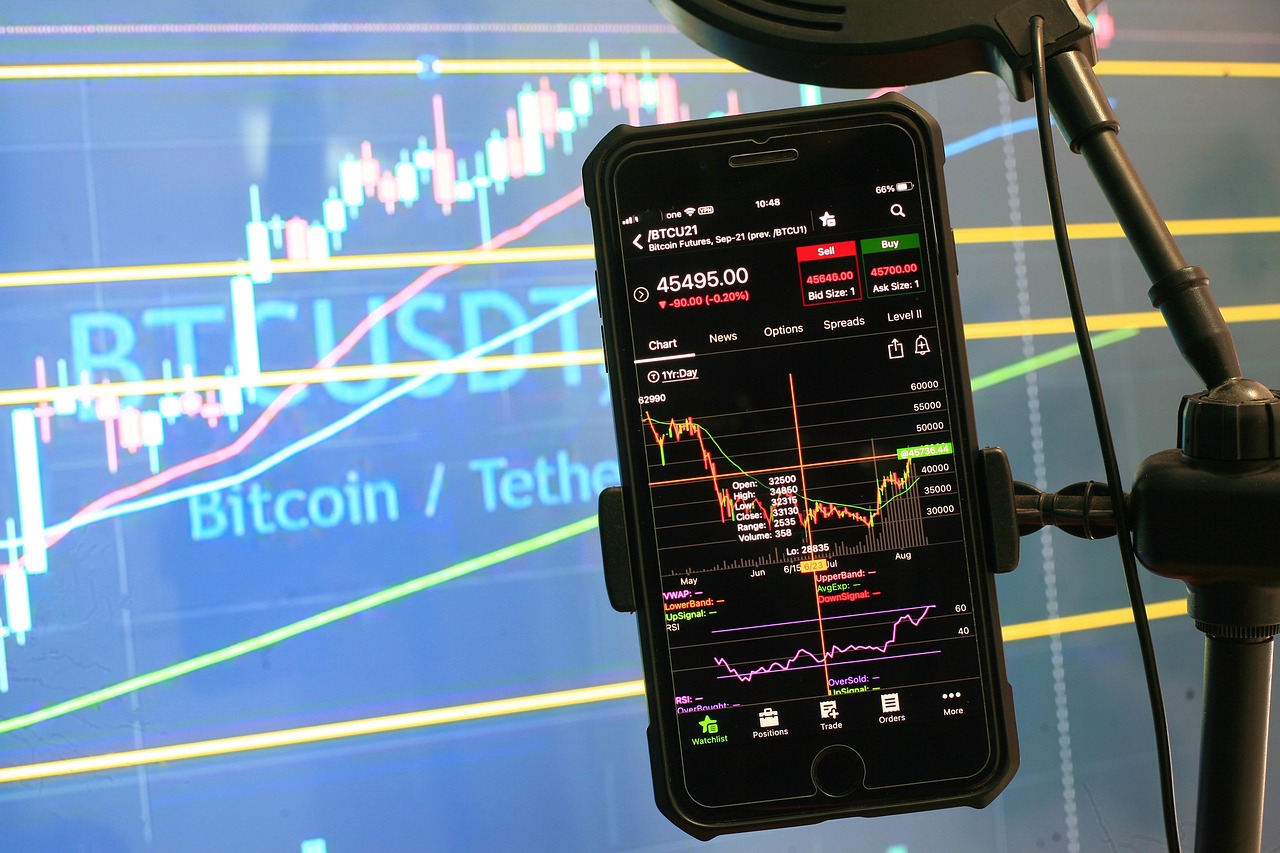
\nBitcoin has experienced a prolonged period of consolidation, largely confined within a $60,000 to $70,000 range, a pattern that has become historically significant for the asset [24]. This persistent trading band reflects a dynamic equilibrium between supply and demand, where on-chain cost-basis data indicates strong support around the $58,000 to $64,000 area, suggesting that a substantial portion of circulating BTC last moved within this window [24]. Conversely, supply near the $68,000 to $70,000 level has consistently capped upside movements, partly due to profit-taking and, at times, significant outflows from investment vehicles [24].
\nRecent trends in Bitcoin exchange-traded fund (ETF) flows highlight this complex environment. After an extended period of outflows, U.S. spot Bitcoin ETFs recorded approximately $200 million in net positive flows for the five-day trading period ending July 11, 2026, marking the first week of gains in about eight weeks [29]. This shift followed a challenging two-month cycle where over $8 billion was withdrawn from these funds [29]. Earlier in July, U.S. spot Bitcoin ETFs saw inflows of around $221.72 million on July 2, breaking a ten-day outflow streak that had drained approximately $2.73 billion [7]. Similarly, on June 12, spot Bitcoin ETFs attracted about $85.85 million, ending a five-session outflow run [7]. However, these inflows have not been linear, with Bitcoin ETFs experiencing a $95 million outflow on July 10 [7], and combined Bitcoin and Ether ETFs posting approximately $282 million in net inflows for the week of July 7–11, breaking an eight-week outflow run of nearly $9.46 billion [7].
\nDespite these fluctuating institutional flows, the overall market for Bitcoin remains under pressure, though not fundamentally broken [12]. On July 10, Galaxy Digital, a prominent digital asset financial services company, transferred 2,500 Bitcoin, valued at roughly $160 million, to exchange wallets within an hour, a move often interpreted as a precursor to potential liquidation [27]. This occurred while Bitcoin was trading near $63,962, above its 20-day moving average of $61,810 but below its 50-day moving average of $65,366 and 200-day moving average of $74,106 [27]. Similarly, Strategy (formerly MicroStrategy), a major corporate Bitcoin holder, liquidated 3,588 BTC, generating $216 million, between June 29 and July 5 to meet preferred-stock and dividend obligations [4] [24]. Despite its size, this sale had a limited impact on the market, with Bitcoin eventually rising toward $63,800 [12] [24].
\nLooking ahead, some analysts maintain a bullish long-term outlook for Bitcoin. Standard Chartered's Global Head of Digital Assets Research, Geoffrey Kendrick, continues to stand by his $500,000 Bitcoin price prediction before the current U.S. presidential term ends, citing regulatory tailwinds under a sympathetic administration and institutional access through spot ETFs [26]. This forecast is reinforced by President Trump's public endorsement of Bitcoin on July 6, where he emphasized geopolitical competition with China as a primary rationale for U.S. digital asset dominance [26]. However, Bitcoin faces structural risks, including the long-term threat of quantum computing to wallet security, for which no cohesive defense plan currently exists, and concerns about miner incentives as block rewards shrink and transaction fees may prove insufficient to maintain network security [32]. Additionally, the Bitcoin Improvement Proposal (BIP-110), a contentious soft fork implemented in December 2025 to prevent network spam from Ordinals inscriptions, is losing community support, with critics like Blockstream CEO Adam Back arguing it clashes with Bitcoin's permissionless ethos and market-driven mechanisms [2]. This proposal saw support from only 10 out of 2,016 blocks by July 4, and Ordinals activity has dropped to all-time lows [2].
\n\nEthereum's Evolving Landscape: L2s, Energy, and Investor Divergence
\nEthereum's ecosystem continues to evolve significantly, particularly following its transition to a Proof-of-Stake (PoS) consensus mechanism via The Merge. This upgrade dramatically reduced the network's energy consumption, with Ethereum now using approximately 7.87 GWh of electricity annually, which is less than half the annual consumption of the British Museum [20]. This represents a reduction of over 99.9% from its prior Proof-of-Work era, making it one of the largest energy reductions by a major blockchain [20]. The network's infrastructure, supported by about 8,522 physical nodes and nearly 894,000 validators, demonstrates decentralization despite a geographical concentration, with roughly 62% of nodes hosted in the United States, Germany, Finland, and France [20]. Furthermore, 56.4% of Ethereum's electricity consumption originates from sustainable sources, including 17% nuclear energy and 39.4% renewable energy, surpassing the global average of approximately 43% [20]. The network's carbon footprint has similarly decreased by 99.98% to an estimated 2.37 kilotonnes of CO₂ equivalent per year, comparable to about 900 UK households [20].
\nThe Layer 2 (L2) ecosystem built on Ethereum is experiencing rapid growth and innovation. Robinhood Chain, an Arbitrum-powered Ethereum L2 solution, processed 7.6 million transactions within a 24-hour period just 11 days after its July 1 mainnet deployment [5]. This rapid adoption was significantly driven by Robinhood's strategy of absorbing all network fees for participants during an initial 90-day period, eliminating financial friction for users [5]. The network also surpassed $500 million in 24-hour Uniswap trading activity, ranking second only to Ethereum's mainnet [5]. Robinhood Chain's daily DEX volume has since reached a record $600 million, surpassing BNB Chain and Hyperliquid in speculative interest, largely fueled by a memecoin frenzy [23]. However, this L2 growth has sparked debate among critics regarding its actual benefit to ETH's value, with some arguing that L2s operate as largely independent blockchains and do not capture the vast majority of economics for ETH [23]. Others contend that ETH-denominated pairs on L2s could eventually lead to more ETH burning, especially if real-world asset (RWA) narratives gain traction [23].
\nInvestor sentiment for Ethereum reveals a growing disparity between institutional and retail participants. Institutional investors have shown a bullish shift, recording $84.4 million in net buying for the week ending July 12, marking the first weekly net buy in nine weeks [10]. This turnaround suggests a recalibration of outlook among institutional players, potentially leading to increased capital allocation to spot U.S. Ethereum ETFs [10]. In contrast, retail investors appear to be shifting bearish, with selling volume rising in the Ethereum perpetual market, evidenced by a Long/Short Ratio falling to 0.946 [10]. Whales on major exchanges like OKX and Bybit also exhibit an "extremely bearish" stance, adding further pressure to ETH [10]. Despite this, overall liquidation data indicates that short sellers have faced greater losses ($11.49 million) compared to long traders ($8.30 million), suggesting that while retail traders are attempting to drive a decline, they could also bear the brunt of it [10]. Meanwhile, BNB Chain has also made significant strides, doubling its mainnet throughput to approximately 5,200 transactions per second (TPS) in the first half of 2026 and outlining plans for a next-generation Layer 1 architecture targeting over 100,000 TPS by early 2027 [3].
\n\nThe AI Revolution's Impact on Tech and Crypto
\nThe artificial intelligence (AI) sector continues to be a dominant force in the technology landscape, with companies like Nvidia demonstrating unprecedented growth. Nvidia delivered an extraordinary quarterly performance, generating $81.6 billion in revenue, an 85% increase from the prior year [1]. The Data Center division was the primary growth engine, recording $75.2 billion in sales, a 92% expansion year-over-year, driven by robust adoption of Blackwell 300 platforms and AI-focused networking solutions [1]. Nvidia's networking business, often overlooked, also saw remarkable growth, with Data Center networking sales reaching $14.8 billion, soaring 199% year-over-year, underpinned by technologies like NVLink, Spectrum-X Ethernet, and InfiniBand crucial for large-scale AI computing clusters [1]. Management projects Q2 revenue at roughly $91 billion, excluding Data Center compute sales from China due to regulatory export controls [1]. The company is already advancing its roadmap with the Rubin architecture, anticipated for volume shipments in late fiscal 2027, which could reduce AI token costs by tenfold for specific applications compared to Blackwell [1]. Wall Street analysts maintain a strong bullish outlook, with 48 out of 54 analysts assigning a Buy rating and 3 recommending strongly bullish sentiment [1].
\nThe broader semiconductor sector, after an initial period of weakness, has staged a significant rebound, with companies including Nvidia, Broadcom, AMD, and Micron regaining ground [22]. This recovery is attributed to the resilient fundamentals of AI infrastructure, characterized by substantial capital expenditure commitments from hyperscale cloud operators and robust demand for AI processors, advanced networking components, and specialized memory solutions [22]. Broadcom, for instance, secured an extended custom semiconductor partnership with Apple through 2031, providing long-term revenue visibility and highlighting major technology firms' continued investment in AI silicon [22]. South Korea's SK Hynix also made a strong debut in U.S. markets, reflecting sustained investor appetite for companies involved in the AI technology stack, particularly those specializing in high-bandwidth memory products critical for AI server architectures [22].
\nThe allure of AI infrastructure is also prompting strategic shifts within the cryptocurrency sector. Empery Digital, a publicly traded firm, liquidated 1,400 Bitcoin units at an average of $62,200 each, generating approximately $87.1 million, to pivot towards AI infrastructure development [4]. The proceeds will finance a $65 million equity position in a joint venture targeting an industrial property for transformation into an AI-focused data center [4]. This move mirrors a similar decision by Strategy, which liquidated 3,588 Bitcoin, generating $216 million, to support dividend distributions for its preferred equity instrument [4]. These reallocations suggest a growing trend among companies that previously embraced aggressive cryptocurrency treasury models to redirect resources toward AI infrastructure, where institutional interest appears more robust [4].
\nHowever, the rapid advancement and adoption of AI agents are also straining existing computing infrastructure. OpenAI has repeatedly reset usage limits for its Codex coding agent and the newly launched ChatGPT Work, reflecting the immense processing demand these systems place on computing resources [31]. ChatGPT Work, an enterprise-focused agent launched on July 9, is based on GPT-5.6 and designed for compute-intensive tasks like generating reports and spreadsheets [31]. The Stanford Digital Economy Lab found that agentic coding jobs require approximately 1,000 times more tokens than conventional coding conversations, with input tokens being the primary cost driver [31]. This highlights a significant challenge for AI firms in managing usage and costs, leading to measures like usage caps and periodic resets across the industry [31].
\n\nAltcoin Dynamics and Ecosystem Developments
\nThe broader cryptocurrency market, beyond Bitcoin and Ethereum, is characterized by diverse developments and varying performance across altcoins. Solana, for instance, experienced a challenging period in Q2 2026, recording $51 million in total fees, a 43% drop from Q1 and a 78% year-over-year decline, marking its lowest fees since Q4 2024 [15]. This reduction in fees indicates a significant contraction in network activity, and the platform has seen $24 billion in capital outflows in recent months [15]. Despite a recent 28% relief recovery, Solana's Realized Cap, which tracks on-chain capital inflows, has dropped to $73 billion from a record $97 billion last year, its lowest level since late 2024 [15].
\nIn contrast, some altcoins have shown resilience or significant growth. The LAB token experienced a dramatic 56% crash after an insider wallet, initially funded by the LAB team, sold 18.4 million tokens worth approximately $18.3 million through Aster [6]. On-chain investigator ZachXBT traced over 196 million LAB tokens from the project, highlighting concerns about hidden supply, discounted sales, and unusual market-maker activity [6]. Ethena (ENA) has seen an upward trend since July 8, climbing 14.11% from its $0.072 low to $0.082, reclaiming a short-term resistance zone [9]. The Robinhood Earn feature significantly boosted Ethena, with the network observing that Ethena represented over 70% of asset allocation from Robinhood user deposits, leading to a $50 million inflow into a USDG vault on Morpho and a 160% increase in Robinhood Chain's Total Value Locked (TVL) [9].
\nVirtual Protocol (VIRTUAL) surged 15.92% over 24 hours, attracting renewed market attention following its migration of $700 million worth of VIRTUAL tokens from LayerZero to Chainlink’s Cross-Chain Interoperability Protocol (CCIP) [11]. This move, along with the integration of Virtuals’ AI agent infrastructure into Robinhood Chain, expanded its presence in the tokenized AI economy and was rewarded by investors as a proactive step to strengthen interoperability and reduce cross-chain risks [11]. Audiera (BEAT) defied the typical token unlock dump, climbing 18.81% despite the release of 21.25 million BEAT tokens (7.3% of circulating supply) between July 1 and 3 [18]. This resilience was attributed to strong demand absorbing the new supply and investor focus shifting to Audiera’s product-driven tokenomics, which include a dynamic burn mechanism [18]. Sky Protocol (SKY) reported record annualized gross revenue run rate of $419.08 million, with Sky Reserves closing June at $82.5 million, up $33.7 million from March [25]. Its native token, SKY, posted notable gains, reclaiming key moving averages and seeing stronger capital inflows [25].
\nOther projects like Sui and Aptos, both operating on the Move programming language, are positioned for significant growth, drawing parallels to Solana's early expansion [30]. Sui has seen remarkable ecosystem expansion across DeFi, gaming, and NFTs, attracting institutional capital and developers [30]. Aptos prioritizes high throughput, security, and decentralization, expanding its footprint through developer incentive programs and corporate partnerships [30]. Hyperliquid, a rapidly expanding decentralized finance protocol, offers a user experience comparable to centralized exchanges with ultra-fast order execution and robust liquidity, positioning it to capture significant market share as traders seek alternatives to centralized platforms [30]. Meanwhile, XRP Ledger activity has fallen to unusually low levels, with only 25,350 and 24,887 daily active addresses on July 9 and 10, respectively, marking the second-lowest figures in 2026 [13]. This muted activity, coupled with persistently negative funding rates, suggests that traders are waiting for a more decisive move rather than chasing shallow bounces [13].
\n\nThe Rise of Stablecoins in Agentic Commerce
\nA significant, albeit quiet, transformation is underway in the realm of payments, driven by the emergence of "agentic commerce," where AI software autonomously negotiates and completes purchases on behalf of users [17]. This shift necessitates a new approach to payment infrastructure, moving away from traditional checkout flows towards seamless, background transactions, often integrated within chat interfaces or voice commands [17]. Stablecoins are increasingly positioned to become the "invisible payment rails" underpinning this evolution due to their inherent advantages, including 24/7 settlement, programmable escrow and refund capabilities, and cross-border reach [17].
\nMajor players in the tech and financial sectors are signaling this transition. Adyen, a global payment platform, unveiled "Adyen Agentic," explicitly naming "Meta" among the agent protocols it translates for, indicating an expectation of agent-led commerce on Meta's surfaces like WhatsApp, Messenger, and Instagram shops [17]. Stripe, in collaboration with AWS, is also enabling AI-agent payments in partnership flows, providing tooling for third-party agents to initiate and complete transactions on Stripe-backed rails [17]. Furthermore, Mastercard and PrivatBank conducted Ukraine's first agent-executed payment, utilizing Mastercard Agent Pay to integrate a consented agent directly into the payment process, demonstrating real-world application beyond laboratory demonstrations [17].
\nThe appeal of stablecoins in this context stems from their ability to facilitate fast, predictable, and final settlement, which is crucial for agents operating around the clock and across international borders [17]. While customers may continue to experience fiat pricing, the underlying settlement can occur via token rails, with payment service providers (PSPs) handling the conversion and abstracting away the complexities of blockchain transactions [17]. This model allows for the benefits of stablecoin technology without requiring users to directly interact with crypto assets. A key development bolstering the institutional comfort with stablecoins is Circle's recent announcement of securing final OCC approval to form a national trust bank for USDC custody, strengthening its regulatory profile in the U.S. [17]. This regulatory clarity, combined with the operational efficiencies, positions stablecoins as a compelling solution for the evolving demands of agent-initiated payments, even as traditional payment methods like card networks and bank transfers continue to serve specific use cases [17].
\nIn a related development, Metaplanet is exploring how Bitcoin holdings can serve as working collateral for tokenized credit that trades continuously. The firm, which holds approximately 43,000 BTC [14] [19], has partnered with Metaplanet Securities, stablecoin issuer JPYC, and tokenization firm Progmat to study a Bitcoin-backed digital credit framework, dubbed Project Nova [14]. This initiative aims to enable 24/7 trading and settlement with daily interest accrual, potentially opening Japan's credit markets to mid-sized and high-growth firms that are currently priced out of traditional bond markets [14] [19]. The project envisions using Metaplanet's BTC holdings as collateral for tokenized notes, with automated price oracles and intraday margin checks to manage volatility [19]. This approach positions BTC treasury firms as potential 24/7 lenders, bridging the gap between DeFi's always-on nature and a compliance-first wrapper for institutional distribution [19].
\n\nBroader Market Shifts and Geopolitical Influences
\nBeyond the immediate focus on CPI and AI, broader market shifts and geopolitical factors continue to shape the financial landscape. In South Korea, cryptocurrency exchange volume has experienced a significant contraction, falling below KRW 10 trillion for the first time since September 2023 [16]. Combined turnover across the five largest won-denominated exchanges (Upbit, Bithumb, Coinone, Korbit, and Gopax) reached approximately KRW 9.9676 trillion from July 3 to July 10, representing a 25.75% drop from the previous week and a monthly decline of about 43.5% from early June levels [16]. This sustained decline, spanning five consecutive weeks, indicates reduced network activity and less frequent portfolio rotation among Korean crypto traders [16].
\nIn traditional markets, crude oil prices have retreated throughout the week, a development attributed to diminishing geopolitical risk premiums and improved supply forecasts [22]. Lower energy costs are generally viewed as favorable for various sectors, including airlines, consumer-facing businesses, and industrial manufacturers, and can help alleviate persistent inflation concerns for both market participants and monetary authorities [22].
\nMeanwhile, individual equities continue to react to company-specific news and analyst revisions. Tesla (TSLA) shares surged 3.2% during Thursday's session after UBS upgraded its price target from $364 to $442, despite maintaining a neutral outlook [21]. This rally sent TSLA to an intraday high of $407.86 before settling at $406.55 [21]. The electric vehicle maker reported strong Q2 2026 performance, achieving record-breaking deliveries of 480,126 vehicles and production figures of 451,758 units [21]. Tesla's energy storage division also continues to gain traction, with over $9 billion in Megapack orders [21]. Institutional ownership of Tesla shares stands at approximately 66.2% of total outstanding stock, with multiple investment firms expanding their positions [21]. In another significant development, SpaceX formally became a member of the Nasdaq-100 Index during the week, a milestone expected to attract substantial investment from passive index funds and institutional portfolios [22].
\n\nConclusion
\nThe current market environment is characterized by a complex interplay of macroeconomic indicators, technological advancements, and shifting investor sentiment. While the upcoming CPI release for June holds the potential to influence short-term market movements, the S&P 500's trajectory remains significantly tied to the Federal Reserve's cautious guidance and corporate earnings outlooks, which could temper any positive inflation news [8]. Concurrently, the AI revolution continues to drive unprecedented growth in the technology sector, exemplified by Nvidia's stellar performance and the broader shift towards AI infrastructure, even as it strains computing resources [1] [22] [31]. Within the cryptocurrency landscape, Bitcoin navigates a prolonged consolidation phase, influenced by fluctuating ETF flows and ongoing debates about its long-term risks and utility [24] [7] [12] [32]. Ethereum's ecosystem demonstrates significant progress in energy efficiency and Layer 2 scaling, though it faces a divergence in institutional and retail investor sentiment [20] [5] [10]. The emerging role of stablecoins in agentic commerce and the innovative approaches by firms like Metaplanet to leverage Bitcoin as collateral for digital credit underscore the continuous evolution of digital assets beyond traditional investment paradigms [17] [14] [19]. As these diverse forces interact, market participants are presented with a landscape demanding careful analysis of both macro signals and micro-level developments to navigate the inherent complexities and opportunities.
\n", "title": "S&P 500 CPI Week: Navigating Guidance Risk Amidst AI Boom & Crypto Shifts", "subtitle": "A soft inflation print may not be enough for equities as Fed and corporate guidance loom, while AI drives tech and crypto markets evolve.", "seo_meta": { "description": "Analysis of S&P 500's CPI week, Fed guidance risks, Nvidia's AI dominance, Bitcoin's consolidation, Ethereum's L2 growth, and altcoin dynamics.", "keywords": ["S&P 500", "CPI", "Federal Reserve", "AI", "Nvidia", "Bitcoin", "Ethereum", "Crypto ETFs"] }, "image_search_terms": ["stock chart", "AI chips", "bitcoin graph"] }![[crypto] Market Preview: Bank Earnings and Critical Inflation Reports Dominate This Week’s Trading](/uploads/thumbnails/crypto-market-preview-bank-earnings-and-critical-inflation-reports-dominate-this-week-s-trading.jpg)

![[crypto] Wall Street Rallies as Disappointing Jobs Data Reduces Fed Rate Hike Pressure](/uploads/thumbnails/crypto-wall-street-rallies-as-disappointing-jobs-data-reduces-fed-rate-hike-pressure.jpg)