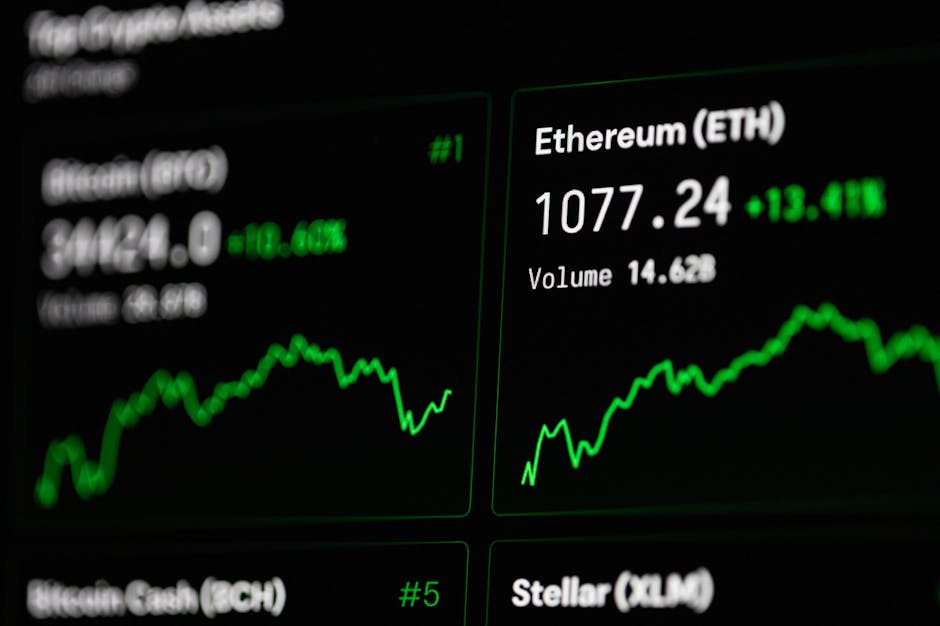
The final week of May 2026 finds the global financial landscape at a critical juncture, where the traditional boundaries between geopolitical stability, macroeconomic policy, and digital asset liquidity have effectively dissolved. As the crypto market grapples with a Fear & Greed Index reading of 22, signaling "Extreme Fear" [MARKET DATA], investors are navigating a complex web of high-impact events that threaten to redefine the current bull cycle. From the fragile extension of a Middle Eastern ceasefire to the looming threat of "hot" inflation data, the coming days will test the resilience of Bitcoin's correlation with traditional equities. While the S&P 500 has recently pushed toward a fresh all-time high near 7,400 crypto.news, the underlying volatility in energy markets and a massive $1 billion exodus from Bitcoin ETFs suggest that the path forward is anything but certain decrypt.co.
1. The US-Iran Ceasefire Extension and Energy Market Volatility
Perhaps the most significant driver of market sentiment this week is the tactical shift in Washington regarding the Middle East conflict. President Donald Trump recently confirmed an extension of the US-Iran truce to allow Iranian leadership to finalize a "unified proposal" for broader de-escalation crypto.news. This 60-day extension, brokered by intermediaries, aims to set a framework for renewed negotiations over Tehran’s nuclear program and potential sanctions relief crypto.news.
However, the stability of this agreement remains under intense scrutiny. Despite the technical ceasefire, the US Central Command (CENTCOM) has executed "self-defense strikes" on Iranian military sites near the Strait of Hormuz, targeting missile launch locations and vessels attempting to deploy mines crypto.news. These military frictions have a direct impact on global energy shipments, as the Strait carries a significant share of the world's oil crypto.news. Analysts observe that the prospect of continued diplomacy has acted as a "pressure valve" for markets, yet any breakdown in talks could trigger a supply shock crypto.news.
For the crypto sector, this geopolitical tension is more than a peripheral concern. Bitcoin and other large-cap tokens have recently traded as "high-beta extensions" of US equities, with correlations to the S&P 500 climbing as high as 0.7 to 0.9 crypto.news. When the initial ceasefire was announced, Bitcoin jumped above $72,000, gaining nearly 5% in 24 hours crypto.news. Conversely, renewed escalations have seen Bitcoin slip below $73,000, reflecting a 3.4% decline in a single day as oil prices surged decrypt.co.
2. The April PCE Inflation Report: A Litmus Test for the Fed
On Thursday, May 28, 2026, the US Bureau of Economic Analysis is releasing the Personal Consumption Expenditures (PCE) report for April, an event that Wall Street banks expect will show persistent price pressures crypto.news. Major institutions, including JPMorgan, Goldman Sachs, and Bank of America, project that headline PCE inflation likely rose 3.8% year-over-year crypto.news.
The implications for monetary policy are stark. New York Fed President John Williams has warned that the conflict in the Middle East is "driving up inflation" through soaring energy prices, which could push headline inflation over 3% in the near term crypto.news. While Williams maintains that core inflation (excluding food and energy) may end the year at 2.5%, the energy shock is expected to keep overall PCE stuck near 3% crypto.news.
Market participants are bracing for volatility, as "hotter-than-expected" inflation typically strengthens the US dollar and keeps Treasury yields elevated—conditions that historically pressure speculative assets like cryptocurrencies crypto.news. Traders are currently pricing in a 40% chance of a 25 basis point rate increase by December 2026, a significant shift from earlier expectations of easing crypto.news.
3. Record Bitcoin ETF Outflows and Institutional Sentiment
The institutional appetite for digital assets is facing its most severe test of the year. Recent data reveals a massive $1 billion outflow from Bitcoin spot ETFs over a two-day period, with Tuesday alone seeing a -$733.40 million exodus—the worst single day of 2026 decrypt.co. This eight-day streak of outflows has erased more than $2.6 billion from the ETF ecosystem since mid-May decrypt.co.
This liquidity drain has coincided with a broader market retreat. Ethereum recently broke below the $2,000 threshold for the first time since April, trading at $1,983 and marking a 33% decline year-to-date decrypt.co. Even high-performing assets like HYPE, which had gained 123% earlier in the year, suffered a 10% daily drop decrypt.co.
Despite this short-term pain, some analysts see a structural shift on the horizon. Jefferies projects that the crypto and blockchain sector could become a $1 trillion public market within five years, driven by an upcoming wave of IPOs from companies like Kraken (Payward), Blockchain.com, and Gemini decrypt.co. The focus of institutional investors appears to be shifting from pure price speculation to the integration of blockchain infrastructure into core financial systems, such as tokenized money market funds and settlement networks decrypt.co.
4. The Rise of On-Chain Outcome Markets (HIP-4)
A transformative development in the DeFi space is the emergence of macro outcome markets, exemplified by Hyperliquid’s HIP-4 upgrade. This system allows validators to settle real-world event markets directly on-chain, effectively turning the validator set into an oracle crypto.news.
Under this new framework, traders can directly price the probability of economic data releases, such as "May CPI year-over-year," within a decentralized environment crypto.news. These outcome contracts are fully collateralized and settle within a fixed range, allowing sophisticated traders to use shared collateral across both perpetual futures and event positions crypto.news.
The goal of these markets is to allow crypto participants to hedge macro risk more precisely. Rather than reacting blindly to a data print, traders can price the outcome itself cryptodaily.co.uk. This innovation addresses the "freeze" often seen in crypto markets ten minutes before a major CPI print, where spreads widen and liquidity thins out cryptodaily.co.uk. By integrating these events into the DeFi stack, the industry is moving toward a model where "visibility has become infrastructure" cryptodaily.co.uk.
5. Political Realignments and Regulatory Scrutiny
The intersection of crypto and politics is becoming increasingly complex as the 2026 election cycle intensifies. While President Donald Trump has pledged to "never let crypto down" and has advocated for making America the "crypto capital of the world," his second term has seen a $1 trillion wipeout in total digital asset market capitalization since his inauguration finbold.com.
Political spending is also shifting. While the Fairshake PAC remains a bipartisan force, new Republican-focused PACs, such as Fellowship PAC (associated with Tether and Cantor Fitzgerald), have emerged to back candidates who favor aggressive deregulation decrypt.co. This shift was evident in recent Texas primary runoffs, where crypto-focused committees spent over $9 million to support industry-aligned candidates decrypt.co.
Simultaneously, regulatory pressure is mounting globally. China’s top judiciary is studying new rules for virtual currency cases and cross-border finance, signaling fresh scrutiny of the sector crypto.news. In the US, the SEC has walked back some investigations, but the legal framework remains incomplete and subject to sharp disagreements among industry leaders like Brad Garlinghouse and Charles Hoskinson finbold.com.
Conclusion: Navigating a High-Stakes Environment
The events of May 25–31, 2026, underscore a fundamental maturation of the cryptocurrency market. No longer an isolated asset class, digital assets are now deeply entwined with global geopolitical stability and US macroeconomic policy. The fragile US-Iran ceasefire and the impending PCE inflation data represent immediate hurdles for price action, while the massive ETF outflows suggest a period of institutional recalibration. However, the development of on-chain outcome markets and the projected $1 trillion public market for blockchain firms indicate that the industry's underlying infrastructure continues to evolve. As the Fear & Greed Index hovers in "Extreme Fear" at 22 [MARKET DATA], the market's ability to absorb these shocks will likely dictate the trajectory of the next phase of the digital economy.