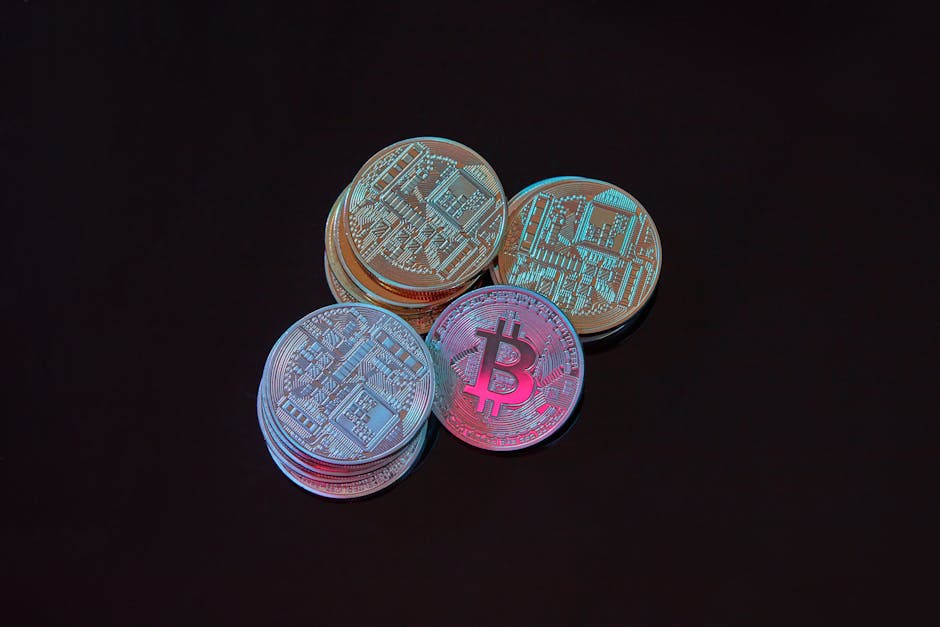
The Bitcoin network is undergoing a fundamental structural shift as the traditional mining landscape collides with the burgeoning demand for Artificial Intelligence (AI) infrastructure. For the second consecutive time, Bitcoin mining difficulty is slated for a significant downward adjustment, estimated at approximately 3% [2]. This decline in computational competition comes as major industry players, most notably Riot Platforms, report a strategic pivot toward data center operations and AI hosting to offset the pressures of depressed asset prices and rising operational costs [4][7]. While the network’s hashrate softens, the geopolitical narrative surrounding Bitcoin is simultaneously hardening; U.S. Secretary of Defense Pete Hegseth recently characterized the cryptocurrency as a vital instrument of national security and a lever against global adversaries like China [1][5].
The Great Hashrate Migration: Why Difficulty is Dropping
The Bitcoin network is designed to maintain a consistent block production time of approximately 10 minutes. When the total computational power—known as the hashrate—connected to the network decreases, block times slow down, prompting the protocol to lower the mining difficulty [2]. Recent on-chain data from CoinWarz indicates that the average block time has stretched to 10.30 minutes, a 0.30-minute delay from the target [2].
As a result, the network is expected to implement a 2.91% reduction in difficulty during its upcoming adjustment [2]. This follows a period of sustained bearish price action that began in late 2025, which has squeezed miner profit margins. Because the block subsidy is fixed in BTC terms, the USD-denominated revenue for miners is entirely dependent on the market price of Bitcoin [2]. With Bitcoin currently floating around $78,600—up 2.7% in 24 hours but still struggling to reclaim previous highs—some validators have been forced to disconnect their hardware [2][14].
- Consecutive Drops: This weekend marks the second consecutive downward adjustment for Bitcoin difficulty [2].
- Hashrate Trends: The 7-day average hashrate has trended downward over the last few months as less efficient miners exit the market [2].
- Revenue Pressure: Mining revenue for major firms like Riot Platforms fell to $111.9 million in Q1 2026, compared to $142.9 million in the prior year period [4].
The AI Pivot: Riot Platforms and the Data Center Revolution
Faced with the volatility of crypto markets, industrial-scale miners are increasingly repurposing their power capacity for AI and high-performance computing (HPC). Riot Platforms (RIOT) recently marked what CEO Jason Les described as a "definitive inflection point," reporting its first-ever revenue from AI infrastructure hosting [4][7].
In Q1 2026, Riot generated $33.2 million in data center revenue [4]. This diversification strategy was bolstered by a significant expansion of its partnership with technology giant AMD. During the quarter, AMD exercised an option to double its contracted capacity with Riot to a total of 50 megawatts [4][7]. This shift is not merely a side project; it is a survival mechanism. While Riot's mining revenue declined due to a 24% increase in global network hashrate year-over-year and rising costs—now averaging $44,629 per coin—its engineering and data center segments provided a critical buffer [4][7].
Investors have responded favorably to this transition. Riot’s stock surged nearly 9% following the earnings report and has climbed more than 49% over the last 30 days [4]. The company currently maintains a robust balance sheet with 15,679 Bitcoin (valued at approximately $1.1 billion) and $282.5 million in cash [4][7].
Bitcoin as a National Security Asset
While miners look to AI for financial stability, the U.S. government is increasingly viewing Bitcoin through the lens of defense and geopolitics. On April 30, 2026, Defense Secretary Pete Hegseth informed the House Armed Services Committee that the Pentagon is conducting classified Bitcoin programs [1][5]. Hegseth described these efforts as having two tracks: enabling the technology and countering it, both of which provide the U.S. with "leverage" against China [1].
This sentiment was echoed by INDOPACOM Admiral Paparo, who confirmed that the U.S. Indo-Pacific Command is running a live Bitcoin node to test operational protocols [1]. The strategic importance of Bitcoin has been heightened by the actions of adversarial nations:
- Iran: The nation has demanded Bitcoin and stablecoin payments for transit through the Strait of Hormuz, directly linking the asset to maritime security [1][10].
- Russia and China: Russia now accounts for roughly 16% of the global hashrate, while China maintains a 12% share through offshore operations [1].
- U.S. Strategic Reserve: Earlier in 2026, President Trump signed an executive order establishing a U.S. strategic Bitcoin reserve, seeded with 200,000 coins seized from forfeitures [1].
Market Sentiment and Macro Headwinds
Despite the strategic upgrades, the immediate market outlook remains cautious. The Fear & Greed Index currently sits at 39, indicating a state of "Fear" among investors [Market Data]. Bitcoin has struggled to break through a heavy resistance band between $78,000 and $79,000 [14].
Analysts at CryptoQuant warn that the recent price recovery may be fragile. Their data shows that the April surge was driven primarily by perpetual futures demand—leveraged speculation—rather than "spot demand," which represents actual coin accumulation [11]. Historically, rallies lacking spot demand are prone to sharp reversals, similar to the pattern observed at the start of the 2022 bear market [11][6].
Furthermore, institutional appetite appears to be cooling. U.S. spot Bitcoin ETFs recorded $138 million in net outflows on April 29, marking a third consecutive day of redemptions [12][14]. This coincides with a hawkish tone from the Federal Reserve, which recently held interest rates at 3.50% to 3.75% in a highly contested 8-4 vote [12][15].
The Nation-State Factor: Bhutan’s Sell-off
Adding to the supply-side pressure, the Royal Government of Bhutan has significantly reduced its Bitcoin holdings. In Q1 2026 alone, the country sold approximately 2,800 BTC, worth over $200 million [6]. Since its peak holdings of 13,000 BTC in 2024, Bhutan has liquidated 75.23% of its reserves [6]. Analysts suggest that the lack of new inflows into Bhutanese wallets may indicate a temporary halt or reduction in their hydropower-based mining operations [6].
Conclusion: A Maturing Ecosystem
The Bitcoin market in mid-2026 is characterized by a transition from a pure speculative asset to a complex piece of global infrastructure. The drop in hashrate and difficulty reflects a healthy, if painful, market correction where miners are evolving into diversified data center operators to survive [2][4]. Simultaneously, the integration of Bitcoin into U.S. defense strategy and the emergence of AI-driven mining models suggest that the network's value proposition is expanding far beyond simple peer-to-peer payments [1][7]. However, with the Fear & Greed Index at 39 and spot demand remaining negative, investors should remain wary of short-term volatility driven by geopolitical tensions in the Middle East and uncertainty surrounding the Federal Reserve's leadership transition [10][11][14].


![[crypto] Bitcoin (BTC) Slides Under $62K as Iran Tensions Escalate and Oil Surges](/uploads/thumbnails/crypto-bitcoin-btc-slides-under-62k-as-iran-tensions-escalate-and-oil-surges-3.jpg)