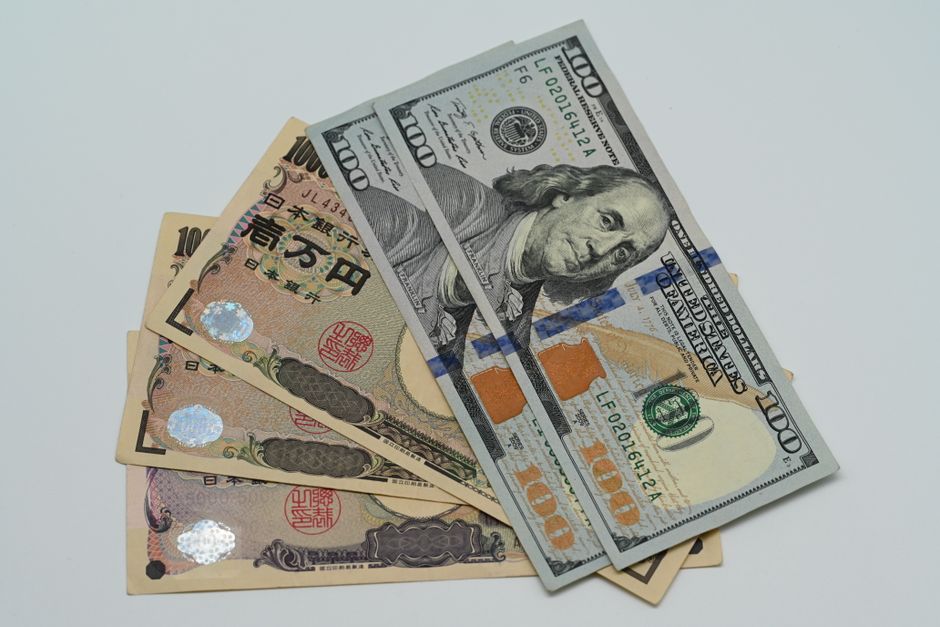
The global financial landscape is currently navigating a significant structural shift as the Bank of Japan (BoJ) elevates interest rates to 1%, a level not witnessed since 1995. This hawkish pivot, driven by persistent yen volatility and domestic inflation concerns, coincides with a period of intense consolidation and "Extreme Fear" within the cryptocurrency markets. As of June 28, 2026, the Crypto Fear & Greed Index has plummeted to a value of 18, reflecting a cautious sentiment among participants despite significant technological and institutional milestones [Market Data Summary]. While traditional macro-economic pressures mount, the Japanese market is simultaneously emerging as a primary laboratory for the "Deep Convergence" of traditional finance (TradFi) and on-chain innovation, a theme central to the IVS2026 conference in Kyoto gritdaily.com.
Japan’s Regulatory Renaissance and the 1% Rate Environment
The Bank of Japan's decision to raise rates to 1% marks a definitive end to the era of ultra-loose monetary policy, creating a new backdrop for the country's rapidly evolving digital asset sector. This macro shift occurs as Japan implements the Financial Instruments and Exchange Act (FIEA), which has triggered a new regulatory era for Web3 and blockchain technology gritdaily.com. Analysts observe that this regulatory clarity is fostering a unique environment where major financial institutions are directly integrating with crypto-native infrastructure. For instance, SBI Holdings has moved to acquire the exchange Bitbank outright, aiming to create a market leader that combines banking-grade compliance with crypto-native brokerage rails cryptodaily.co.uk.
The convergence of high-level policy and private sector initiative was on full display at the IVS2026 conference in Kyoto. The event featured a prominent lineup of government representatives, including Seiji Kihara of the Liberal Democratic Party and Nobuchika Imaizumi from the Financial Services Agency (FSA), alongside executives from BlackRock Japan, Franklin Templeton Japan, and Nomura Holdings gritdaily.com. This collaboration is particularly evident in the stablecoin sector. Ripple, in partnership with SBI VC Trade, recently launched its RLUSD stablecoin in Japan after receiving a "Type 4" electronic payment instrument classification from the JFSA bitcoinist.com. This launch is part of a broader race that includes participants like Circle and Nomura, all seeking to establish regulated stablecoin frameworks under Japan's revised Payment Services Act thedefiant.io.
The Strategic Role of SBI Holdings
SBI Holdings is positioning itself as a central pillar in Japan's digital asset infrastructure. Beyond the Bitbank acquisition, SBI's partnership with Ripple to distribute RLUSD highlights a strategy of building "banking-grade" gateways for digital assets cryptodaily.co.uk bitcoinist.com. This move is intended to serve JPY balance holders and corporate treasuries, providing a regulated path for trading majors like Bitcoin (BTC) and Ether (ETH) cryptodaily.co.uk. The integration of these services into traditional brokerage rails suggests a shift toward crypto becoming a foundational infrastructure for the broader Japanese economy gritdaily.com.
Institutional Capital Rotation: From Bitcoin to AI
While Japan builds its domestic infrastructure, the global crypto market is facing a significant "risk-off" phase. Data indicates that capital is rotating out of Bitcoin and gold and into semiconductor and artificial intelligence (AI) stocks ambcrypto.com. Since April 2026, U.S. semiconductor ETFs have attracted more than $20 billion in net inflows, while Bitcoin and gold ETFs have seen combined outflows of approximately $12 billion ambcrypto.com. This trend is further evidenced by record weekly outflows from spot Bitcoin ETFs, totaling $1.79 billion, with BlackRock’s IBIT alone accounting for $1.3 billion of that figure ambcrypto.com.
This rotation occurs despite Bitcoin ETFs reaching a historic milestone: collectively, these funds now hold over 1.1 million BTC, surpassing the estimated holdings of Bitcoin’s pseudonymous creator, Satoshi Nakamoto insidermonkey.com. These 12 spot ETFs represent nearly 5% of the total Bitcoin supply and have surpassed $100 billion in assets under management (AUM) insidermonkey.com. However, the current market price of Bitcoin hovers near $59,815, reflecting a period of consolidation as the market awaits a fresh catalyst, such as the resolution of the U.S. government shutdown coindesk.com.
The AI Narrative and Market Sentiment
The intersection of AI and crypto has become a dominant narrative in 2026. Autonomous AI agents have grown into a $13.5 billion market, though some analysts warn that these agents could potentially conflict with crypto's core promise of decentralization forbes.com. The enthusiasm for AI is also creating branding collisions; OpenAI’s announcement of GPT-5.6 model names—Sol, Terra, and Luna—prompted significant discussion within the crypto community due to the overlap with existing project tickers bitcoinist.com. Despite the "Extreme Fear" sentiment, some crypto-adjacent stocks like Core Scientific (CORZ) continue to see interest due to their diversification into high-performance computing (HPC) for AI, which generated $10.3 million in revenue in a recent quarter insidermonkey.com.
Technical Evolution: Quantum Security and Protocol Upgrades
As the market matures, technical risks are moving from the theoretical to the political. On June 22, 2026, the White House issued an executive order accelerating the migration to post-quantum cryptography (PQC), setting a government-wide pilot completion target for late 2027 cryptodaily.co.uk. This policy shift has immediate implications for Bitcoin, as an estimated 6.9 to 7.0 million BTC are currently considered "quantum-vulnerable" because their public keys are visible on-chain cryptodaily.co.uk. Of this amount, approximately 1.7 million BTC reside in legacy P2PK addresses cryptodaily.co.uk.
In response, the Bitcoin developer community is debating two major proposals: BIP-360 and BIP-361. BIP-360, known as "Pay-to-Merkle-Root," aims to harden addresses by hiding critical signature material until the time of spending cryptodaily.co.uk. BIP-361 outlines a three-phase migration plan:
- Phase 1 (Opt-in): Introduction of new quantum-resistant address types for voluntary migration cryptodaily.co.uk.
- Phase 2 (Activation): An economic majority pushes for migration, with miners and nodes enforcing new rules cryptodaily.co.uk.
- Phase 3 (Legacy Sunset): After a grace period, certain legacy signatures may no longer be spendable, provided there is ecosystem consensus cryptodaily.co.uk.
Institutional custodians are now expected to formalize "migration playbooks" to address these timelines, as address hygiene becomes a significant economic issue for long-term holders cryptodaily.co.uk.
Infrastructure and Middleware: Project Pangea
A critical component of the "Deep Convergence" theme is the modernization of cross-border finance. Chainlink, in collaboration with FairSquareLab, UniKA, and Qivalis, has launched "Project Pangea," a consortium of at least 47 banks across Europe and South Korea cryptodaily.co.uk. These institutions collectively represent more than $10 trillion in AUM and aim to compress EUR–KRW foreign-exchange settlement from the traditional T+2 timeframe to near real-time (T+0) using stablecoin rails cryptodaily.co.uk.
The EUR–KRW corridor, which sees roughly $150 billion in annual volume, serves as the initial proving ground for this technology cryptodaily.co.uk. Chainlink’s role is to provide the middleware—specifically through its Cross-Chain Interoperability Protocol (CCIP), Data Streams, and Chainlink Runtime Environment (CRE)—to translate ISO 20022/SWIFT messages into on-chain atomic settlement cryptodaily.co.uk. Notably, the project includes a programmatic tie-in where enterprise usage fees are converted to LINK and held in a Chainlink Reserve, directly linking real-world transactional volume to the token's ecosystem cryptodaily.co.uk.
Operational Benefits for Global Banking
For the participating banks, the primary value proposition of Project Pangea lies in the reduction of Herstatt risk (settlement risk) and the lowering of prefunding requirements cryptodaily.co.uk. By using regulated fiat tokens for the cash leg of a trade while maintaining existing bank messaging standards, institutions can achieve atomic payment-versus-payment (PvP) swaps without overhauling their entire core systems cryptodaily.co.uk. This "middleware-first" approach allows banks to retain their AML/KYC and treasury controls while benefiting from the efficiency of blockchain-based settlement cryptodaily.co.uk.
Market Microstructure and Niche Outperformance
Despite the broader market consolidation, certain sectors are exhibiting idiosyncratic strength. Privacy tokens have recently outperformed the majors, with Decred (DCR) rising 22%, while DASH and XMR also extended their gains coindesk.com. In the memecoin sector, BONK has shown significant volatility, leading rallies with gains of over 8% in 24-hour periods as it approaches a milestone of 1 million holders coindesk.com. Traders are also monitoring the potential launch of a 2X leveraged BONK ETF, which could debut as early as July 16 coindesk.com.
Furthermore, the "crypto treasury" model is gaining traction beyond Bitcoin. Sol Strategies (ticker: STKE) saw its stock jump 22% on June 26, 2026, as it focuses on a corporate Solana treasury model bitcoinist.com. This move coincided with SOL reclaiming the $72 level, suggesting that investors are increasingly looking for ways to judge network adoption and liquidity shifts through equity proxies bitcoinist.com.
Derivatives and Liquidity Constraints
The underlying market structure remains fragile due to thin liquidity. Volmex's BVIV index, which measures 30-day implied volatility for Bitcoin, remains elevated at approximately 50% coindesk.com. Annualized funding rates for BTC and ETH are currently well below their 2025 averages, indicating a subdued demand for leverage and a general lack of investor risk appetite coindesk.com. On the CME, the annualized three-month basis for SOL futures has dropped to 7%, matching the premiums seen in BTC and ETH futures coindesk.com.
Global Regulatory Pressures and Compliance
As institutional adoption grows, so does regulatory scrutiny. The Monetary Authority of Singapore (MAS) recently added the decentralized trading platform Hyperliquid (HYPE) to its Investor Alert List, flagging it as an unlicensed entity cryptopolitan.com. This makes Hyperliquid one of the first major DeFi protocols to appear on the register, joining centralized entities like Binance and KuCoin cryptopolitan.com.
In the United States, the market is closely watching the final stages of a potential government shutdown. Analysts suggest that the resumption of government operations could accelerate crypto policy changes and dictate near-term price action coindesk.com. Additionally, the upcoming U.S. administration is expected to foster a friendlier regulatory environment, with discussions regarding a national strategic Bitcoin reserve acting as a powerful long-term catalyst insidermonkey.com.
The current market environment is characterized by a stark contrast between macro-economic headwinds and rapid infrastructure development. While the Bank of Japan's rate hike and the rotation of capital into AI stocks have created a "bearish" technical outlook for crypto in the short term, the "Deep Convergence" of TradFi and on-chain technology continues unabated. From Japan's regulated stablecoin launches and SBI's exchange acquisition to Chainlink's 47-bank FX pilot and the ongoing debate over Bitcoin's quantum-resistant future, the industry is building the foundational systems for a new generation of financial infrastructure. Investors remain in a state of "Extreme Fear," yet the institutionalization of the asset class—evidenced by ETF holdings surpassing those of Satoshi Nakamoto—suggests that the long-term integration of digital assets into the global economy is accelerating [Market Data Summary] insidermonkey.com.


![[crypto] Crypto bear market isn’t over? AI’s $20B capital rotation says so](/uploads/thumbnails/crypto-crypto-bear-market-isn-t-over-ai-s-20b-capital-rotation-says-so.jpg)