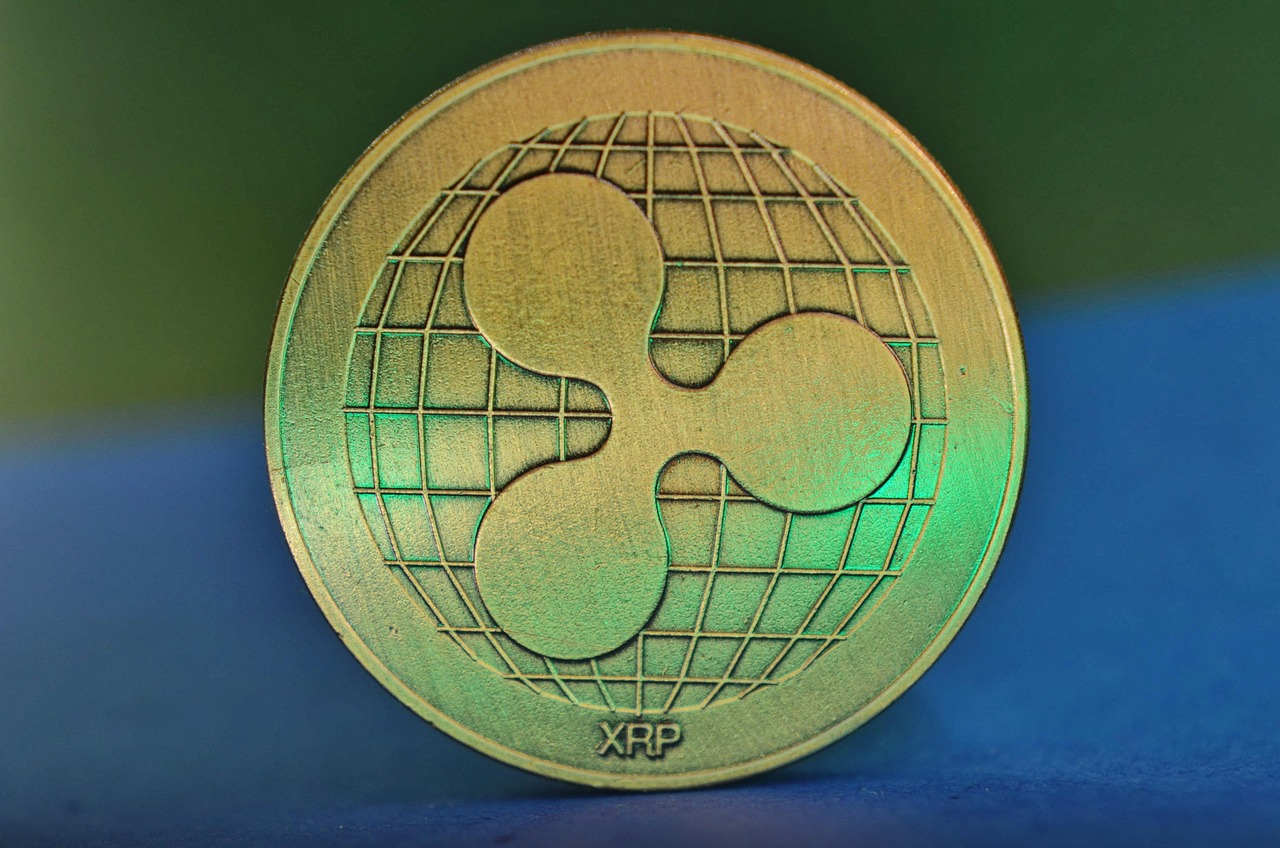
The global financial landscape is witnessing a pivotal shift as traditional banking infrastructure converges with decentralized ledger technology. While the Society for Worldwide Interbank Financial Telecommunication (SWIFT) has long dominated the cross-border payment sector, new data from major Japanese financial institutions suggests that the XRP Ledger (XRPL) is mounting a formidable challenge bitcoinist.com. As institutional appetite for XRP-based exchange-traded funds (ETFs) rebounds to two-month highs finbold.com, the asset is being repositioned not merely as a speculative vehicle, but as a core component of the emerging TradFi-to-DeFi settlement layer ambcrypto.com.
The Efficiency Gap: XRP Outperforms SWIFT in Live Trials
Recent findings presented at the 2026 XRP Tokyo conference have reignited the debate over the future of international remittances. Major Japanese banks revealed live pilot results comparing XRP directly against the SWIFT network across active remittance corridors between Japan and Southeast Asia bitcoinist.com. The data indicated that XRP-based transactions were 60% cheaper than those processed via traditional SWIFT rails bitcoinist.com.
Beyond cost reductions, the speed of settlement remains a primary differentiator. While SWIFT transactions typically require 1 to 5 business days to complete due to the necessity of routing through multiple intermediary banks, XRP settlements in the pilot were finalized in under 4 seconds bitcoinist.com. This efficiency is attributed to XRP's role as a "bridge asset," which allows for the near-instant conversion of a sender's local currency into XRP and then into the recipient's currency, bypassing the costly and time-consuming chain of correspondent banking bitcoinist.com.
Institutional Adoption: Tokenized Deposits and ETFs
The push toward blockchain-based settlement is not limited to Ripple's ecosystem. Global banking giant HSBC has expanded its Tokenized Deposit Service (TDS) to the United States, following successful launches in Hong Kong, Singapore, Luxembourg, and the United Kingdom pymnts.com. By representing traditional fiat deposits as digital tokens on a distributed ledger, HSBC enables corporate clients to move funds across jurisdictions in real-time pymnts.com.
This institutional momentum is reflected in the crypto markets through a resurgence in ETF activity. In the week ending April 13, 2026, U.S. spot XRP ETFs recorded $11.75 million in net inflows, the highest weekly total since early February finbold.com. Key contributors to this growth include:
- Bitwise XRP ETF: Registered $9.52 million in weekly inflows, bringing its total net assets to $276.27 million finbold.com.
- Franklin XRP ETF: Reported $2.90 million in inflows, its strongest performance since late February finbold.com.
- Total Market Cap: Despite price volatility, XRP's market capitalization stood at approximately $81.3 billion to $82.4 billion as of mid-April finbold.comfinbold.com.
Market Dynamics: Derivatives Reset and Retail Sentiment
Despite the positive institutional data, XRP's price action has remained constrained, trading around $1.32 to $1.34 finbold.comu.today. Analysts point to a significant "leverage reset" in the derivatives market as a primary cause for this stagnation. Since the peak in October 2025, XRP Futures Open Interest has collapsed by 78.57%, falling from nearly $20 billion to approximately $2 billion finbold.com.
On the Binance exchange, a sharp contraction flushed out over 700 million XRP in notional value ambcrypto.com. However, some analysts view this as a healthy development. With the 30-day change in Open Interest hovering near zero, the market structure is described as "cleaner," as speculative "weak hands" have exited their positions ambcrypto.com. Furthermore, exchange reserves on Binance have trended lower to $3.6 billion, with netflows showing sustained withdrawals of approximately -$11.4 billion, suggesting that large-scale "whales" are moving assets into cold storage for long-term accumulation ambcrypto.com.
Technical Outlook: The 9-Year Triangle
From a technical perspective, XRP is currently navigating a massive 9-year ascending triangle on its monthly chart benzinga.comfinbold.com. This pattern, which dates back to 2017, features a horizontal resistance level and a rising trendline of macro support finbold.com. Analysts suggest that if XRP holds its support zone between $0.75 and $0.80, the eventual breakout from this consolidation could lead to a price target of $8.50 finbold.com.
In the immediate term, XRP faces resistance between $1.37 and $1.41 cryptonews.comu.today. A decisive close above $1.40 is seen as a prerequisite for a rally toward $1.60, while a failure to hold the $1.28–$1.30 pivot zone could lead to a retest of lower levels finbold.comcryptonews.com.
The Future of the XRP Ledger (XRPL)
The utility of the XRP Ledger is expanding beyond simple payments. Stablecoin activity on the network has surged, with transfer volumes reaching $1.77 billion over a 30-day period—a 91.9% increase finbold.com. The network is currently dominated by the RLUSD stablecoin, which accounts for roughly 84–85% of the total stablecoin market share on XRPL finbold.com.
Furthermore, the ecosystem is preparing for a shift toward decentralized finance (DeFi). Ripple executives are highlighting the transition of blockchain from a mere asset class to core market infrastructure benzinga.com. New financial frameworks are expected to provide XRP holders with yield-generating opportunities, with some advocates projecting passive returns of 5% to 10% as the infrastructure matures cryptopolitan.com.
Conclusion
The convergence of live banking data showing XRP's superiority over SWIFT in cost and speed, combined with a significant reset in market leverage, suggests that XRP is entering a new phase of its lifecycle. While geopolitical tensions and regulatory delays in the U.S. continue to fuel market uncertainty finbold.combitcoinist.com, the steady accumulation by institutional investors via ETFs and the expansion of stablecoin utility on the XRPL provide a robust fundamental backdrop. As the 9-year technical consolidation nears its apex, the financial industry's pivot toward blockchain-based settlement puts XRP firmly back in the cross-border spotlight.




![[crypto] XRP Ledger's 'Missing Layer' Draws Closer as Developers Test Lending, Credit Features: Ripple](/uploads/thumbnails/crypto-xrp-ledger-s-missing-layer-draws-closer-as-developers-test-lending-credit-features-ripple-3.jpg)