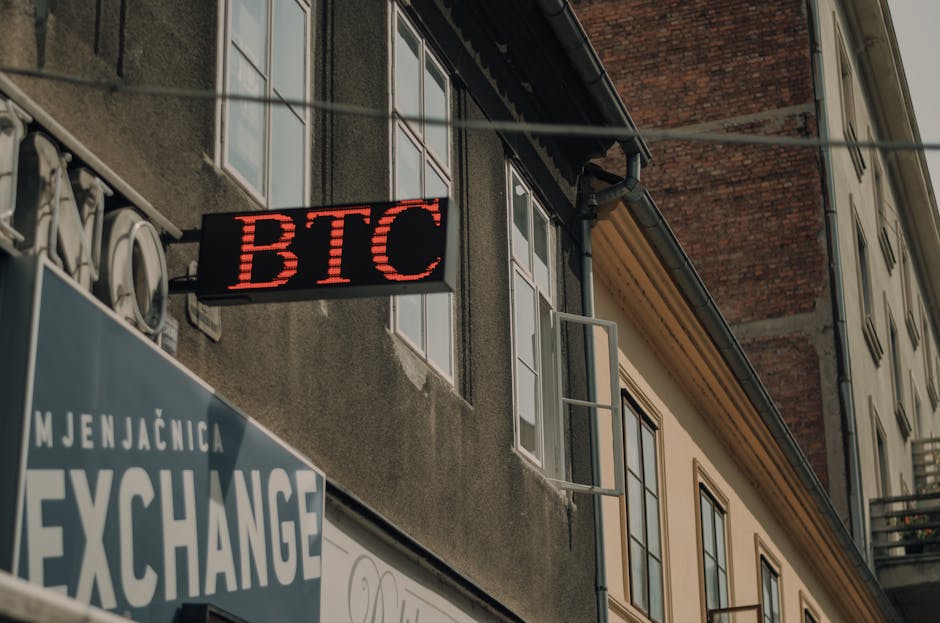
The landscape of institutional finance is undergoing a structural transformation as traditional banking giants and digital asset native firms converge on a unified regulatory and operational framework. While the broader market monitors the S&P 500’s ascent toward the 7,400 level crypto.news, a more profound shift is occurring in the plumbing of the global financial system. Major institutions are no longer merely observing digital assets from the sidelines; they are now actively pursuing federal charters and regulatory frameworks to establish robust custody solutions for digital assets bitcoinist.com cryptopolitan.com. This evolution is driven by a combination of legislative momentum in the United States, such as the CLARITY Act, and a competitive race among brokerages like Morgan Stanley to capture a burgeoning retail and institutional appetite for regulated crypto access crypto.news ambcrypto.com.
The Institutional Pivot: Federal Charters and Custody
The integration of digital assets into institutional frameworks has moved beyond speculative trading toward functional utility. A significant indicator of this shift is the increasing number of firms seeking federal oversight to provide secure custody solutions. Payward, the parent company of the Kraken exchange, recently filed an application with the Office of the Comptroller of the Currency (OCC) for a National Trust Company charter bitcoinist.com. If approved, this would establish the Payward National Trust Company (PNTC), allowing the firm to offer federally regulated custody services to both institutional and individual clients bitcoinist.com.
This move by Kraken is part of a broader "charter rush" within the U.S. financial sector. More than a dozen cryptocurrency and fintech companies, including industry leaders like Coinbase, Ripple, Circle, and BitGo, have either applied for or secured conditional national trust bank charters from the OCC cryptopolitan.com. Even traditional powerhouses like Morgan Stanley and Fidelity Digital Assets are pursuing these charters to deepen their direct crypto custody and staking capabilities crypto.news cryptopolitan.com.
The demand for these charters reflects a fundamental requirement for institutional participation: the need for a "qualified custodian" that operates under federal supervision bitcoinist.com. As institutions look to move digital assets onto their balance sheets or use them as collateral, the security and regulatory standing of the custodian become paramount. This is particularly relevant as institutional decision-makers signal their intentions; early 2026 surveys indicate that 73% of institutional leaders plan to increase their crypto allocations within the year ambcrypto.com.
The Divergence: Bitcoin’s Dominance vs. Ethereum’s Structural Shift
While institutional interest in the asset class is rising, capital is not flowing uniformly across all digital assets. Recent market data reveals a stark divergence in how institutions are positioning themselves in Bitcoin versus Ethereum. Since early February 2026, Bitcoin fund holdings—which include ETFs and trusts—increased from 1.278 million BTC to 1.370 million BTC bitcoinist.com. This represents a net accumulation of over 92,000 BTC, or a 7.2% growth in institutional exposure bitcoinist.com.
In contrast, Ethereum fund holdings have trended downward during the same period, falling from 5.93 million ETH to 5.80 million ETH, a reduction of approximately 127,000 ETH bitcoinist.com. Analysts suggest this divergence is structural; Bitcoin has solidified its role as a "macro reserve asset" with the deepest liquidity and most developed ETF infrastructure bitcoinist.com. Ethereum, meanwhile, is often viewed as a higher-risk allocation that institutions may reduce during periods of macro uncertainty bitcoinist.com.
However, Ethereum’s value proposition is increasingly being defined by its utility as an infrastructure layer rather than just a speculative asset. The market capitalization of tokenized U.S. Treasuries on the Ethereum network has reached a record $8 billion ambcrypto.com. This growth highlights a massive demand for real-world yield exposure on-chain. Currently, tokenized Treasury funds account for roughly 46% of the $30.5 billion tokenized funds sector ambcrypto.com. BlackRock’s BUIDL fund, for instance, has deployed more than 56% of its market cap on Ethereum, signaling the network's dominance in the Real World Asset (RWA) space ambcrypto.com.
Regulatory Catalysts: The CLARITY Act and the GENIUS Act
The acceleration of institutional adoption is inextricably linked to the evolving regulatory landscape in the United States. Richard Harrison of MoonPay noted that this clarity has allowed firms to enter the market at a faster pace crypto.news.
Attention is now focused on the CLARITY Act, which is scheduled for a Senate Banking Committee markup on May 14, 2026 ambcrypto.com. The bill has already seen bipartisan support, passing the House with a 294-134 vote ambcrypto.com. Public sentiment also appears supportive, with HarrisX polling showing 52% of respondents across party lines favor the act ambcrypto.com.
Despite this momentum, significant hurdles remain. Major crypto exchanges, including Coinbase, Kraken, and Gemini, have lobbied to remove a provision in the CLARITY Act that would require exchanges to list only assets "not readily susceptible to manipulation" bitcoinist.com. The exchanges argue that this standard, borrowed from traditional commodity markets, could unfairly restrict the listing of smaller, lower-liquidity tokens bitcoinist.com. Furthermore, five major banking trade groups recently rejected compromise language regarding stablecoins, highlighting the ongoing friction between traditional banking interests and the digital asset industry crypto.news.
The Brokerage War: Morgan Stanley vs. The Field
As regulation clarifies, the competitive battle for retail and institutional crypto users is intensifying. Morgan Stanley recently launched crypto trading on its E*Trade platform with a flat 0.5% fee crypto.news. This pricing strategy directly undercuts competitors like Schwab (75 basis points) and Fidelity (approximately 1%) crypto.news. The pilot program, which includes Bitcoin, Ether, and Solana, is set to reach 8.6 million users crypto.news.
Morgan Stanley’s entry is significant due to its massive distribution network; the bank’s 16,000 financial advisors oversee $9.3 trillion in client assets crypto.news. This scale provides a formidable challenge to crypto-native platforms like Coinbase, which generated $3.32 billion in consumer transaction revenue in 2025 crypto.news. The bank is also developing a proprietary digital wallet for 2026, intended to hold crypto alongside tokenized stocks and real estate crypto.news.
Macro Dynamics: Digital Gold and Equity Correlations
The role of digital assets in a broader portfolio is being tested by geopolitical and macroeconomic events. During the 2026 conflict involving the U.S., Israel, and Iran, Bitcoin demonstrated resilience as a macro hedge. Since the escalation on February 28, 2026, Bitcoin has outperformed gold by approximately 36% crypto.news. While gold prices remained nearly unchanged during this period, Bitcoin rose about 7% to trade near $71,000 crypto.news.
JPMorgan analysts observed that during this period, Bitcoin saw inflows while precious metals faced significant outflows, including nearly $11 billion from gold ETFs crypto.news. This has strengthened the "digital gold" narrative among institutional investors who previously viewed Bitcoin solely as a risk asset.
However, Bitcoin’s correlation with traditional equities remains high. In early 2026, the 30-day correlation coefficient between BTC and the S&P 500 reached 0.74 crypto.news. Some data points even showed intraday correlations spiking as high as 0.96, suggesting that Bitcoin often behaves as a leveraged bet on the same risk-on/risk-off cycle as U.S. stocks crypto.news. With the S&P 500 hitting record highs near 7,400, the macro environment remains supportive for crypto, but it also leaves the asset class vulnerable to any sharp equity drawdowns crypto.news.
The Ripple Effect: XRP and Institutional Longevity
Institutional engagement is also deepening for assets like XRP. UBS, which manages over $5 trillion in assets, recently disclosed holdings in XRP through ETF vehicles and trust structures bitcoinist.com. The SEC filing revealed exposure of approximately $1.5 million across 197,369 shares of the Volatility Shares XRP ETF and 317 shares of the Grayscale XRP Trust bitcoinist.com.
This involvement is viewed by experts as the continuation of a decade-long relationship; UBS was one of the first major banks to join RippleNet in 2016 bitcoinist.com. Institutional demand for XRP is further evidenced by cumulative spot XRP ETF inflows reaching $1.32 billion, helping the asset maintain support levels around $1.40 bitcoinist.com.
Conclusion: A New Financial Architecture
The convergence of traditional banking and digital assets is no longer a future projection but a present reality. From Morgan Stanley integrating crypto into its service suites to the record-breaking $8 billion in tokenized Treasuries on Ethereum, the infrastructure of finance is being rebuilt on-chain crypto.news ambcrypto.com. While regulatory debates over the CLARITY Act and market divergences between Bitcoin and Ethereum continue, the overarching trend is one of deepening institutional integration. As federal trust charters become the new standard for custody and digital assets become viable collateral, the distinction between "crypto" and "finance" continues to blur, creating a more liquid, transparent, and accessible global market.