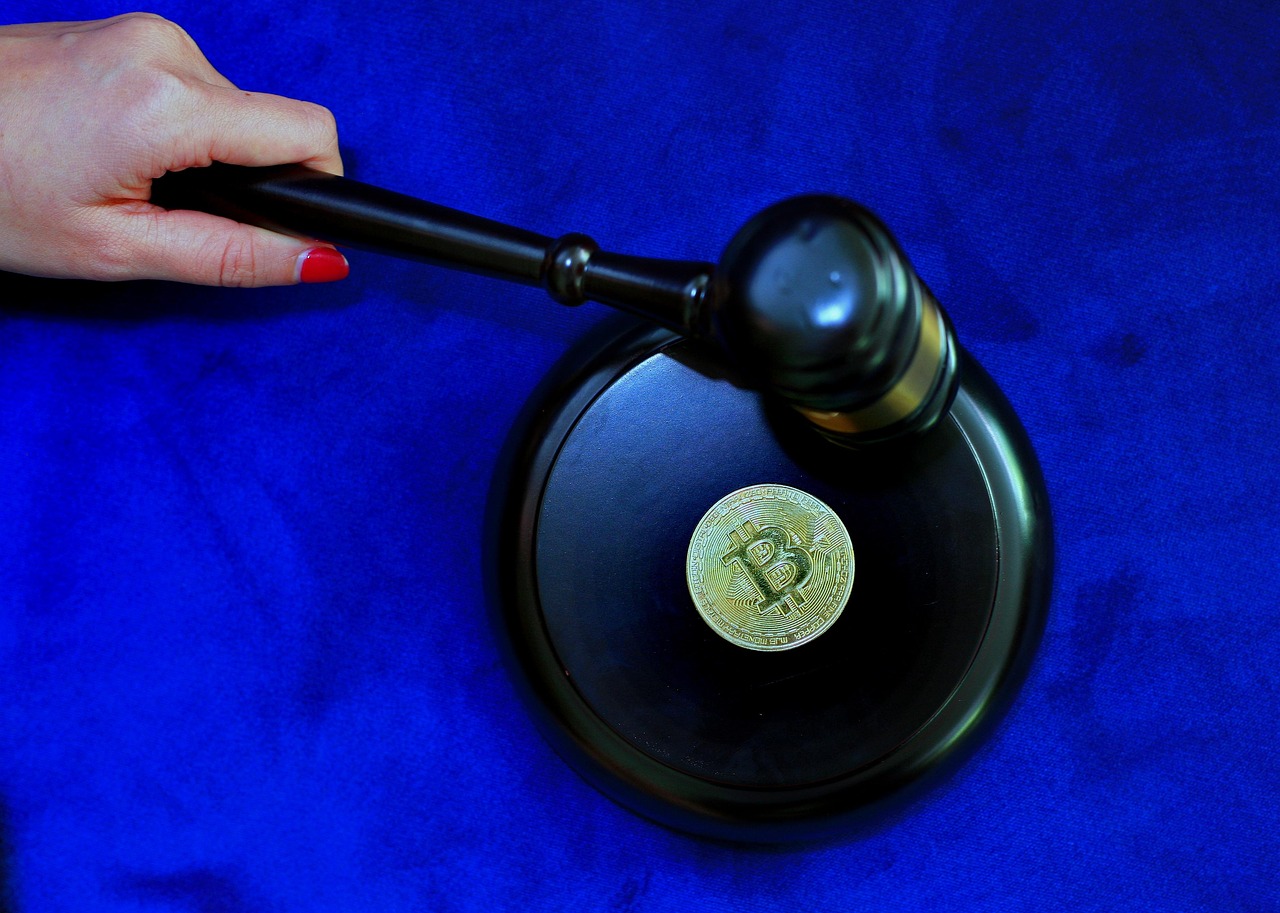
US Crypto Regulation Advances: A Deep Dive into the GENIUS Act and Stablecoin Stability
The United States cryptocurrency regulatory landscape is undergoing a fundamental transformation as lawmakers and regulators move from a period of reactive enforcement to establishing comprehensive statutory frameworks. This shift represents a critical juncture for the digital asset industry, with two major legislative initiatives—the GENIUS Act and the CLARITY Act—positioning to redefine how stablecoins and digital assets operate within the U.S. financial system.
The End of Regulatory Ambiguity
For years, the U.S. crypto market operated in what industry participants described as a state of "productive ambiguity" cryptodaily.co.uk. Innovation moved faster than regulation, and enforcement actions often substituted for formal rulemaking. That phase is ending as Congress moves to establish clear, codified rules for digital assets.
The transition from experimental market growth to regulated financial integration marks a significant departure from the previous approach. Rather than relying on case-by-case enforcement by agencies like the Securities and Exchange Commission (SEC), lawmakers are now crafting comprehensive legislation that addresses the unique characteristics of digital assets while providing the legal certainty that institutional investors and traditional financial institutions require.
The GENIUS Act: Stabilizing the Dollar's Digital Extension
The Guiding and Establishing National Innovation for U.S. Stablecoins (GENIUS) Act represents a foundational piece of legislation that treats dollar-pegged tokens not as speculative instruments, but as systemic financial infrastructure cryptodaily.co.uk. This approach recognizes the critical role that stablecoins have come to play in the digital economy.
Stablecoins have become the liquidity backbone of digital markets, serving multiple essential functions. They settle trades, collateralize decentralized finance (DeFi) protocols, and facilitate cross-border transfers with unprecedented speed and efficiency. Yet until recently, their regulatory status depended largely on state money transmitter licenses and informal interpretations, creating a patchwork of inconsistent requirements across jurisdictions.
The GENIUS Act replaces this fragmented approach with defined standards that establish a federal regime for payment stablecoins. The legislation introduces requirements for full reserve backing, asset quality standards, segregation of funds, redemption rights, and regulatory supervision. Under this framework, stablecoin issuers move closer to a narrow-bank model, subject to prudential oversight rather than operating in regulatory gray space.
This shift has profound implications for the stablecoin ecosystem. By establishing clear reserve requirements and operational standards, the GENIUS Act aims to enhance consumer protection while maintaining the efficiency and utility that have made stablecoins so valuable to the digital economy. The legislation recognizes that stablecoins are not merely crypto assets but represent a new form of digital money that requires specialized regulatory treatment.
The CLARITY Act: Defining Digital Assets in U.S. Financial Law
Complementing the GENIUS Act, the CLARITY Act attempts to define how digital assets fit within U.S. financial law cryptodaily.co.uk. This legislation addresses the fundamental question of how to categorize and regulate cryptocurrencies, tokens, and other digital assets that don't neatly fit into existing regulatory frameworks.
The CLARITY Act represents an effort to create a comprehensive taxonomy of digital assets, distinguishing between different types of tokens based on their characteristics and use cases. This approach recognizes that not all digital assets are created equal—some function more like commodities, others like securities, and still others like currencies or utility tokens.
By establishing clear definitions and regulatory categories, the CLARITY Act aims to eliminate the uncertainty that has plagued the industry. This clarity is essential for fostering innovation while ensuring appropriate investor protections and market integrity. The legislation would provide a roadmap for how different types of digital assets should be treated under existing financial laws and regulations.
SEC Chair Aligns with Trump Administration on Regulatory Clarity
The push for regulatory clarity extends beyond Congress to the highest levels of financial regulation. SEC Chair Paul Atkins has aligned with the Trump administration on the need for digital asset regulation clarity news.bitcoin.com. This alignment signals a coordinated effort between legislative and executive branches to establish a coherent regulatory framework for cryptocurrencies.
Under Atkins' leadership, the SEC has taken steps to provide more definitive guidance on how federal securities laws apply to crypto assets. The agency has submitted rule proposals to the White House for review, including measures related to the "Application of the Federal Securities Laws to Certain Types of Crypto Assets and Certain Transactions Involving Crypto Assets" bitcoinworld.co.in. This submission suggests that the SEC is working toward a comprehensive taxonomy of crypto assets, potentially codifying different treatment for various types of digital tokens.
The alignment between the SEC Chair and the administration represents a significant shift from the previous era of enforcement-driven regulation. Rather than relying primarily on enforcement actions to shape industry behavior, regulators are now working to establish clear rules that provide certainty for market participants while maintaining appropriate oversight.
International Developments: Pakistan and Kazakhstan Embrace Crypto
The U.S. is not alone in its efforts to establish regulatory frameworks for digital assets. Pakistan has passed the Virtual Assets Act of 2026, which legally formalizes oversight over the country's crypto industry and sanctions compliance and anti-money laundering regulations cointelegraph.com. The bill establishes the Pakistan Virtual Assets Regulatory Authority (PVARA) to set and enforce anti-money laundering provisions and international sanctions compliance.
Pakistan's approach represents a significant reversal from previous regulatory stances. The government moved to regulate cryptocurrencies as legal tender in November 2024, reversing long-standing pushback from regulators who had previously stated that crypto would never be legalized or integrated into the financial system. Since that time, Pakistan has announced a Bitcoin strategic reserve and dedicated 2,000 megawatts of electricity for mining and AI data centers.
Kazakhstan is also moving forward with crypto integration, with its central bank earmarking $350 million for investments in crypto assets decrypt.co. The initiative, derived from the Central Asian country's gold and foreign exchange reserves, marks an effort to diversify away from traditional stores of value. The investments will span "shares of high-tech companies related to cryptocurrencies and digital financial assets, index funds, and other instruments that exhibit similar dynamics to crypto assets," suggesting a diversified approach to crypto exposure.
Bitcoin as a Medium of Exchange: The Tax Challenge
While regulatory frameworks for stablecoins and crypto assets advance, another critical issue remains unresolved: how to treat Bitcoin as a medium of exchange without triggering capital gains tax. Senator Cynthia Lummis has highlighted this challenge, noting that U.S. lawmakers are actively exploring how Bitcoin can be used for everyday payments without automatically triggering capital gains tax bitcoinist.com.
Lummis described discussions underway in both the House and Senate around a potential de minimis exemption, with the figure currently being considered landing "right around $300" bitcoinist.com. However, she emphasized that this threshold is only part of the broader tax problem. The bigger question is how Congress should distinguish between a disposal of Bitcoin as an investment asset and the use of Bitcoin as money.
The challenge reflects a fundamental tension in how Bitcoin is treated under current tax law. When used for payments, each transaction could potentially trigger a taxable event based on the difference between the cost basis and the fair market value at the time of the transaction. This creates a significant barrier to using Bitcoin as a true medium of exchange, as it would require tracking and reporting capital gains on even small transactions.
Lummis framed the issue as critical to treating Bitcoin as a true medium of exchange, noting that the goal is to allow Bitcoin to be used "the same way we use the US dollar" without the complexity and tax implications of investment asset treatment bitcoinist.com.
Market Developments: Infrastructure and Adoption
Beyond regulatory developments, significant infrastructure advancements are expanding the utility and adoption of digital assets. Tether, the issuer of the USDT stablecoin, has co-led a $7.5 million seed round in Utexo to enable native USDT settlement on Bitcoin and the Lightning Network benzinga.com. This investment aims to address the infrastructure gap for Bitcoin-native stablecoin settlement.
Utexo's technology allows USDT transactions to be settled directly on the Bitcoin network, including the first-ever availability of USDT over the Lightning Network. The system provides fixed fees revealed beforehand, with settlement costs paid in USDT. Transactions settle atomically and privately in under one second, anchored to Bitcoin's security model.
This development represents a significant step toward integrating stablecoins with Bitcoin's payment rails. By enabling USDT transactions over the Lightning Network, Utexo could facilitate faster, cheaper cross-border payments while maintaining the stability benefits of dollar-pegged stablecoins. The technology allows payment operators to route USDT settlement directly over Bitcoin-native rails without managing underlying technical trade-offs or changing custody and compliance workflows.
SEC Case Resolutions and Industry Relations
The regulatory landscape is also being shaped by high-profile case resolutions that may signal a new era of cooperation between regulators and industry participants. Justin Sun, the founder of the Tron blockchain, announced that the SEC has agreed to drop all claims against him, the Tron Foundation, and the BitTorrent Foundation after a $10 million settlement cryptopolitan.com cryptoslate.com.
The case against Sun had hung over one of crypto's best-known founders since 2023, when the SEC accused him of using fake trades to manipulate the price of a cryptocurrency created on his Tron platform. The settlement brings closure to these claims without imposing personal sanctions on Sun himself, and neither Sun nor the entities admitted any wrongdoing.
Sun's response to the resolution is particularly noteworthy. He reaffirmed his ongoing focus on building blockchain solutions and voiced willingness to collaborate with the SEC on developing practical guidelines for the industry cryptopolitan.com. This willingness to work with regulators suggests a potential shift toward more constructive engagement between industry leaders and regulatory authorities.
Market Volatility and ETF Developments
The cryptocurrency market continues to evolve, with Bitcoin volatility potentially set to increase as the SEC reviews market structure behind ETF leverage decrypt.co. On April 16, the SEC will host a public roundtable on listed options market structure, covering quote-driven competition, customer experience, and growth.
This regulatory review is significant because Bitcoin exposure is migrating into regulated, centrally cleared products just as the SEC is reconsidering how the machinery works. Small changes to spreads, routing, and quoting can alter leverage costs, and when leverage gets cheaper, volatility patterns change. The timing is particularly relevant as Bitcoin ETF options now sit inside the same infrastructure used by traditional equity derivatives.
Meanwhile, Bitcoin ETFs have shown mixed performance, with recent outflows followed by signs of stabilization blockonomi.com. After a sustained uptrend, Bitcoin has pulled back to under $70,000, dipping by 4.3% in the past 24 hours. However, longer-term flow trends are stabilizing, with the 14-day Bitcoin spot ETF netflow trend turning higher and the 30-day ETF position change stabilizing around 23,943 after improving from deeply negative territory.
Regulatory Enforcement: Dubai's Actions Against KuCoin
Regulatory enforcement actions continue to shape the industry landscape. Dubai's Virtual Assets Regulatory Authority (VARA) has issued a cease-and-desist order against KuCoin following discoveries of unauthorized operations directed at local users bitcoinist.com. The authority issued directives demanding immediate cessation of all services provided by entities associated with the exchange.
VARA pinpointed numerous corporate entities functioning under KuCoin's umbrella while soliciting business from emirate residents, including Phoenixfin Pte Ltd, MEK Global Limited, Peken Global Limited, and Kucoin Exchange EU GmbH. The authority concluded these organizations likely delivered crypto services absent mandatory regulatory clearance and potentially misled users regarding their compliance status.
This enforcement action underscores the importance of obtaining proper licensing and regulatory approval in different jurisdictions. As countries establish their own regulatory frameworks for digital assets, exchanges and other crypto businesses must navigate a complex landscape of varying requirements and compliance standards.
Market Sentiment and Whale Activity
Large-scale market movements continue to provide insights into institutional sentiment and strategic positioning. A massive transfer of 850 million USDT from the decentralized finance protocol Aave to the cryptocurrency exchange HTX captured immediate market attention . This transaction, valued at approximately $850 million, represents one of the largest single stablecoin movements observed in recent months.
Such large transfers often precede significant market activity, whether trading, over-the-counter deals, or providing liquidity. The movement from Aave, a leading decentralized lending and borrowing protocol, to HTX, a major centralized exchange, suggests a strategic decision to redeploy capital from DeFi protocols to more traditional exchange-based trading environments.
The Path Forward: Balancing Innovation and Regulation
The current trajectory of U.S. crypto regulation represents a delicate balancing act between fostering innovation and ensuring market integrity. The GENIUS Act and CLARITY Act, along with evolving SEC guidance, aim to provide the legal certainty that institutional investors and traditional financial institutions require while maintaining appropriate oversight and consumer protections.
This regulatory maturation comes at a critical time for the cryptocurrency industry. As digital assets move from the periphery of finance toward mainstream integration, clear rules of the road become essential for sustainable growth. The shift from reactive enforcement to proactive rulemaking reflects an understanding that crypto assets are not going away but will instead become an increasingly important part of the global financial system.
The international developments in Pakistan, Kazakhstan, and Dubai demonstrate that this regulatory evolution is happening globally, with different jurisdictions taking varied approaches based on their economic priorities and risk tolerance. The U.S. efforts to establish comprehensive frameworks may well influence regulatory approaches in other countries, given the significant role that U.S. financial markets play in the global economy.
As these regulatory frameworks take shape, the industry faces both challenges and opportunities. Clear rules will likely reduce some of the uncertainty that has characterized crypto markets, potentially attracting more institutional capital and fostering greater mainstream adoption. However, compliance with new regulatory requirements will also impose costs and operational changes on crypto businesses, potentially affecting the pace of innovation.
The resolution of high-profile cases like Justin Sun's, combined with the willingness of industry leaders to engage constructively with regulators, suggests a maturing relationship between the crypto industry and regulatory authorities. This evolution from adversarial to collaborative engagement may prove crucial for developing regulatory frameworks that protect consumers and ensure market integrity while allowing the innovation that has characterized the crypto space to continue.
The coming months and years will be critical as these legislative and regulatory initiatives move from proposal to implementation. The success of these efforts will depend not only on the substance of the rules themselves but also on how effectively they balance the sometimes competing goals of innovation, investor protection, and financial stability. As the U.S. moves toward a more comprehensive regulatory framework for digital assets, the industry and its participants must prepare for a new era of crypto regulation—one characterized by clarity, consistency, and compliance rather than ambiguity and enforcement actions.