Iran-Israel Conflict: Global Currency & Economic Ripple Effects
Escalating tensions between Iran and Israel, with US involvement, are destabilizing global markets, impacting oil prices, currencies, and safe-haven assets like Bitcoin and gold.
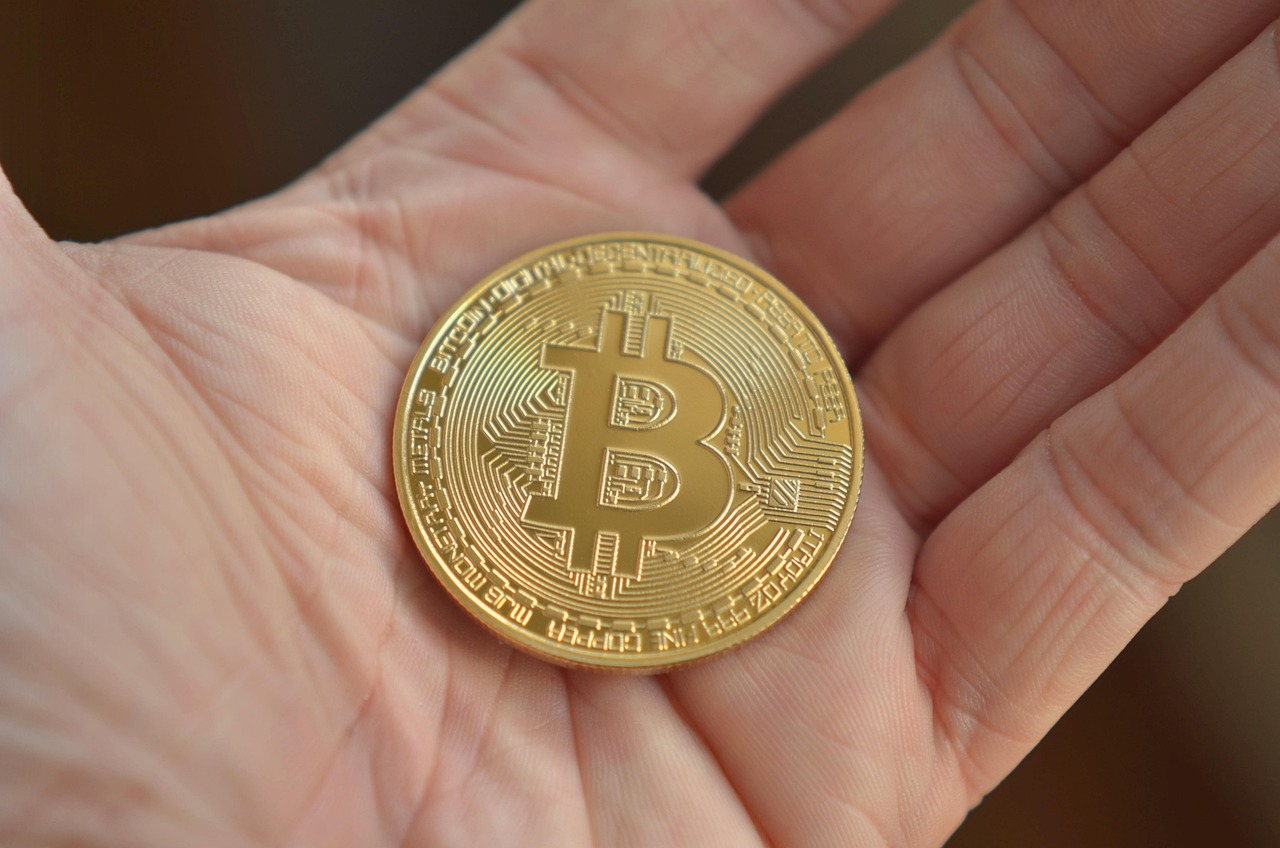
Photo: Pixabay / vjkombajn
The Shifting Sands of Global Currency Power: A Deep Dive into the Iran-Israel Conflict's Ripple Effects
The global financial landscape is experiencing unprecedented turbulence as the Iran-Israel conflict enters its fourth consecutive day, creating shockwaves that extend far beyond the Middle East. This escalating military confrontation, which began with coordinated attacks by the United States and Israeli forces against Iran on February 28, 2026, has already claimed numerous military lives and threatens to destabilize the global economy through its impact on oil supplies, currency markets, and safe-haven assets coingape.com. As President Donald Trump signals an extended military campaign with claims of "unlimited munition stockpiles," investors worldwide are scrambling to reassess their portfolios and hedge against potential economic fallout coingape.com.
The conflict's timing is particularly significant, occurring against a backdrop of already fragile global markets and shifting monetary policies. The immediate market reaction has been telling: Bitcoin, traditionally viewed as a digital safe haven, initially surged above $68,500 as tensions escalated, while gold—the traditional refuge in times of geopolitical uncertainty—experienced mixed signals with sentiment averaging 0.626 but a median of 0.800 coingape.comcoingape.com. These divergent responses highlight the complex interplay between traditional and digital assets in today's interconnected financial ecosystem.
The Geopolitical Flashpoint: Understanding the Iran-Israel Conflict
The current military confrontation represents one of the most significant escalations in Middle Eastern tensions in recent years. According to multiple sources, the conflict began with a coordinated attack by the United States and Israeli forces against Iran, allegedly resulting in the death of Supreme Leader Ali Khamenei coingape.com. Iran's response has been swift and multifaceted, including missile and drone strikes throughout the Middle East, purported attacks on Israeli soil, and claims of shutting down the Strait of Hormuz—a critical global oil shipping route that handles approximately 20% of the world's petroleum coingape.com.
The strategic implications of this conflict extend far beyond the immediate military objectives. The Strait of Hormuz, which Iran claims to have closed, represents a chokepoint through which roughly 17 million barrels of oil pass daily coingape.com. Any sustained disruption to this vital waterway could send oil prices skyrocketing, potentially triggering a global economic crisis reminiscent of the 1970s oil shocks. The conflict has already spilled over into neighboring countries, with reported attacks on U.S. embassies, strikes in Lebanon, Saudi Arabia, and Kuwait, creating a regional conflagration that threatens to draw in additional powers coingape.com.
President Trump's recent statements have added another layer of complexity to the situation. His claim of "virtually unlimited" U.S. munition stockpiles suggests a willingness to extend military operations for weeks or potentially months coingape.com. This stance, coupled with his earlier indication that operations could last four to five weeks or more, signals a protracted conflict that markets must price in coingape.com. The administration's position appears to be focused on preventing Iran from obtaining nuclear weapons, with Vice President JD Vance stating that "Iran can never be allowed to obtain a nuclear weapon" coingape.com.
Market Reactions: The Flight to Safety and Digital Alternatives
The immediate market response to the escalating conflict has been characterized by a classic "flight to safety" pattern, albeit with some modern twists. Bitcoin, which has increasingly been viewed as a digital alternative to gold, initially strengthened by over 3% as the conflict intensified, surging above $67,000 and temporarily reaching around $68,500 in active trading coingape.com. This price action reflects Bitcoin's growing role as a hedge against geopolitical uncertainty, particularly among younger investors and those skeptical of traditional financial systems.
However, the cryptocurrency's safe-haven status proved somewhat fleeting. As President Trump's statements about unlimited munitions stockpiles circulated, Bitcoin erased earlier gains and dropped 3% to trade at $67,946 coingape.com. This volatility underscores the ongoing debate about Bitcoin's reliability as a geopolitical hedge compared to traditional safe havens like gold. The 24-hour low for Bitcoin during this period fell below $67,000, representing a significant correction from its earlier highs coingape.com.
Gold, the traditional safe-haven asset, has shown more complex price action during this crisis. While sentiment data indicates generally positive views of gold (average sentiment of 0.626 with a median of 0.800), the actual price movement has been less dramatic than might be expected given the severity of the geopolitical situation bitcoinist.com. This muted response could reflect several factors, including the strength of the U.S. dollar, expectations of Federal Reserve policy responses, or simply the market's assessment that the conflict, while serious, may not yet warrant extreme safe-haven flows.
The divergence between Bitcoin and gold's price action during this crisis highlights the evolving nature of safe-haven assets in the digital age. While gold maintains its historical role as a store of value during uncertainty, Bitcoin's inclusion in institutional portfolios and its borderless nature make it an increasingly important component of crisis hedging strategies. The fact that both assets experienced volatility during this period suggests that investors are still determining the optimal allocation between traditional and digital safe havens.
Cryptocurrency Market Dynamics: Institutional Flows and Technical Analysis
Beyond the immediate price reactions to the geopolitical crisis, the cryptocurrency market has shown remarkable resilience and structural strength. U.S. spot Bitcoin ETFs recorded $458.2 million in inflows on March 2, extending last week's $787.3 million in net inflows and pushing cumulative net inflows to $55.3 billion cointelegraph.com. This institutional demand comes despite—or perhaps because of—the heightened geopolitical risks, suggesting that large investors view the current market conditions as a buying opportunity rather than a reason to flee.
The institutional flows into Bitcoin ETFs represent a significant shift in market dynamics. After four weeks of redemptions that had drained roughly $2.48 billion from the complex, the sudden reversal indicates that institutional investors may be positioning for a longer-term recovery rather than reacting to short-term volatility crypto.news. BlackRock's iShares Bitcoin Trust (IBIT) led the inflows with $264 million, followed by Fidelity's Wise Origin Bitcoin Fund (FBIT) with about $95 million and Bitwise's Bitcoin ETF (BITB) with $36 million cointelegraph.com. This concentration of flows among established providers suggests that institutional investors are prioritizing security and regulatory compliance over potential higher returns from smaller or less established products.
The technical picture for Bitcoin and the broader cryptocurrency market presents a complex but potentially bullish setup. Bitcoin dominance Bollinger Bands have compressed to their tightest levels in seven years, creating a setup that historically precedes sharp market moves blockonomi.com. This compression suggests that a significant breakout is imminent, though the direction remains uncertain. The last time such a squeeze occurred in 2020, it preceded a historic altseason where capital rotated from Bitcoin into smaller cryptocurrencies, generating massive gains across the sector blockonomi.com.
However, the current market structure differs from previous cycles in important ways. Altcoins remain fragile while Bitcoin dominance stays elevated across the board, suggesting that any breakout may initially favor Bitcoin over alternative cryptocurrencies blockonomi.com. Bitcoin itself is approaching oversold territory on higher timeframes, which could provide support for a bullish reversal if the geopolitical situation stabilizes or if institutional flows continue to strengthen blockonomi.com. The direction of the next breakout will likely define market structure for months ahead, with both bullish and bearish outcomes carrying serious consequences for altcoin investors.
Ethereum's Fundamentals and the Account Abstraction Revolution
While Bitcoin captures headlines during geopolitical crises, Ethereum continues to build fundamental strength through technological innovation. The upcoming Glamsterdam upgrade, anticipated during the first half of 2026, will deploy enshrined Proposer-Builder Separation (ePBS), a protocol that divides block proposers from builders by delegating construction responsibilities to a competitive marketplace blockonomi.com. This upgrade represents a significant step toward addressing Ethereum's centralization challenges while maintaining network efficiency.
Vitalik Buterin, Ethereum's co-founder, has been particularly active in outlining the network's development roadmap. In a comprehensive blog post, Buterin explored potential solutions to centralization threats within Ethereum's block construction mechanism, identifying this as a critical vulnerability for Ethereum's decentralization blockonomi.com. The primary concern centers on how a limited group of advanced operators frequently controls block construction, allowing them to strategically arrange transactions to maximize extractable value and create competitive advantages over smaller network participants blockonomi.com.
The Glamsterdam upgrade will incorporate FOCIL (Forward Obligatory Commitment to Inclusion Lists), which designates 16 randomly chosen participants who each specify transactions that must appear in subsequent blocks blockonomi.com. This mechanism ensures censorship resistance even under total builder capture, preventing exclusion even if a single hostile actor controls all block building blockonomi.com. A more expansive version, known as Big FOCIL, has also entered the conversation as a possible next step, under which FOCILers would collectively cover all transactions in a given block blockonomi.com.
Perhaps most significantly, Buterin has provided an update on plans for account abstraction, stating that it could go live within a year under the Hegota upgrade bitcoinist.com. Account abstraction enables smart contracts to initiate and validate transactions, allowing users to automate payments from their wallets while retaining control of their funds bitcoinist.com. This upgrade will enable users to pay gas fees in tokens other than ETH via the paymaster contract, dramatically improving user experience and potentially accelerating Ethereum's adoption for everyday transactions bitcoinist.com.
The progress on account abstraction represents years of development since early 2016, with the EIP-8141 proposal now solving every remaining problem that account abstraction is intended to solve bitcoinist.com. This feature could be transformative for Ethereum's usability, enabling use cases that were previously impractical due to the need to hold ETH for gas fees. As Buterin noted, users wanting to pay gas in RAI, an Ethereum-backed asset, can now use a paymaster contract—a special-purpose DEX that provides ETH in real time bitcoinist.com.
Institutional Accumulation and the "Macro Bottom" Thesis
Institutional investors appear to be positioning for a significant market recovery, with several prominent asset managers and analysts suggesting that the current price levels represent a "macro bottom" rather than a distribution top. Jan van Eck, CEO of the $100 billion asset manager VanEck, has confirmed that Bitcoin is forming a macro market bottom, signaling the end of the post-halving correction cryptonews.com. His thesis rests on a specific structural claim about the 4-Year Cycle, arguing that the $60,000-$70,000 zone isn't a distribution top but rather a re-accumulation floor cryptonews.com.
This institutional perspective represents a significant departure from retail trader sentiment, which often views the inability to break $73,000 as a failure cryptonews.com. Van Eck's analysis suggests that Bitcoin, often correlated with tech stocks, is behaving more like gold in its maturity phase, with the brutal drawdown of 2022 and the consolidation of 2023 establishing a Bitcoin Macro Bottom that remains intact despite recent volatility cryptonews.com. This framing changes the entire trade setup for 2025 and beyond, suggesting that current price levels represent a generational buying opportunity rather than a reason for caution.
The accumulation behavior of major corporate players reinforces this institutional thesis. Strategy (formerly MicroStrategy) has added another 3,015 BTC to its balance sheet, spending approximately $204.1 million at an average price of $67,700 per bitcoin themerkle.com. This latest acquisition pushes the company's total holdings to a staggering 720,737 BTC, further cementing its position as the largest corporate Bitcoin holder globally themerkle.com. The company has spent approximately $54.77 billion to build that position, resulting in an average purchase price of about $75,985 per BTC themerkle.com.
Strategy's approach remains unchanged: accumulate during volatility, maintain conviction, and expand holdings opportunistically themerkle.com. The firm's scale is historic, with few entities—corporate or sovereign—controlling Bitcoin reserves at this magnitude themerkle.com. Strategy continues to operate not merely as a software business with crypto exposure, but as a leveraged Bitcoin balance sheet vehicle, demonstrating institutional confidence in Bitcoin's long-term value proposition even during periods of geopolitical uncertainty.
The Regulatory Landscape and Legislative Challenges
While the cryptocurrency market shows fundamental strength and institutional accumulation, the regulatory environment remains a significant source of uncertainty. Cardano founder Charles Hoskinson has warned about the CLARITY Act, describing it as "horrific" and claiming that it makes every crypto asset a security by default coingape.com. Hoskinson argues that the bill creates attack vectors and bureaucratic red tape that enables the SEC to destroy all future American crypto projects coingape.com.
The Cardano founder's concerns extend beyond simple classification issues. He notes that the CLARITY Act lacks protections for DeFi, prediction markets, and even stablecoins, since the bill bans yield on stablecoin balances coingape.com. "This is not a good bill," Hoskinson declared, adding that the rulemaking could become weaponized against the crypto industry and that the bill doesn't address the core issues in the crypto space coingape.com. His warning comes despite support from other industry leaders, including Ripple CEO Brad Garlinghouse, who has argued that the lack of perfection should not hinder progress coingape.com.
The regulatory debate highlights the tension between innovation and investor protection in the cryptocurrency space. While some industry participants argue for pragmatic progress even with imperfect legislation, others like Hoskinson believe that rushing through flawed bills could do more harm than good coingape.com. The discussion around potential amendments to the CLARITY Act suggests that Congress recognizes some of these issues, but the fundamental question remains whether the current legislative approach adequately addresses the unique characteristics of blockchain technology and decentralized finance.
Market Structure and the Path Forward
The current market structure presents both opportunities and risks for investors navigating the intersection of geopolitical crisis and cryptocurrency adoption. The $1 billion that suddenly flowed back into crypto exchange-traded products after weeks of steady bleeding represents a significant shift in institutional sentiment cryptonews.com. This rotation occurred without hype cycles or wild headlines—just size moving in, suggesting that large investors are making calculated decisions based on fundamental analysis rather than emotional reactions to market volatility cryptonews.com.
The technical setup for Bitcoin and the broader cryptocurrency market remains highly sensitive to both macroeconomic factors and geopolitical developments. Bitcoin now trades near $69,655, up nearly 4% on the day and more than 5% on the week, following a sharp drawdown that left BTC roughly 45% below its prior $126,080 peak cryptonews.com. This recovery demonstrates the market's resilience but also highlights the significant distance still to travel before reaching previous all-time highs.
The macroeconomic context adds another layer of complexity to market analysis. Investors are watching U.S. unemployment data closely, with expectations around 4.3% cryptonews.com. Any surprise in these figures could quickly shift risk appetite again, potentially derailing the current recovery or accelerating it depending on whether the data comes in stronger or weaker than expected. The conversations in institutional circles have shifted from cutting exposure to timing entries, suggesting a fundamental change in market sentiment cryptonews.com.
The Ethereum ecosystem continues to develop independently of Bitcoin's price action, with fundamental improvements that could drive long-term value creation. The smart money accumulation strategy observed by Lookonchain, which flagged a whale purchase of 13,450 ETH building on BitMine's earlier acquisition of over 50,928 ETH, suggests that sophisticated investors are positioning for Ethereum's technological advantages rather than simply following Bitcoin's price movements ambcrypto.com. This divergence between Bitcoin's role as a store of value and Ethereum's function as a platform for decentralized applications could define the next phase of cryptocurrency market development.
Conclusion: Navigating Uncertainty in a Changing Financial Landscape
The intersection of the Iran-Israel conflict, cryptocurrency market dynamics, and institutional accumulation patterns creates a complex but potentially rewarding environment for investors who can navigate the uncertainty. The current geopolitical crisis has highlighted both the strengths and limitations of digital assets as safe havens, with Bitcoin showing initial resilience before succumbing to broader market pressures as the conflict's duration became apparent coingape.comcoingape.com.
The institutional flows into cryptocurrency products, particularly the $458 million daily surge in Bitcoin ETFs and the continued accumulation by corporate giants like Strategy, suggest that large investors view the current market conditions as a buying opportunity rather than a reason for panic crypto.newsthemerkle.com. This institutional confidence, combined with fundamental improvements in the Ethereum ecosystem and the potential for a "macro bottom" in Bitcoin prices, creates a bullish long-term outlook despite short-term volatility cryptonews.comthemerkle.com.
However, investors must remain cognizant of the significant risks that remain. The regulatory uncertainty surrounding legislation like the CLARITY Act could create headwinds for cryptocurrency adoption in major markets coingape.com. The geopolitical situation remains fluid, with the potential for further escalation that could trigger broader market sell-offs coingape.com. And the technical setup, while potentially bullish, carries the risk of a sharp breakdown if key support levels are breached blockonomi.com.
For investors navigating this environment, a balanced approach that combines exposure to both traditional safe havens like gold and digital alternatives like Bitcoin may provide the best risk-adjusted returns. The continued development of Ethereum's technological infrastructure, particularly the upcoming Glamsterdam upgrade and account abstraction features, suggests that the cryptocurrency ecosystem is maturing beyond simple price speculation toward genuine utility and value creation bitcoinist.comblockonomi.com. As the conflict in the Middle East continues to unfold and markets adjust to the new geopolitical reality, those who can maintain a long-term perspective while managing short-term risks may find significant opportunities in the shifting sands of global currency power.
Related

The Shifting Global Financial Order: How the Iran-Israel Conflict is Reshaping Currency Dynamics
Mar 3, 2026

US-Iran Conflict: Crypto Market Impact & Safe Haven Test
Mar 1, 2026

Iran-Israel Conflict & AUD Resilience
Mar 5, 2026
![[crypto] Iran strikes Gulf energy network as oil surges past $110 – crypto markets react](/uploads/thumbnails/crypto-iran-strikes-gulf-energy-network-as-oil-surges-past-110-crypto-markets.jpg)
[crypto] Iran strikes Gulf energy network as oil surges past $110 – crypto markets react
Mar 20, 2026

Oil Prices Surge Amid Middle East Conflict
Mar 2, 2026

Global Markets Volatile Amid US-Iran Tensions and Oil Fluctuations
May 29, 2026
Source Articles
This article is based on analysis of 15 source articles from our news database.
- 1Bitcoinist·Sebastian Villafuerte·bitcoinist.com·
- 2AMBCrypto·Ritika Gupta·ambcrypto.com·
- 3Bitcoinist·Scott Matherson·bitcoinist.com·
- 4Crypto news·Dorian Batycka·crypto.news·
- 5CryptoNews·Tim Hakki·cryptonews.com·
- 6CoinGape·Boluwatife Adeyemi·coingape.com·
- 7Bitcoin.com·Emmanuel Musa·news.bitcoin.com·
- 8CoinGape·Coingapestaff·coingape.com·
- 9Blockonomi·Brenda Mary·blockonomi.com·
- 10Cointelegraph·Cointelegraph by Helen Partz·cointelegraph.com·
- 11CoinGape·Varinder Singh·coingape.com·
- 12Blockonomi·Trader Edge·blockonomi.com·
- 13Blockonomi·Brenda Mary·blockonomi.com·
- 14The Merkle·Will Izuchukwu·themerkle.com·
- 15CryptoNews·Ahmed Balaha·cryptonews.com·