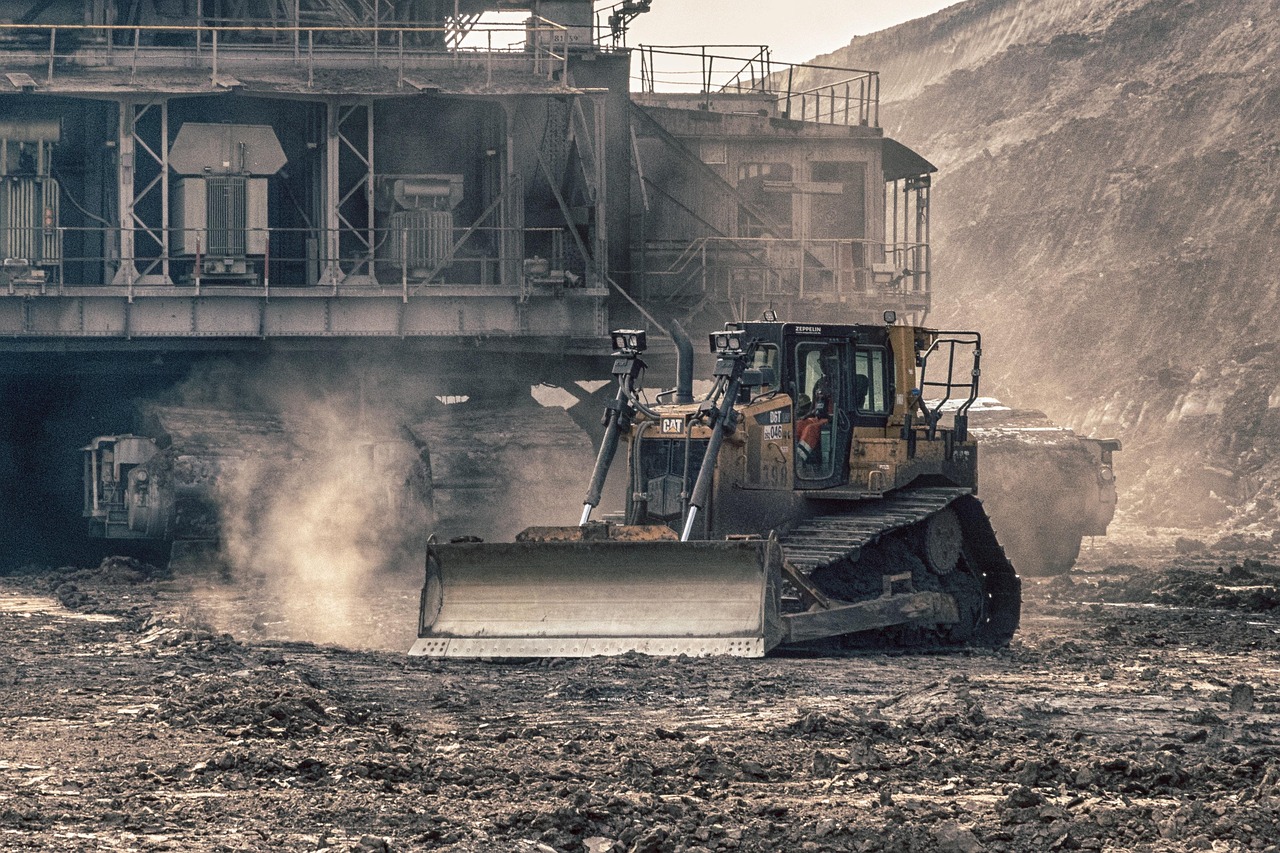
The Mining Sector's Resurgence: Investment, Expansion, and the Copper-Driven Future
The global mining sector is experiencing a remarkable renaissance, driven by surging demand for critical minerals, geopolitical tensions reshaping supply chains, and record-breaking investments in exploration and development. As the world transitions toward renewable energy and electric vehicles, copper has emerged as the linchpin of this transformation, while gold and silver continue to serve as safe-haven assets amid escalating global uncertainty. This comprehensive analysis examines the current state of the mining industry, investment trends, and the strategic importance of copper in powering the future.
Geopolitical Tensions Fuel Safe-Haven Demand
The mining sector's recent surge is inextricably linked to escalating geopolitical tensions, particularly in the Middle East. Coordinated military strikes by the United States and Israel on Iran, which resulted in the death of Supreme Leader Ayatollah Ali Khamenei, have sent shockwaves through global markets and triggered a flight to safe-haven assets gold.einnews.comgold.einnews.comgold.einnews.comgold.einnews.comgold.einnews.comgold.einnews.comgold.einnews.comgold.einnews.comgold.einnews.comgold.einnews.com.
Precious metals have responded dramatically to this geopolitical turmoil. Gold futures surged 4% in early March 2026, with prices climbing to near Rs 1.68 lakh per 10 grams in India and reaching over $5,400 per ounce in international markets gold.einnews.com. Silver followed suit, jumping 3.72% to Rs 2.93 lakh per kilogram on the Multi Commodity Exchange gold.einnews.com.
Analysts attribute this rally to investors seeking refuge from escalating regional instability. "Gold climbed above USD 5,400 per ounce, reaching an over one-month high as safe-haven demand intensified following joint strikes by the US and Israel on Iran over the weekend," noted Jigar Trivedi, Senior Research Analyst at IndusInd Securities gold.einnews.com.
The energy sector has also benefited from these tensions, with crude oil prices spiking approximately 13% to around $82 per barrel before retreating slightly gold.einnews.comgold.einnews.com. Consultancy Wood Mackenzie warned that prices could exceed $100 per barrel if tanker traffic through the Strait of Hormuz doesn't normalize quickly gold.einnews.com.
Copper: The Critical Mineral Powering the Energy Transition
While gold and silver capture headlines during geopolitical crises, copper remains the unsung hero of the global energy transition. The copper market has experienced a remarkable 41.58% price increase, with the latest price reaching $12,986.61 per metric ton [MARKET DATA]. This surge reflects growing demand from electric vehicles, renewable energy infrastructure, and data centers.
The copper market's strength is evident in recent investment activity. Sprott, the Canadian investment firm founded by billionaire Eric Sprott, has invested $17 million in American Eagle Gold for a 9.9% stake in the British Columbia-focused junior miner mining.com. This investment is particularly noteworthy because "it's rare for him to back copper stories," according to Anthony Moreau, CEO of American Eagle mining.com.
American Eagle's flagship NAK project in British Columbia's Babine copper district represents the type of high-potential copper development attracting significant investment. The company has arranged additional financing with strategic investors Teck Resources and South32, raising a total of C$34.54 million to advance exploration mining.com.
Government Support and Regulatory Reform
Government policies are playing a crucial role in the mining sector's resurgence. Ontario, Canada, has emerged as a global leader in mining investment attractiveness, rising from 15th to 2nd place worldwide in just one year gold.einnews.com. This dramatic improvement stems from regulatory reforms aimed at accelerating permitting processes and creating a more attractive investment environment.
Ontario's Minister of Energy and Mines, Stephen Lecce, emphasized the province's commitment to becoming "the world's reliable partner" in critical minerals supply gold.einnews.com. "With demand for critical minerals expected to double by 2030, the critical minerals race is on," Lecce stated, highlighting the strategic importance of jurisdictions that can provide "reliable, safe, and ethical" mineral supplies gold.einnews.com.
The Ontario government's reform agenda includes challenging the status quo and moving "with unprecedented speed to open mines faster," creating certainty for investors in permitting, partnerships, and long-term economic vision gold.einnews.com. This approach contrasts sharply with jurisdictions that maintain lengthy and uncertain approval processes.
Emerging Markets and Strategic Investments
The mining sector's global nature is evident in investment patterns across different regions. In Kazakhstan, QazMoly is pursuing up to $240 million in United States funding for its tungsten project, contingent on selling all output to US interests . This arrangement reflects growing concerns about supply chain security and the strategic importance of critical minerals.
Tungsten prices have surged fivefold over the past year as underinvestment and tightening Chinese supply create potential shortages . The US government considers tungsten strategically critical, particularly for defense applications where tungsten carbide's extreme hardness and density make it essential for machine parts, drill bits, and hard-facing materials.
Global demand for tungsten is expected to grow at an average annual rate of 8%, potentially creating a $10 billion industry by the mid-2030s . This growth trajectory mirrors broader trends in the critical minerals sector, where demand is outpacing supply and creating investment opportunities.
Market Volatility and Investment Opportunities
The mining sector's volatility presents both challenges and opportunities for investors. Precision Funds Management's executive directors, Dermot Woods and Andy Clayton, describe the current market as experiencing a "dislocation" that creates buying opportunities for investors with available capital gold.einnews.com.
While commodity prices reach record highs in several metals, macroeconomic news and earnings disappointments have driven short-term pullbacks in some stocks gold.einnews.com. This divergence creates opportunities to acquire quality assets at discounted prices. "In the last year, the Small Resources Index is up 91% and the Small Industrials Index hasn't moved," Woods noted, highlighting the momentum in the resources space gold.einnews.com.
The volatility in gold and silver markets has made some investors cautious, while industries with similar fundamental drivers to mining, such as industrials, have been overlooked by many market participants gold.einnews.com. This creates potential value in sectors that may benefit from the same macroeconomic trends driving mining demand.
Regional Market Reactions
Different regions are responding to the mining sector's resurgence in distinct ways. In Australia, the S&P/ASX 200 initially fell about 0.45% as traders processed weekend geopolitical developments, but energy and gold stocks soared gold.einnews.comgold.einnews.com. The energy sector jumped nearly 5%, with Woodside Energy Group surging roughly 5% and Santos jumping 6% gold.einnews.comgold.einnews.com.
Gold stocks also performed strongly on the ASX, with Newmont Corporation jumping about 6% and Northern Star Resources seeing significant gains gold.einnews.comgold.einnews.com. This pattern reflects the commodity-heavy nature of the Australian market and its sensitivity to global resource price movements.
In Egypt, financial markets opened under strain following the Iran conflict escalation, with the Egyptian pound weakening and gold prices surging gold.einnews.com. The price of Egypt's gold pound coin jumped by more than 5,000 pounds in a single day, underscoring heightened anxiety among households gold.einnews.com.
Long-Term Investment Outlook
Looking beyond immediate market reactions, the long-term investment outlook for mining remains robust. VanEck, a global asset management firm with over 50 years of gold investing experience, emphasizes that gold "remains essential in today's uncertain macroeconomic and geopolitical climate" mining.com.
The firm's analysis suggests that gold's role as a safe-haven asset will continue to drive demand, particularly given heightened global political and economic uncertainty mining.com. This perspective is supported by gold's 64% surge in 2025, driven by strong central bank buying, robust ETF inflows, and expectations of US monetary policy easing gold.einnews.com.
Major financial institutions maintain bullish long-term forecasts for gold. J.P. Morgan and Bank of America have reiterated that gold prices could climb toward the key $6,000 level, with J.P. Morgan forecasting sufficient demand from various sources to support this target gold.einnews.com.
Supply Chain Security and Strategic Minerals
The mining sector's resurgence is fundamentally tied to concerns about supply chain security. Governments worldwide are increasingly focused on ensuring reliable access to critical minerals, particularly those essential for defense, technology, and renewable energy applications.
This focus is driving investment in jurisdictions that can provide stable, ethical supplies of critical minerals. Ontario's rise in mining investment attractiveness reflects this trend, as does the US government's interest in financing tungsten projects in Kazakhstan with the condition that all output be sold to US interests gold.einnews.com.
The strategic importance of these minerals extends beyond immediate economic considerations. As nations seek to reduce dependence on potentially unreliable suppliers, particularly China, which dominates many critical mineral supply chains, investment in alternative sources becomes a matter of national security.
Technological Innovation and Mining Efficiency
While not explicitly detailed in the provided sources, the mining sector's resurgence is likely being supported by technological innovations that improve efficiency and reduce environmental impact. Modern mining operations increasingly employ advanced technologies including automation, artificial intelligence for exploration and processing optimization, and improved environmental monitoring systems.
These technological advances can help mining companies reduce costs, improve safety, and minimize environmental impact, making projects more economically viable and socially acceptable. As the sector continues to evolve, companies that effectively leverage these technologies may gain competitive advantages.
Environmental and Social Considerations
The mining sector's resurgence occurs against a backdrop of increasing environmental and social scrutiny. Modern mining operations must navigate complex regulatory environments and address concerns about environmental impact, water usage, and community relations.
Jurisdictions that can demonstrate strong environmental, social, and governance (ESG) credentials may have advantages in attracting investment. Ontario's emphasis on being a "reliable, safe, and ethical" partner reflects this reality, as does the growing importance of sustainable mining practices in project development and operation.
Market Data Analysis
The provided market data reveals several important trends. Copper sentiment shows a positive average of 0.293 with a median of 0.500, indicating generally favorable market sentiment toward the metal [MARKET DATA]. However, the 41.58% price increase represents an unusually large change that warrants careful verification against multiple sources.
The copper price of $12,986.61 per metric ton reflects strong demand fundamentals, though investors should be aware of potential volatility in commodity markets. The price movement could be influenced by various factors including supply disruptions, changes in demand forecasts, and broader economic conditions.
Gold and silver prices have shown significant volatility in response to geopolitical events, with both metals benefiting from safe-haven demand during periods of uncertainty. The sustained rally in precious metals suggests continued investor interest in these traditional stores of value.
Investment Strategies for the Mining Sector
For investors considering the mining sector, several strategies emerge from current market conditions. Direct investment in mining companies offers exposure to commodity price movements and potential operational improvements. However, this approach carries company-specific risks related to management, project execution, and geopolitical factors.
Exchange-traded funds (ETFs) focused on mining and precious metals provide diversified exposure to the sector while reducing individual company risk. These funds can offer liquidity and professional management while tracking broader sector performance.
Streaming and royalty companies represent another investment approach, providing exposure to commodity prices without direct operational risk. These companies typically have lower capital requirements and can benefit from rising commodity prices while maintaining more stable cash flows.
Future Outlook and Key Considerations
The mining sector's future appears bright, driven by several converging trends. The global transition to renewable energy and electric vehicles will continue to drive demand for copper and other critical minerals. Geopolitical tensions are likely to persist, supporting safe-haven demand for gold and silver. Government policies supporting domestic mineral production and supply chain security will create investment opportunities.
However, investors should remain aware of potential risks. Commodity price volatility can significantly impact mining company valuations. Regulatory changes, environmental concerns, and community opposition can affect project development timelines and costs. Technological disruption could alter demand patterns for certain minerals.
The sector's success will depend on companies' ability to navigate these challenges while capitalizing on growth opportunities. Those that can secure quality assets in stable jurisdictions, implement efficient operations, and maintain strong ESG practices are likely to outperform over the long term.
Conclusion
The mining sector is experiencing a remarkable resurgence driven by geopolitical tensions, the energy transition, and strategic investments in critical minerals. Copper has emerged as the linchpin of this transformation, with prices surging and investment activity accelerating. Gold and silver continue to serve as safe-haven assets amid global uncertainty, while emerging markets and government support create new opportunities.
Ontario's dramatic rise in mining investment attractiveness demonstrates how regulatory reform and strategic vision can transform a jurisdiction's competitiveness. Meanwhile, investments in projects like American Eagle's NAK copper development and QazMoly's tungsten initiative reflect the sector's global nature and the importance of supply chain security.
As the world continues to transition toward renewable energy and electric vehicles, demand for critical minerals will likely remain strong, supporting the mining sector's growth. Investors who understand these trends and can navigate the sector's complexities may find significant opportunities in this resurgent industry. The mining sector's future appears bright, but success will require careful attention to geopolitical developments, technological innovation, and evolving environmental and social expectations.