
The landscape of global finance has reached a definitive turning point as the U.S. Securities and Exchange Commission (SEC) has officially granted Nasdaq the authority to support trading in tokenized securities [7]. This landmark decision, following a rigorous seven-month assessment period that began in September 2025, paves the way for blockchain-based representations of traditional financial instruments—including stocks, bonds, and funds—to be traded on one of the world’s largest regulated exchanges [7]. As the wall between traditional Wall Street infrastructure and decentralized technology continues to erode, the market is witnessing a surge in institutional activity, highlighted by the filing of Evernorth Holdings to become the world’s largest publicly traded XRP treasury company on the Nasdaq [1], [3].
Nasdaq Secures SEC Approval To List Tokenized Securities, Including Blockchain Versions of Stocks and Bonds
The SEC’s approval of Nasdaq’s rule amendments represents a significant shift in regulatory posture toward distributed ledger technology (DLT). Tokenized securities are digital tokens recorded on a blockchain that represent ownership rights to traditional assets [7]. By moving these assets onto a ledger, the exchange aims to enhance transparency, speed up settlement times, and potentially lower costs for market participants.
According to reports, the SEC’s evaluation included extensive adjustments to ensure that these new digital representations comply with existing federal securities laws and maintain high standards of investor protection [7]. This regulatory clarity arrives at a time when the Trump administration is reportedly pushing for deeper integration of digital assets into the U.S. banking system, with officials like Comptroller of the Currency Jonathan Gould encouraging firms to pursue national banking charters [9].
Evernorth and the Rise of the XRP Treasury Model
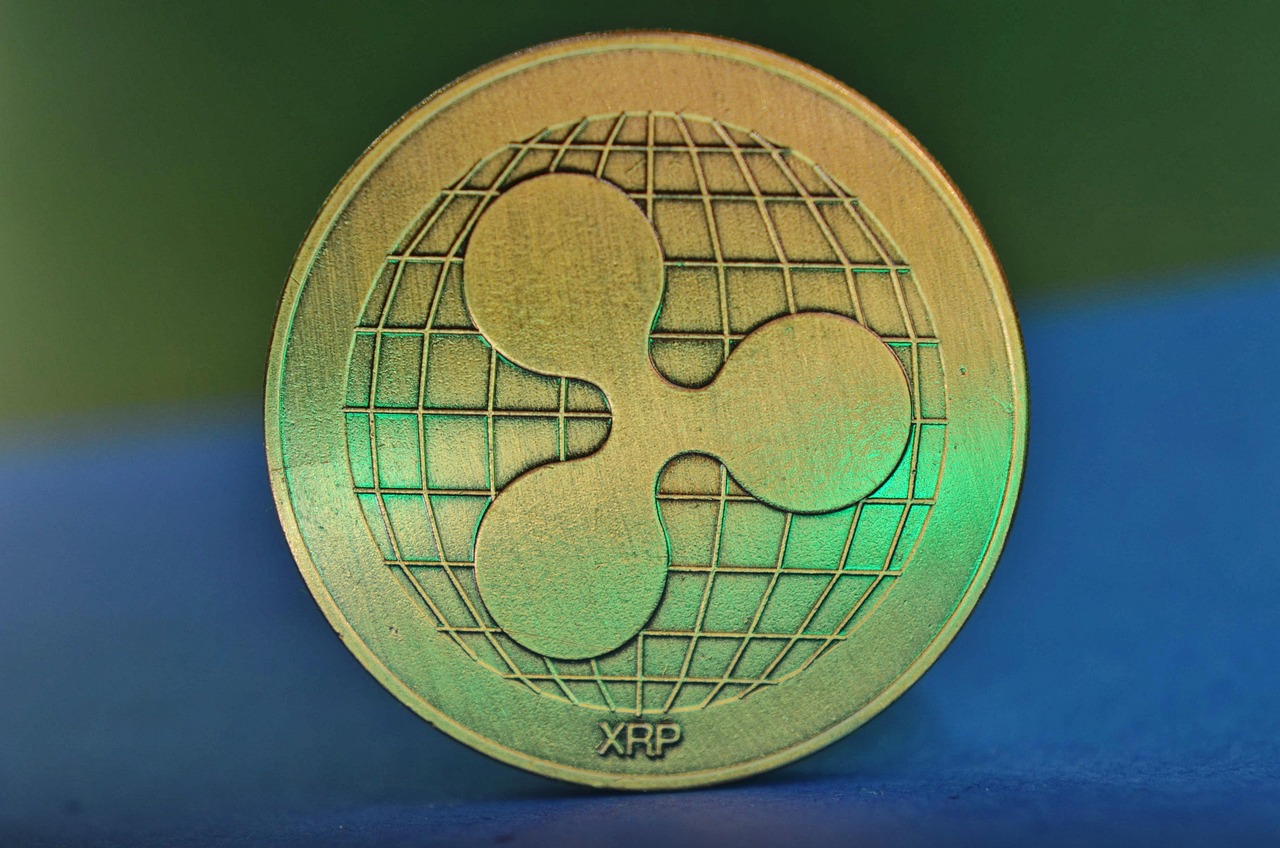
Coinciding with Nasdaq’s new capabilities, Evernorth Holdings has officially filed a Form S-4 registration statement with the SEC to go public on the Nasdaq under the ticker symbol XRPN [1], [3]. This move is being characterized as a watershed moment for the XRP ecosystem, as Evernorth seeks to become a "crypto-native" institutional powerhouse [3].
Strategic Structure and Leadership
Unlike a passive Exchange-Traded Fund (ETF) that merely tracks the price of an underlying asset, Evernorth is designed as an active, yield-generating corporate treasury vehicle [3]. Its model draws comparisons to MicroStrategy’s Bitcoin strategy but with a specific focus on the XRP Ledger’s decentralized finance (DeFi) capabilities [3]. Key pillars of the company’s operations include:
- Institutional Lending & DeFi: Utilizing XRP to generate yield through decentralized protocols [3].
- Liquidity Provisioning: Acting as a market maker to facilitate smoother transactions within the ecosystem [1].
- Validator Participation: Engaging directly with the network's consensus mechanism [3].
The company is led by CEO Asheesh Birla, a former senior executive at Ripple who played a critical role in scaling Ripple’s cross-border payments business [3]. Birla has stated that the firm aims to combine "public market discipline with XRP blockchain-based financial infrastructure" to modernize capital deployment [1].
Financials and Market Position
The path to listing involves a business combination with Armada Acquisition Corp. II (AACI), a Special Purpose Acquisition Company (SPAC) [1], [3]. The transaction is expected to generate over $1 billion in proceeds, which includes a $200 million investment from Japanese financial giant SBI Holdings [1].
As of March 2026, Evernorth has already begun aggressive accumulation of its primary reserve asset. On-chain data reveals the company holds 473.27 million XRP, valued at approximately $692.24 million at press time [1]. However, the firm’s holdings are currently down more than 19% from their average acquisition cost due to a broader market downturn that saw XRP fall below key support levels [1].
Institutional Adoption: The Global XRP Landscape
Evernorth is not alone in its strategic use of XRP as a reserve asset. Several other institutional players are integrating the digital asset into their corporate balance sheets and operational workflows:
- SBI Holdings: The Japanese giant maintains a massive strategic reserve to power its cross-border payment corridors [1].
- SBI ARUHI: Japan’s largest mortgage lender recently announced that shareholders listed in the registry by March 31, 2026, will be eligible to receive XRP as a shareholder benefit [10].
- Webus International: This Nasdaq-listed firm has committed to a $300 million XRP-denominated treasury to optimize global payment settlements [1].
- Trident Digital Tech: Another Nasdaq-listed entity utilizing XRP for institutional treasury purposes [1].
Furthermore, Ripple Labs is expanding its footprint in South America. On March 17, 2026, the company announced a full-stack institutional platform in Brazil, offering custody, prime brokerage, and stablecoin settlements [6]. Local partners in Brazil are already using this infrastructure to tokenize hundreds of millions in real-world assets (RWAs) on the XRP Ledger [6].
Market Performance and Technical Outlook
While the regulatory news is bullish, the immediate market reaction has been mixed across various assets. XRP recently found support near $1.53 after a period of downward pressure, though it remains in a phase of technical uncertainty [6]. Analysts note that the asset needs to break through immediate resistance levels to sustain a recovery trajectory [6].
In contrast, other major cryptocurrencies have shown significant volatility:
- Ethereum (ETH): Surged 24% in an eight-day period, though analysts warn of a potential pullback to the $2,150 level to reset momentum [5].
- Solana (SOL): Jumped 22% from its March lows, with analysts eyeing a path toward $115 amid strong institutional demand and ETF speculation [2].
- Shiba Inu (SHIB): Saw a 26% surge in open interest within 24 hours, indicating massive activity in the derivatives market despite a short-term price dip [6].
Regulatory Shift: The End of "Chokepoint 2.0"?
The broader context for Nasdaq’s approval is a shifting political climate in Washington. Comptroller of the Currency Jonathan Gould is reportedly moving to rescind Biden-era guidance that required banks to seek prior approval before engaging with digital assets [9]. This "permissible unless prohibited" stance is intended to prevent liquidity from fleeing to offshore jurisdictions like the EU, which is moving forward with its MiCA framework [9].
With an estimated 278 pro-crypto members in Congress following the 2024 elections, the political will to obstruct blockchain integration appears to be evaporating [9]. This environment is encouraging traditional banks to compete or collaborate with crypto-native firms, as the stablecoin market is projected to reach $3 trillion by 2030 [9].
Conclusion: A New Era for Capital Markets
The SEC’s approval for Nasdaq to trade tokenized securities, combined with the public debut of XRP-centric treasury firms like Evernorth, signals the beginning of a new era for capital markets. Investors now have a clear path toward liquid, transparent exposure to blockchain assets through traditional exchange infrastructure. While market volatility remains a constant factor, the structural integration of DLT into the world’s primary financial hubs suggests that the "tokenization of everything" is no longer a theoretical concept, but a regulated reality. As firms like Ripple and Evernorth bridge the gap between decentralized protocols and national banking charters, the focus shifts from mere speculation to the long-term utility of digital assets in global settlement and treasury management.

![[crypto] XRP Wins Major Regulatory Clarity As Commodity Status Emerges](/uploads/thumbnails/crypto-xrp-wins-major-regulatory-clarity-as-commodity-status-emerges.jpg)