Ethereum's AI Integration: A Deep Dive into Scalability and the Future of Decentralized Applications
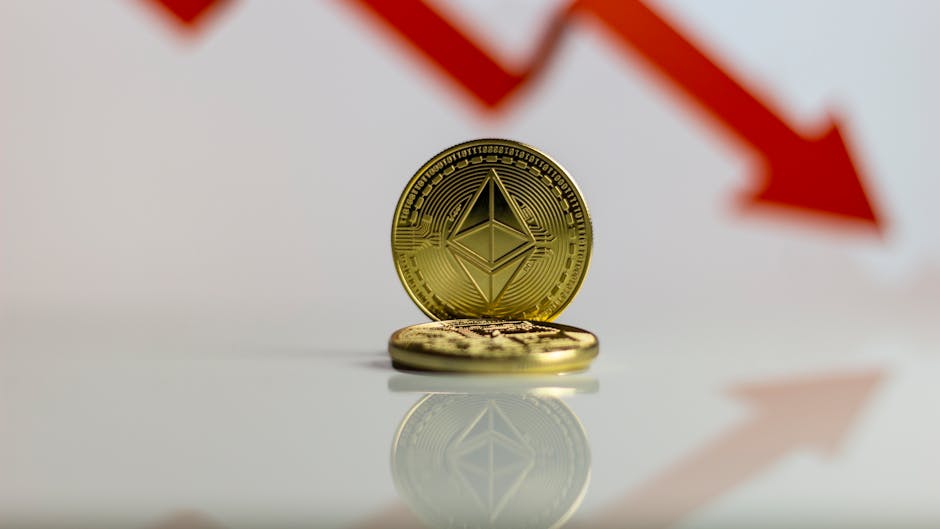
Photo: Pexels / Bastian Riccardi
Introduction: Ethereum's Crossroads - AI Integration and Scalability Challenges
The Ethereum ecosystem finds itself at a critical juncture in March 2026, balancing between unprecedented network usage and persistent price struggles. While Ethereum's real-world asset market has surpassed $15 billion and transaction volumes hit record highs, the native ETH token has experienced six consecutive monthly losses, marking its longest losing streak since 2018. This paradox—where network fundamentals strengthen while token price weakens—reflects broader market dynamics and technological transitions that are reshaping Ethereum's future.
At the heart of these transitions lies Ethereum's ambitious integration with artificial intelligence technologies and a comprehensive overhaul of its core infrastructure. From Vitalik Buterin's proposals to rebuild the execution layer fundamentals to the network's growing role in AI agent transactions, Ethereum is positioning itself as the backbone for the next generation of decentralized applications. This article explores these developments, their implications for scalability, and what they mean for Ethereum's long-term trajectory.
The AI Revolution: Ethereum's New Frontier
The convergence of artificial intelligence and blockchain technology represents one of the most significant developments in the crypto space during 2026. According to Grayscale's market analysis, tokens associated with artificial intelligence emerged as February's strongest performers, experiencing more modest declines compared to other market segments during the broader correction blockonomi.com. This outperformance stems from increasing interest in autonomous AI agents—sophisticated software systems capable of executing complex operations independently without human intervention.
Several projects are leading this AI-blockchain integration. OpenClaw, a productivity platform designed for local deployment, achieved unprecedented growth rates among open-source initiatives, demonstrating the market's appetite for AI-powered blockchain solutions blockonomi.com. Similarly, Kite AI specializes in facilitating AI agent transactions through stablecoin payments, while Pippin AI develops agents operating natively on blockchain infrastructure blockonomi.com. These platforms represent a new category of decentralized applications that leverage Ethereum's smart contract capabilities to create autonomous economic agents.
The implications extend beyond simple automation. As CB Insights research indicates, by 2026 AI agents will prioritize deployment, security enhancements, and scalability over mere creation, attracting significant investments in supporting technologies finbold.com. This maturation of the ecosystem suggests that Ethereum's role as a platform for AI agents will become increasingly central to its value proposition. The network's ability to provide verifiable, tamper-resistant execution environments makes it particularly attractive for AI applications that require trust and transparency.
AI Agents and DeFi: A Natural Synergy
The integration of AI agents with decentralized finance (DeFi) protocols represents a particularly promising development. These autonomous agents can execute complex financial strategies, manage portfolios, and interact with smart contracts without human intervention. The Bank of Japan's recent statements about blockchain's programmability and atomic transactions highlight how these capabilities could streamline complex processes such as delivery-versus-payment and cross-border transfers blockonomi.com.
Moreover, the legal framework surrounding AI agents on Ethereum is becoming clearer. The recent dismissal of the class action lawsuit against Uniswap Labs by a New York court reinforces the legal standing of smart contract developers and decentralized platforms cryptoslate.com. This precedent provides crucial protection for developers creating AI agents and other autonomous systems on Ethereum, as it establishes that creators cannot be held liable for third-party misuse of their protocols.
Vitalik Buterin's Execution Layer Overhaul
While AI integration represents Ethereum's expansion into new territories, fundamental changes to the network's core architecture are equally transformative. Vitalik Buterin has proposed a comprehensive strategy to overhaul Ethereum's execution layer, targeting the state tree and virtual machine—foundational elements that handle data storage and code execution cryptopotato.com.
Buterin's analysis reveals that the state tree and VM together account for more than 80% of the constraints affecting proof efficiency thedefiant.io. This bottleneck has become a critical limitation as Ethereum seeks to enable scalable client-side and zero-knowledge proving use cases. The proposed solution involves replacing Ethereum's current hexary Keccak-based Merkle Patricia Tree with a binary tree built on a more efficient hash function, such as Blake3 or a variant of Poseidon.
The Technical Transformation
The technical benefits of this transformation are substantial. According to Buterin, the change would shorten Merkle branches by roughly four times, reducing data bandwidth requirements and making client-side branch verification significantly cheaper thedefiant.io. This could reduce data costs for tools such as Helios and private information retrieval systems by 4x. Proving efficiency could also improve by 3-4 times from shorter branches alone.
Additional gains are expected if Ethereum shifts to hash functions such as BLAKE3, which is estimated to be three times more efficient than Keccak thedefiant.io. A Poseidon variant could offer up to 100 times improvement, though Buterin noted that further security work would be required for such a dramatic change. These improvements would make Ethereum more accessible to resource-constrained devices and enable new use cases that were previously impractical due to computational overhead.
The timing of these changes aligns with the upcoming Glamsterdam upgrade, anticipated during the first half of 2026. This upgrade will deploy enshrined Proposer-Builder Separation (ePBS), which divides block proposers from builders by delegating construction responsibilities to a competitive marketplace blockonomi.com. While Buterin endorses ePBS, he emphasizes that it represents an incomplete solution to Ethereum's centralization challenges.
Addressing Centralization: FOCIL and Beyond
Centralization remains one of Ethereum's most pressing challenges, particularly in block construction. The primary concern centers on how a limited group of advanced operators frequently controls block construction, allowing them to strategically arrange transactions to maximize extractable value blockonomi.com. This creates competitive advantages over smaller network participants and threatens the network's decentralization ethos.
To address these concerns, the Glamsterdam upgrade will incorporate FOCIL—Forward Obligatory Commitment to Inclusion Lists blockonomi.com. This mechanism designates 16 randomly chosen participants who each specify transactions that must appear in subsequent blocks. Those transactions must appear somewhere in the block or the block gets rejected outright, ensuring censorship resistance even under total builder capture.
Big FOCIL: The Next Evolution
Buterin has also proposed a more expansive version known as Big FOCIL, which has entered the conversation as a possible next step crowdfundinsider.com. Under that model, FOCILers would collectively cover all transactions in a given block, with each participant handling a subset tied to the sender address's first hex character by default. The system avoids excessive duplication through that address-based assignment structure, with only censored transactions risking appearing twice.
These mechanisms represent Ethereum's commitment to maintaining decentralization even as the network grows more complex. By distributing power among multiple participants and creating fail-safes against censorship, Ethereum aims to preserve its core values while scaling to meet global demand. The success of these initiatives will be crucial for Ethereum's long-term viability as a truly decentralized platform.
Scalability Solutions: Short-term and Long-term Approaches
Scalability remains Ethereum's most persistent challenge, and Buterin has outlined both short-term and long-term solutions to address this issue. In his February 27, 2026 statement, he categorized scaling efforts into two distinct buckets cryptopotato.com.
Short-term Scaling Solutions
Short-term scaling solutions are already in development and will be implemented in the Glamsterdam upgrade. These include block-level access lists, which allow blocks to be verified in parallel, significantly improving processing efficiency cryptopotato.com. This parallel verification capability is crucial for reducing the time and resources required to process transactions, making the network more responsive and capable of handling increased load.
Additionally, ePBS (enshrined Proposer-Builder Separation) brings multiple features beyond just separating proposers and builders cryptopotato.com. These features include improved transaction ordering, reduced centralization risks, and enhanced censorship resistance. Together, these short-term solutions represent incremental but important improvements to Ethereum's scalability profile.
Long-term Scaling Vision
Long-term scaling solutions involve more fundamental architectural changes. Buterin's proposal to rebuild the state tree and VM represents the most ambitious of these efforts cryptopotato.com. By addressing the core bottlenecks in Ethereum's architecture, these changes could enable order-of-magnitude improvements in scalability and efficiency.
Another long-term consideration is the potential for Ethereum smart accounts, which Buterin suggests could launch in the 2026 Hegota upgrade thedefiant.io. Smart accounts would enable more sophisticated account management and could facilitate new types of decentralized applications, further expanding Ethereum's utility and scalability.
Real-World Assets and Institutional Adoption
While technical improvements and AI integration capture much attention, Ethereum's growing role in the real-world asset (RWA) market represents a significant driver of adoption. According to recent data, Ethereum's RWA market has grown to $15 billion, accounting for 58% of the global RWA market crowdfundinsider.com. This expansion is largely driven by the increasing popularity of tokenized gold.
Tokenized gold offerings such as PAX Gold (PAXG) and Tether Gold (XAUT) have become particularly successful, offering investors the security of owning fully backed physical bullion while enjoying the liquidity and portability of digital assets crowdfundinsider.com. PAXG is regulated by the New York Department of Financial Services (NYDFS), with each token backed by one troy ounce of gold, while XAUT is backed by physical gold stored in Swiss vaults.
Institutional Support Amid Market Volatility
Despite Ethereum's price struggles, institutional support remains robust. Data from CryptoQuant shows that the supply of Ethereum on centralized exchanges has continued to shrink to about 16 million coins, a trend historically associated with bullish outlooks cryptopotato.com. This reduction in exchange supply suggests that investors are moving ETH to long-term storage rather than selling, indicating confidence in Ethereum's long-term value proposition.
Institutional players continue to accumulate despite market volatility. BitMine Immersion Technologies Inc. has maintained its substantial ETH holdings, while addresses associated with prominent figures like Chun Wang, founder of F2Pool, have been accumulating ETH cryptopotato.com. This institutional accumulation provides a foundation of support that could help stabilize Ethereum's price once market sentiment improves.
The Paradox of Record Usage and Price Decline
Perhaps the most striking aspect of Ethereum's current situation is the disconnect between network usage and token price. Ethereum is approaching its longest run of consecutive monthly losses since the 2018 crypto winter, with six straight monthly declines cutting its price by roughly 60% from its August 2025 record high news.bitcoin.com. Yet simultaneously, the network is posting record transaction activity and expanding its real-world asset market.
This paradox reflects several factors. First, the mechanisms that once supported a simple bullish thesis for ETH have become harder to model as the network's complexity increases news.bitcoin.com. Second, the broader crypto market dynamics, including Bitcoin's behavior as an index and ETH's role as a high-beta trade, create additional volatility news.bitcoin.com. Third, the market may be reevaluating Ethereum's value proposition amid strong network usage but uncertain token utility.
The contrast with 2018 is instructive. While the 2018 collapse occurred when the broader crypto market was coming off an initial coin offering boom and much of the sector was still trying to prove it had enduring product-market fit, Ethereum in 2026 is a much more mature network news.bitcoin.com. It has deeper institutional relevance, larger on-chain economic activity, and broader use across tokenization, stablecoins, and layer-2 networks.
Geopolitical Context and Market Sentiment
The broader geopolitical context also influences Ethereum's market dynamics. Escalating tensions in the Middle East, including attacks between the USA, Israel, and Iran, have created uncertainty that spreads across financial markets . Such geopolitical instability typically drives investors toward safe-haven assets, though the crypto market's reaction remains complex and sometimes counterintuitive.
Market sentiment data shows an average sentiment score of 0.135 with a median of 0.100 and a VADER score of 0.213 across 13,668 sources [MARKET DATA]. This relatively neutral to slightly positive sentiment suggests that while concerns exist, there remains underlying confidence in Ethereum's long-term prospects. The recent Grayscale analysis identifying crypto buying opportunities after the February market correction reflects this perspective blockonomi.com.
Looking forward, Ethereum's integration with AI technologies, its fundamental architectural improvements, and its growing role in real-world asset tokenization position it for potential growth once market conditions stabilize. The network's ability to support autonomous agents, provide scalable infrastructure, and facilitate institutional adoption suggests that current price struggles may represent a temporary disconnect rather than a fundamental weakness.
Conclusion: Ethereum's Path Forward
Ethereum stands at a fascinating crossroads in 2026, simultaneously experiencing record network usage, undergoing fundamental architectural transformations, and integrating with cutting-edge AI technologies while facing persistent price challenges. This complex situation reflects both the maturation of the ecosystem and the growing pains of a network expanding its capabilities and use cases.
The integration of AI agents represents a natural evolution for Ethereum, leveraging its smart contract capabilities to create autonomous economic systems. Meanwhile, Buterin's proposed execution layer overhaul addresses fundamental scalability and efficiency bottlenecks that have limited Ethereum's potential. Together, these developments suggest that Ethereum is positioning itself not just as a cryptocurrency platform but as the infrastructure for the next generation of decentralized applications.
While current market conditions present challenges, the underlying fundamentals—record network usage, institutional accumulation, real-world asset growth, and technological innovation—provide a strong foundation for future growth. As these various threads converge and market sentiment improves, Ethereum's current paradox of high usage but low price may resolve in favor of the network's long-term value proposition. The coming months and years will reveal whether these ambitious initiatives can deliver on their promise and establish Ethereum as the backbone of a decentralized, AI-integrated future.
Related
Ethereum and AI Integration: Building the Decentralized AI Infrastructure
Feb 14, 2026

Ethereum’s AI Pivot: Building the Settlement Layer for the Agentic Economy
May 2, 2026
Ethereum Gears Up for Scalability & Quantum Resistance with AI Boost
Mar 1, 2026
Ethereum Development Accelerates with AI & Core Protocol Overhaul
Mar 2, 2026
Ethereum's Decentralization Push: Glamsterdam Upgrade and the Future of Web3
Mar 4, 2026
Ethereum Scaling Roadmap Advances: AI, Account Abstraction, & 'Glamsterdam' Upgrade
Mar 1, 2026
Source Articles
This article is based on analysis of 13 source articles from our news database.
- 1Blockonomi·Trader Edge·blockonomi.com·
- 2Crypto news·Ann Maria Shibu·crypto.news·
- 3Blockonomi·Trader Edge·blockonomi.com·
- 4Blockonomi·Brenda Mary·blockonomi.com·
- 5CrowdFundInsider·Omar Faridi·crowdfundinsider.com·
- 6CryptoPotato·Chayanika Deka·cryptopotato.com·
- 7The Defiant·DefAInt·thedefiant.io·
- 8CryptoSlate·Oluwapelumi Adejumo·cryptoslate.com·
- 9Bitcoin.com·Jamie Redman·news.bitcoin.com·
- 10The Defiant·DefAInt·thedefiant.io·
- 11CrowdFundInsider·Omar Faridi·crowdfundinsider.com·
- 12Finbold·Steve Muchoki·finbold.com·
- 13CryptoPotato·Dimitar Dzhondzhorov·cryptopotato.com·