![[crypto] SEC Drops MetaMask Case Against ConsenSys With No Fine or Wrongdoing](/uploads/thumbnails/crypto-sec-drops-metamask-case-against-consensys-with-no-fine-or-wrongdoing.jpg)
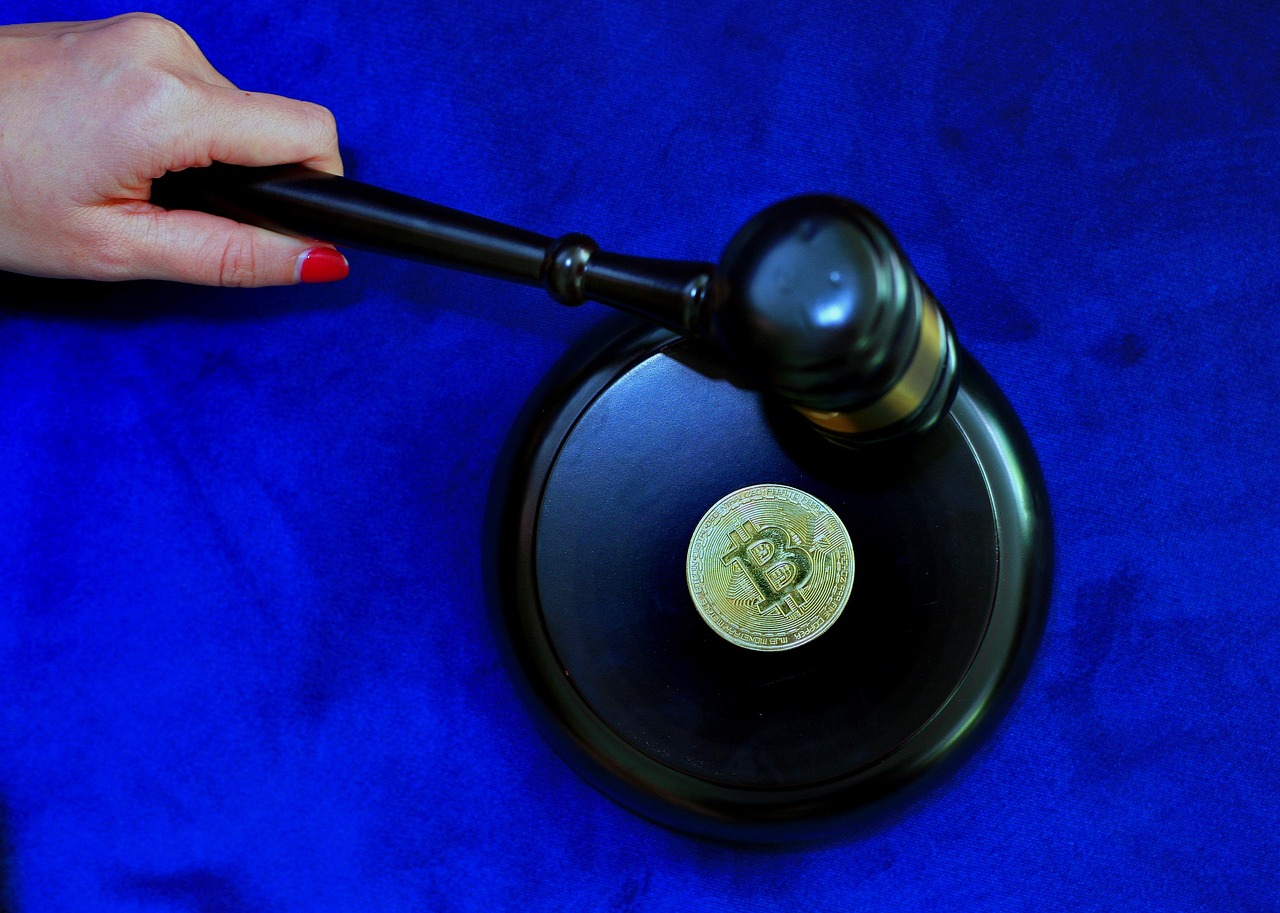
The digital asset market is navigating a complex interplay of regulatory shifts, political endorsements, and institutional maneuvers, with recent developments signaling a potentially clearer, albeit still evolving, landscape. A pivotal moment arrived with the Securities and Exchange Commission's (SEC) decision to close its enforcement investigation into ConsenSys regarding MetaMask Swaps and MetaMask Staking, without imposing any fine or requiring an admission of wrongdoing [1]. This outcome directly challenges the regulatory theory that non-custodial wallet interfaces constitute unregistered brokerage operations, offering a significant precedent for the decentralized finance (DeFi) sector and the broader Ethereum ecosystem [1].
\n\nRegulatory Clarity Emerges for Non-Custodial Wallets
\nThe SEC's dismissal of its case against ConsenSys marks a critical juncture for blockchain software developers and the future of non-custodial digital asset wallets. The investigation, initiated with a complaint in June 2024, had alleged that ConsenSys brokered crypto asset securities transactions since October 2020 through MetaMask's integrated services, collecting transaction-based compensation [1]. Furthermore, the agency's staking theory targeted MetaMask's routing integrations with Lido and Rocket Pool as unregistered securities offerings, a stance that, if upheld, could have compelled wallet developers to remove core functionalities from non-custodial interfaces [1].
\nConsenSys had proactively challenged the SEC's authority by filing its own lawsuit in April 2024, contesting the agency's jurisdiction over Ethereum-related software and its attempted classification of Ethereum as a security [1]. This legal maneuvering, coupled with the SEC's separate closure of its Ethereum 2.0 probe in June 2024 and a federal court's dismissal of ConsenSys's Texas suit in September 2024, effectively narrowed the dispute to the MetaMask case now resolved [1]. Joe Lubin, founder of ConsenSys, characterized the resolution as a positive step for blockchain software developers, confirming that the SEC would not impose a fine [1]. This clean exit is particularly significant because ConsenSys's core legal argument—that wallet software should not be regulated as a traditional broker simply for routing users to protocols—has effectively prevailed without requiring a potentially unpredictable court ruling [1].
\nMetaMask's central role as the dominant retail interface for accessing DeFi protocols, NFT markets, liquid staking, and on-chain transactions within the Ethereum stack underscores the profound implications of this regulatory outcome [1]. A ruling that swap routing or staking integrations within a non-custodial wallet necessitated broker-dealer registration would have created cascading challenges for all wallet developers offering similar functionalities [1]. The current resolution removes this structural threat to Ethereum's user-access layer, at least within the present enforcement cycle [1]. This development aligns with a broader pattern of SEC crypto enforcement pullbacks under post-Gensler leadership, which has included dropped or paused actions against entities such as Gemini, Uniswap Labs, Robinhood Crypto, and OpenSea [1]. The absence of a definitive court ruling means the underlying legal questions regarding broker classification remain open for future administrations or enforcement waves to potentially revisit [1].
\n\nEthereum's Institutional Accumulation and Staking Momentum
\nAmidst the evolving regulatory landscape, Ethereum (ETH) continues to attract significant institutional interest, exemplified by BitMine Immersion Technologies' aggressive accumulation strategy. BitMine (NYSE: BMNR), chaired by Fundstrat's Tom Lee, maintained its substantial Ethereum acquisition pace, adding 42,197 ETH to its corporate treasury over the past week [5] [6] [7] [8] [9] [10]. This latest purchase, valued at approximately $73 million to $74 million [6] [7] [8], has elevated BitMine's total Ethereum holdings to 5,742,237 ETH [5] [6] [7] [9] [10]. This figure represents roughly 4.8% of Ethereum's circulating supply, which stands at approximately 120.7 million ETH [5] [6] [7] [9] [10]. The company is now 95% of the way to its publicly stated objective of securing 5% total supply ownership, a target it anticipates reaching before the end of 2026 [6] [9] [10]. Achieving this 5% mark would require holding about 6.04 million ETH, assuming the supply remains near current levels [6].
\nBitMine's total crypto and other holdings now exceed $11.1 billion [7] [9] [10]. Beyond its dominant ETH position, valued at around $10 billion to $10.3 billion at an ETH price of $1,750 to $1,800 [6] [8] [9] [10], the company's diversified digital asset portfolio includes 206 Bitcoin tokens [5] [6] [7] [9] [10], $527 million in cash and marketable securities [5] [7] [9] [10], a $180 million equity position in Beast Industries [5] [7] [9] [10], and a $71 million stake in Eightco Holdings (NASDAQ: ORBS) [5] [7] [9] [10]. This comprehensive strategy positions BitMine as the largest corporate holder of Ethereum and the second-largest digital asset treasury company globally, behind Strategy (NASDAQ: MSTR) [6] [9] [10]. The company's stock, BMNR, has shown resilience, recovering from initial session weakness to post positive gains, with shares trading around $14.36 to $15.14 [8] [9]. Its inclusion in the Russell 1000 Large-cap Index on June 26, 2026, is expected to attract hundreds or thousands of new institutional investors and passive investment flows [6] [8] [9] [10].
\nA significant component of BitMine's strategy involves Ethereum staking. The company currently maintains 4,879,157 staked ETH [5] [7] [9] [10], which accounts for approximately 85% of its total Ethereum holdings [9] [10]. This operation generates a projected annualized staking income of approximately $235 million [5] [6] [9] [10], with estimates suggesting full-year rewards could reach $277 million if its entire ETH stash were staked at a 7-day yield of 2.68% [6] [10]. BitMine runs its staking operations through MAVAN (Made in America VAlidator Network), an institutional-grade platform initially built for its own treasury but with intentions to expand services to external institutional clients, custodians, and ecosystem partners [6] [9] [10]. Chairman Thomas Lee has publicly stated that revenue from staking activities sufficiently covers the company's dividend commitments associated with its recently introduced preferred equity offering (BMNP), which trades on the NYSE with a 9.5% annual dividend [5] [6] [10]. This contrasts with Strategy's recent decision to liquidate approximately $216 million in Bitcoin to fund dividend obligations [6] [8], highlighting different treasury management approaches within the crypto corporate sector.
\n\nThe CLARITY Act: A Race Against Time for Comprehensive Regulation
\nWhile the SEC's action on MetaMask offers specific relief, the broader push for comprehensive cryptocurrency regulation in the United States continues with the Digital Asset Market Clarity Act (CLARITY Act). This legislation has made significant progress, passing the House of Representatives in July 2025 by a vote of 294 to 134 and advancing through the Senate Banking Committee on May 14 by 15 to 9 [13] [14] [15]. It was subsequently placed on the Senate Legislative Calendar on June 1, making it technically eligible for floor action [13]. However, the bill faces a formidable challenge: securing a vote on the Senate floor before the August 7 summer recess deadline [13] [14] [15]. Should lawmakers adjourn without a vote, the legislation would likely be postponed until at least 2027 [14] [15].
\nThe CLARITY Act proposes a framework for dividing cryptocurrency regulatory responsibilities between two primary federal agencies [14] [15]. The Securities and Exchange Commission (SEC) would retain jurisdiction over investment contract assets, while the Commodity Futures Trading Commission (CFTC) would see an expansion of its authority over digital commodity spot market operations [14] [15]. Key provisions within the legislation also mandate that cryptocurrency platforms and intermediaries segregate customer assets from corporate operational funds, directly addressing vulnerabilities exposed during previous exchange failures [14] [15]. Additionally, the bill allocates $150 million specifically for investigating cryptocurrency fraud cases and extends Bank Secrecy Act compliance requirements to certain digital asset businesses [14] [15]. Advocates argue this framework would replace unpredictable enforcement actions with transparent, codified standards, while opponents contend it still provides insufficient safeguards for consumers and decentralized finance protocols [14] [15].
\nThe primary obstacle to the CLARITY Act's passage is not technical complexity but rather political negotiation, particularly concerning ethics provisions [13] [14] [15]. Democratic senators are demanding explicit language that would prohibit the president, vice president, cabinet members, and congressional representatives from financially benefiting from cryptocurrency industry activities [13] [14] [15]. This demand intensified following President Trump's 2025 financial disclosure, which revealed approximately $1.4 billion in crypto-linked income for the previous year, stemming from memecoin royalties, World Liberty Financial token sales, and other streams, alongside disclosed crypto holdings exceeding $100 million [13] [14] [15]. Senator Elizabeth Warren, a ranking Democrat on the Banking Committee, has advocated forcefully for robust ethics requirements, asserting that any legislation "must prevent the president" and other officials from cryptocurrency profiteering [13] [14] [15]. Senator Ruben Gallego, despite supporting the bill in committee, has stated he would do "everything I can" to crack down on what he termed corrupt dealings, indicating his committee vote was not a guarantee of floor support [13] [14] [15]. The White House's position, as framed by crypto adviser Patrick Witt, accepts rules applying "across the board" but rejects anything singling out one officeholder [13]. This standoff, coupled with a recent Supreme Court ruling allowing the president to fire independent-agency commissioners at will, complicates negotiations over a bipartisan commissioner slate, further eroding its negotiated value [13].
\n\nPolitical Endorsements and Shifting Sentiments
\nThe political landscape surrounding cryptocurrency has seen notable shifts, particularly with President Donald Trump's evolving stance. During a White House media briefing, Trump declared, "I've become a big crypto guy, I'm a fan," characterizing cryptocurrency as "very powerful" and acknowledging the industry as "huge" [3] [4]. He attributed his transformation into a cryptocurrency supporter to both political calculations and observing capital movement within the sector [4]. Trump admitted, "I got involved in it a little bit for politics," recognizing that "there are a lot of people that love crypto" [4]. This represents a dramatic reversal from his previous stance during his first presidential term, when he labeled Bitcoin "a scam" and publicly stated his opposition to cryptocurrency [4].
\nTrump's financial disclosure documents, published on June 30, revealed he collected more than $1.4 billion from cryptocurrency-related activities throughout 2025 [4] [13] [14] [15]. These earnings were spread across memecoin royalties, World Liberty Financial token sales, and other streams, with disclosed crypto holdings exceeding $100 million [13]. Trump and his sons hold co-founder positions at World Liberty Financial, a cryptocurrency venture [4]. During the briefing, Trump attempted to distance himself from these commercial interests, stating, "I let my kids do whatever the hell they do. I don't talk to them, ever, about it," and characterized his advocacy as motivated by national competitiveness rather than financial benefit [4]. The disclosure has intensified ongoing negotiations in Washington, particularly regarding ethics provisions in comprehensive federal cryptocurrency regulatory frameworks, which aim to restrict how government officials and their relatives can profit from digital currencies during their terms [4]. The cryptocurrency industry's emergence as a significant political contributor, with advocacy organizations investing approximately $170 million during the 2024 election cycle predominantly backing Republican candidates, further underscores the political stakes [4]. Trump also asserted that the Biden administration abandoned cryptocurrency company investigations after his pro-crypto declaration, noting that the SEC, under his current administration, has suspended numerous investigations and withdrawn enforcement proceedings against firms, several of which contributed to his campaign [4].
\n\nMarket Performance and Technical Outlook for Key Digital Assets
\nThe broader cryptocurrency market demonstrated overall strength over the holiday weekend, with aggregate market capitalization expanding by 1.04% to reach $2.19 trillion within a 24-hour period [3]. Major digital assets, including Bitcoin, Ethereum, XRP, and Solana, registered modest upward movements [3]. Bitcoin climbed back to highs over $63,000, up 5% on the week, after opening July at a 21-month low of $57,950 [11]. This rebound was partly attributed to a soft June jobs report, which eased rate-hike fears, and a reversal in spot Bitcoin ETF flows, which saw $223.5 million in net inflows on July 2 after bleeding over $4 billion in June [11]. Ethereum ETFs also saw positive inflows, adding approximately $15 million on July 1 and $29 million on July 2 [11].
\n\nEthereum (ETH) Technical Analysis
\nAt press time, Ethereum (ETH) is trading around $1,747 [5] [11], commanding a market capitalization near $211.25 billion alongside a 24-hour volume reaching $12.46 billion [5]. Despite a minor 1.10% pullback in recent trading, technical patterns suggest the asset's recovery trajectory from previous lows remains structurally sound [5]. Market analyst Ted (@TedPillows on X) observed that ETH has successfully reclaimed the February 2026 low price point, which he identifies as a pivotal technical threshold, suggesting sustained price action above this zone could catalyze an additional 8–10% upward movement [5].
\nOn July 6, market technician Ali Martinez identified an hourly timeframe TD Sequential buy configuration forming on Ethereum, which maintains validity only while ETH sustains price levels above $1,750 [5]. Successful defense of this threshold could establish potential targeting toward $1,800–$1,826, while a breakdown beneath $1,750 would negate the technical setup [5]. Ethereum is presently trading above the Bollinger Bands centerline positioned at $1,673.08, and the MACD indicator at -15.01 crossing above its signal line at -45.38 suggests strengthening bullish momentum characteristics [5]. Analyzing the daily timeframe reveals ETH trading beneath both its 50-day EMA at $1,807 and 100-day EMA at $1,970 [5]. Overhead resistance concentrates around $1,806–$1,807, with subsequent barriers identified at $1,909, $2,018, and $2,107 [5]. Downside support establishes at $1,741 and the 20-day EMA located at $1,714, with additional foundational support zones at $1,524, $1,404, and $1,155 [5]. The Relative Strength Index registers at 58, indicating developing positive momentum, while the Stochastic oscillator approaching 90 warns of potential short-term overbought conditions near current resistance territory [5].
\n\nDogecoin (DOGE) Technical Analysis and Sentiment
\nDogecoin (DOGE) currently hovers around $0.077 after maintaining stability throughout the weekend trading session, recording weekly gains exceeding 5% [3]. The meme cryptocurrency is positioned marginally above a critical support threshold that market participants continue monitoring [3]. Market analyst Ali Charts revealed on July 5 that network activity on Dogecoin’s blockchain surged to approximately 50,000 active addresses, indicating heightened user participation and network engagement [3]. Large-scale investors controlling portfolios exceeding 1 billion DOGE expanded their collective holdings to 73.85 billion tokens, suggesting positive market positioning despite a decline in whale-sized transactions to just 12 on Sunday [3]. Derivatives market intelligence from Coinglass showed DOGE trading volume surged 31% to $1.26 billion, while open interest experienced a marginal 0.32% decrease to $1.04 billion, indicating limited fresh leveraged positions entering the market [3].
\nTechnical indicators for DOGE present a balanced outlook, with the RSI positioned at 51.52, representing neutral momentum conditions [3]. The Chaikin Money Flow indicator registers a positive 0.08, demonstrating consistent but modest capital inflows into Dogecoin [3]. Analyst Jesse Peralta’s technical assessment indicates DOGE trading within an extended ascending channel pattern, with current pricing near the channel’s lower boundary [3]. The $0.075 to $0.076 range represents the primary support zone requiring defense [3]. Maintaining ground above $0.075 positions $0.081 as the immediate upside objective, with subsequent recovery milestones identified at $0.090, $0.10, and $0.12 [3]. A breach below $0.075 would activate the next support zone spanning $0.070 to $0.068 [3]. Market technician Celal Kucuker observed that DOGE successfully penetrated its extended downtrend line and is currently undergoing retesting, with successful validation of this former resistance as emerging support potentially establishing a pathway toward the $0.12 price target [3]. The monthly timeframe analysis from Ali Charts identifies a TD Sequential buy signal for DOGE near the $0.077 zone, which certain traders interpret as indicating price exhaustion following an extended weakness period [3]. DOGE presently trades at $0.07648, with the $0.075 level representing the critical threshold bulls must preserve to sustain upward momentum [3]. President Trump's declaration of becoming "a big crypto guy" during a press briefing on Monday, characterizing cryptocurrency as "very powerful" and "huge," contributed to elevated market sentiment for Dogecoin and the broader crypto sector [3] [4].
\n\nConclusion
\nThe recent dismissal of the SEC's enforcement investigation into ConsenSys over MetaMask Swaps and Staking represents a significant, positive regulatory signal for non-custodial wallets and the broader DeFi ecosystem, challenging the notion of wallet interfaces as unregistered brokerages [1]. This development, coupled with a broader pattern of SEC enforcement pullbacks, contributes to a cleaner operating environment for wallet developers and supports Ethereum's mainstreaming trajectory [1]. Concurrently, institutional players like BitMine Immersion Technologies are aggressively accumulating Ethereum, nearing a 5% ownership target of the circulating supply and generating substantial income from staking operations [5] [6] [7] [8] [9] [10]. However, the path to comprehensive regulatory clarity remains complex, with the CLARITY Act facing a tight Senate deadline and significant political hurdles, primarily centered on ethics provisions related to government officials' financial interests in cryptocurrency [13] [14] [15]. The evolving stance of political figures, notably President Trump's public embrace of crypto, further influences market sentiment and the legislative debate [3] [4]. As these regulatory, political, and institutional forces converge, the digital asset market continues to demonstrate resilience and growth, with key cryptocurrencies like Ethereum and Dogecoin exhibiting specific technical patterns and market dynamics that warrant close observation.
", "title": "SEC Drops MetaMask Case: A Regulatory Win for DeFi Amidst Shifting Crypto Landscape", "subtitle": "The SEC's dismissal of its ConsenSys investigation signals a clearer path for non-custodial wallets, while institutional Ethereum accumulation and political endorsements shape the broader market.", "seo_meta": { "description": "Analysis of SEC dropping MetaMask case, its impact on DeFi, BitMine's Ethereum strategy, CLARITY Act's legislative hurdles, and Trump's crypto stance.", "keywords": ["MetaMask", "SEC", "ConsenSys", "Ethereum", "CLARITY Act"] }, "image_search_terms": ["crypto wallet", "blockchain regulation", "Ethereum chart"] } ```
![[crypto] CBDC Prohibition Enters Force Without Presidential Signature in Constitutional Workaround](/uploads/thumbnails/crypto-cbdc-prohibition-enters-force.jpg)
![[crypto] Wall Street Rallies as Disappointing Jobs Data Reduces Fed Rate Hike Pressure](/uploads/thumbnails/crypto-wall-street-rallies-as-disappointing-jobs-data-reduces-fed-rate-hike-pressure.jpg)
![[crypto] Vitalik Buterin Outlines 'Lean Ethereum' Roadmap, a Three-to-Four-Year Protocol Overhaul](/uploads/thumbnails/crypto-vitalik-buterin-outlines-lean-ethereum-roadmap-a-three-to-four-year-protocol-overhaul.jpg)