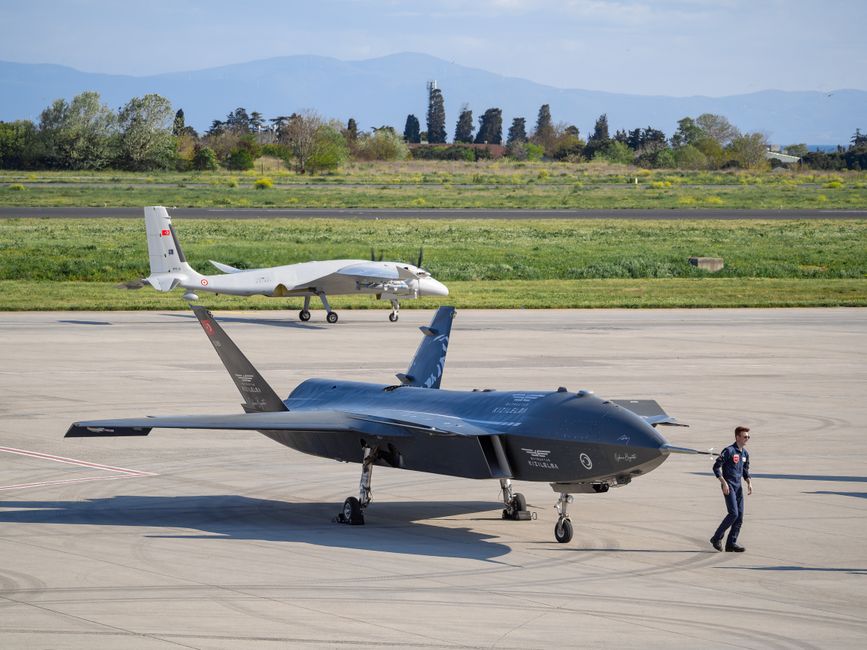
The final trading sessions of June 2026 have marked a significant pivot in market leadership, as the relentless momentum of artificial intelligence (AI) begins to find a powerful companion in the defense technology sector. While the technology-heavy Nasdaq Composite and the S&P 500 have capped a historic quarter driven by semiconductor strength [2] [14], the spotlight has shifted toward autonomous defense systems. AeroVironment (AVAV) has emerged as the primary catalyst for this shift, delivering a fiscal fourth-quarter performance that not only shattered analyst expectations but also signaled a broader revaluation of drone technology as a critical component of modern national security infrastructure [11] [39].
AeroVironment’s Q4 Performance: A Catalyst for Defense Momentum
AeroVironment’s fiscal fourth-quarter results provided a definitive validation of the growing demand for autonomous military systems. The company reported revenue of $641.6 million, representing a year-over-year increase of more than 100% [39] [52]. This figure significantly outpaced the Wall Street consensus estimate of approximately $557 million to $559 million [52] [72]. The earnings profile was equally robust, with adjusted earnings per share (EPS) reaching $1.84, surpassing the projected $1.47 by roughly 25% [39] [52].
The internal composition of this growth highlights the dominance of the company’s Autonomous Systems division, which generated $492 million in revenue—accounting for approximately three-quarters of the firm's total quarterly intake [39]. This surge in activity has translated into a record-breaking funded backlog, which expanded to $1.2 billion by the end of the quarter, a sharp increase from the $727 million reported in the same period the previous year [52]. Despite this momentum, management provided a conservative fiscal 2027 EPS outlook of $3.02 to $3.34, which sat below the $4.00 consensus target, suggesting a focus on long-term scaling over immediate margin expansion [52].
The market response was immediate and forceful, with AeroVironment shares skyrocketing more than 20% in pre-market trading following the announcement [52]. This "stellar" performance created a sympathetic lift across the defense sector, benefiting peers such as Kratos Defense, Vishay Precision, and Unusual Machines [39]. Analysts have noted that while AI remains the primary market engine, defense drones have become a distinct "non-AI momentum trade," offering investors a way to capture growth driven by tangible military demand rather than speculative software multiples [11].
The $55 Billion Drone Push: A Structural Shift in Military Spending
The rally in AeroVironment and its peers is underpinned by a fundamental shift in Pentagon procurement strategies. Modern combat zones have demonstrated that low-cost drones, ranging in price from $5,000 to $10,000, can effectively neutralize military assets worth billions of dollars [94]. In response, the Pentagon’s Defense Autonomous Warfare Group is projected to see its funding skyrocket from a modest $225 million to an estimated $55 billion by fiscal 2027 [94].
This massive capital injection is creating a divergence within the defense industry. While legacy contractors like Lockheed Martin and Northrop Grumman have seen their stock prices face pressure, combat-proven drone specialists are gaining market share [94]. Companies such as AeroVironment, Red Cat Holdings, and Swarmer are increasingly viewed as the primary beneficiaries of this "Cold War 2.0" trend [87] [94]. Applied Aerospace & Defense (AADX), which recently debuted on the public markets, has already secured a backlog exceeding $1 billion, with five out of six major banks initiating coverage with "Buy" ratings [87].
However, the sector is not without its legal and regulatory hurdles. AeroVironment investors are currently navigating a securities class action related to the termination of the $1.7 billion SCAR program and an $89 million goodwill restatement charge [57] [72]. Despite these headwinds, the average analyst price target for AVAV remains near $285.99, implying significant upside potential from current levels [72].
Semiconductor Dominance and the AI Infrastructure Bill
While defense stocks carve out a new niche, the semiconductor sector continues to serve as the bedrock of the 2026 market rally. Semiconductor equities have doubled in value over the first half of the year, powering the Nasdaq to consistent gains [14]. Micron Technology (MU) has been a standout performer, with its stock price surging 232% during the current quarter alone [33]. This rally has been fueled by the company’s ability to secure long-term supply agreements that lock in nearly 40% of its total revenue at favorable margins [33] [49].
Wall Street analysts have become increasingly aggressive in their valuations for the chip sector. Cantor Fitzgerald recently raised its price target for Micron from $1,500 to a staggering $2,000, citing an extended AI-fueled boom [49]. Similarly, Applied Materials (AMAT) reached new all-time highs near $718.96 following upgrades from KeyBanc and Cantor Fitzgerald, with targets now reaching as high as $850 [26] [67]. Lam Research (LRCX) also hit record peaks, with Bank of America setting a $480 price objective as the company forecasts advanced packaging revenues to grow by more than 50% in 2026 [65].
The scale of investment supporting these valuations is unprecedented. S&P 500 companies are expected to face a $730 billion capital expenditure bill for AI data centers, chips, and power infrastructure [10]. This massive spending is beginning to shift the market's focus from software providers to the hardware companies that solve the "AI bottleneck." Western Digital and Seagate have seen a resurgence in interest as the industry realizes that the exabytes of data required for AI training and inference require massive investments in storage infrastructure [47] [76].
Cloud Giants and the Race for AI Supremacy
The "Magnificent Seven" tech giants remain the primary drivers of this capital expenditure. Amazon (AMZN) has recently launched a $1 billion initiative to deploy AI engineering teams directly into customer organizations, a move designed to accelerate the adoption of its AWS cloud services [5]. This initiative mirrors strategies employed by OpenAI and Anthropic to shorten deployment cycles to approximately 45 days [5]. Amazon’s stock has also been bolstered by record-breaking Prime Day sales, which reached $26.4 billion, a 9.3% increase over the previous year [64].
Alphabet (GOOGL) has also maintained its market leadership, surging 5% following its historic entry into the Dow Jones Industrial Average, where it replaced Verizon Communications [43] [59]. This move makes Alphabet one of the index's heaviest-weighted components [59]. Despite this, the broader "Magnificent Seven" group has shed approximately 13% of its value from mid-May highs, as investors weigh the impact of massive AI investments on free cash flow generation [54]. Microsoft and Tesla have led this decline, with both stocks falling more than 32% from their respective 52-week peaks [54].
In the software space, Goldman Sachs has identified Twilio, Braze, and Klaviyo as the top picks to capitalize on the next wave of AI integration, assigning them aggressive price targets that imply upside potential ranging from 62% to 93% [19]. ServiceNow (NOW) has also seen a recovery, surging 8.5% as it unveiled deeper integrations with IBM’s watsonx infrastructure [88].
The New Space Economy: Consolidation and Index Inclusion
The aerospace sector's evolution extends beyond defense drones into the rapidly maturing space economy. Rocket Lab (RKLB) recently announced its largest-ever acquisition, an $8 billion deal for Iridium Communications [28] [93]. This transaction, expected to close by mid-2027, will merge Rocket Lab’s launch capabilities with Iridium’s established satellite constellation and spectrum licenses [28] [93]. Analysts have responded positively, with Roth Capital upgrading RKLB’s price target to $130 [28].
SpaceX (SPCX) continues to dominate headlines as it prepares for inclusion in the Nasdaq-100 index on July 7 [34] [91]. The company has also joined the Russell 1000 index, a move that triggered a 7.2% surge in its stock price [34]. Solidion Technology (STI) has even announced plans to acquire SpaceX shares for its strategic treasury holdings, describing the firm as a "generational asset" [91]. Meanwhile, AST SpaceMobile (ASTS) saw its shares jump 21% following a potential $1 billion collaboration with Japan’s Rakuten Group and the successful deployment of its BlueBird satellites [20].
However, the traditional telecommunications sector is facing disruption from these space-based initiatives. AT&T, Verizon, and T-Mobile all saw their shares decline following reports that SpaceX intends to launch a direct-to-consumer Starlink mobile offering [66] [80]. AT&T shares recently slumped to a 52-week low of $21.29 amid these concerns [66].
Corporate Restructuring and Strategic Capital Management
The current market environment is also characterized by significant corporate restructuring. Comcast (CMCSA) shocked the market with plans to spin off NBCUniversal and Sky into an independent public entity, a move that sent its shares up as much as 23% [90] [92]. The separation is designed as a tax-free distribution to shareholders and is expected to be completed within 12 months [90].
In the digital asset space, Strategy (MSTR) has unveiled a comprehensive "Digital Credit Capital Framework" to overhaul its capital structure [74] [86]. The plan includes a $2 billion share repurchase authorization and a systematic Bitcoin monetization program to support its reserves [86]. Despite a price target cut from TD Cowen due to a bearish Bitcoin outlook, the firm maintains a "Buy" rating with a projected 200% upside [32]. Benchmark Equity Research remains even more bullish, doubling down on a $570 price target for MSTR [25].
Other notable corporate moves include Honeywell Aerospace (HONA) launching as an independent entity on the Nasdaq following its separation from Honeywell [21] [68]. The new company, valued at approximately $72 billion, saw its shares jump 7% on its debut day before retreating slightly [21] [68]. In the gaming sector, GameStop (GME) continues to pursue an acquisition of eBay, forecasting adjusted EBITDA to exceed $600 million by fiscal 2026 [42] [92].
Market Outlook: RBC’s Bullish Forecast Amid Emerging Risks
Against this backdrop of sector-specific volatility, RBC Capital Markets has elevated its 12-month forecast for the S&P 500 from 7,900 to 8,150 [78]. This revision is driven by enhanced earnings expectations and a moderating inflation outlook, which RBC now projects at 3% [78]. The firm’s multi-model framework suggests that the market deserves to move higher, although it warns of potential 5% to 10% corrections triggered by profit-taking in semiconductor equities or geopolitical setbacks [78].
Investors are also keeping a close eye on the "Jobs Week Trap," where a hot nonfarm payrolls report could drive yields higher and squeeze the valuations of the year's biggest winners in the AI and storage sectors [61]. Regulatory concerns also loom, particularly in the media sector, where British authorities are considering blocking the proposed merger between Paramount and Warner Bros. Discovery due to media plurality issues [6].
In conclusion, the market at the end of June 2026 is defined by a broadening of momentum. While the AI infrastructure build-out remains a multi-hundred-billion-dollar tailwind for semiconductor giants like Micron and Applied Materials, AeroVironment’s stellar results have proven that the defense sector is ready to claim its share of investor capital. As the Pentagon shifts toward autonomous systems and the space economy consolidates, the interplay between technology and national security is likely to remain the dominant narrative for the remainder of the year.
![[crypto] Intrusion Inc. Announces Acquisition of VigilAigent to Create an AI-Native Cybersecurity Platform](/uploads/thumbnails/crypto-intrusion-inc-announces-acquisition-of-vigilaigent-to-create-an-ai-native-cybersecurity-platf.jpg)