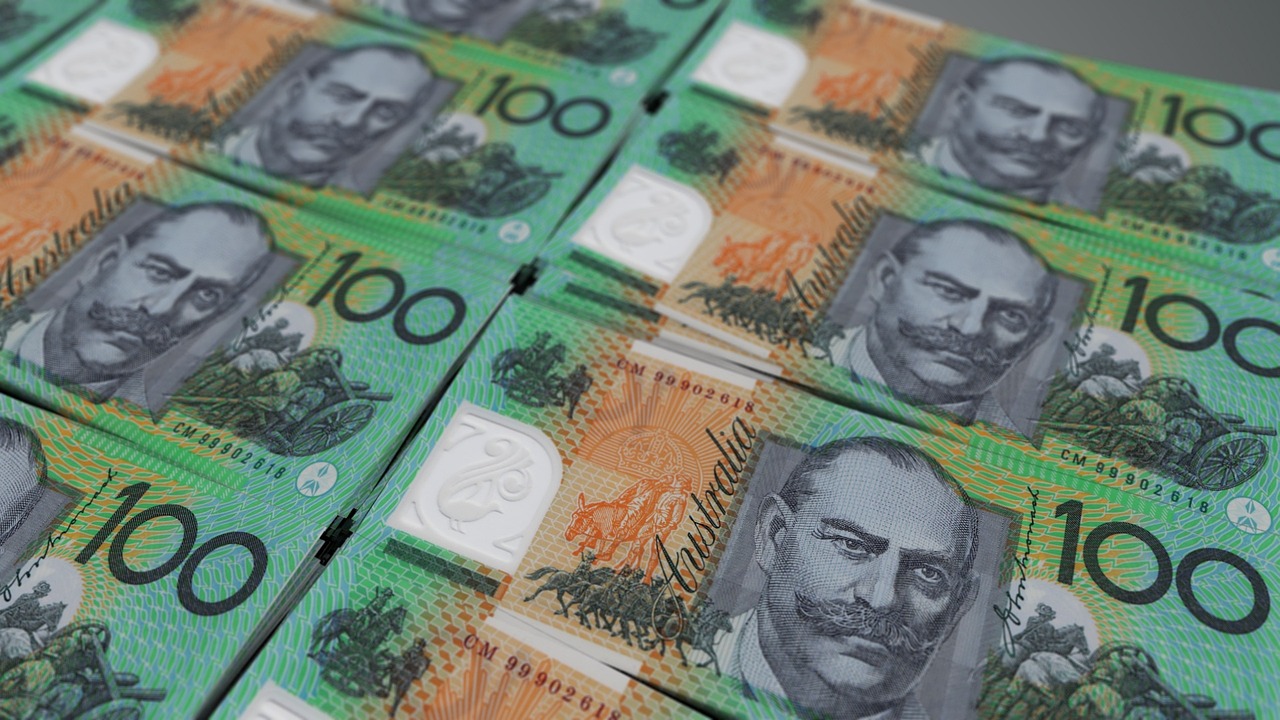
The Australian dollar (AUD) has entered a period of intense scrutiny as market participants weigh surprisingly robust headline economic growth against a deteriorating geopolitical backdrop and softening internal consumption. While the headline GDP figure for the final quarter of 2025 exceeded expectations, the underlying mechanics of the Australian economy suggest a fragility that is being tested by a sudden spike in global risk aversion. As the U.S.-Iran conflict introduces a significant war premium into energy and currency markets, the AUD/USD pair finds itself at a crossroads, caught between its status as a high-beta resource currency and the safe-haven dominance of the U.S. dollar.
Australia’s GDP Paradox: Headline Strength vs. Underlying Weakness
In early March 2026, the Australian Bureau of Statistics released growth data that initially appeared to provide a bullish catalyst for the local currency. Australia’s headline GDP for Q4 2025 printed at 0.8% on a quarter-on-quarter basis [1]. This figure significantly outperformed the market consensus of 0.4% and represented a doubling of the 0.4% expansion recorded in the previous period [1]. On an annual basis, the GDP reading climbed from 2.1% to 2.6%, marking the strongest level of economic expansion seen since 2023 [1].
However, the foreign exchange markets were quick to look past the aggregate numbers. A deeper dive into the components of the GDP report revealed that the growth was not driven by robust consumer demand, but rather by technical factors that may not be sustainable. Key findings from the report include:
- Inventory Buildup: A 0.4% increase in inventories accounted for half of the quarterly growth, suggesting that companies are accumulating stock rather than selling it [1].
- Stagnant Consumption: Household consumption saw a meager uptick of only 0.1%, indicating that Australian consumers remain cautious despite the broader economic expansion [1].
- Market Reaction: Because the growth was fueled by inventories rather than spending, traders treated the outcome as "net neutral" or even bearish, leading the AUD to edge lower shortly after the release [1].
Geopolitical Shocks: The U.S.-Iran Conflict and Safe-Haven Flows
The fundamental outlook for the Australian dollar has been further complicated by a dramatic escalation in Middle Eastern tensions. The trading week beginning March 2, 2026, opened in "panic mode" following U.S. strikes on Iran over the weekend [1]. This development immediately triggered a flight to safety, benefiting the U.S. dollar and the Swiss franc at the expense of risk-sensitive currencies like the AUD.
The conflict has had a profound impact on commodity markets and traditional risk correlations. Crude oil prices sustained a climb to "war-era highs" as the Strait of Hormuz faced gridlock and China moved to conserve its domestic supply [1]. While Australia is a major resource exporter, the "risk-off" sentiment generated by the war outweighed the potential benefits of higher energy prices for the AUD. Furthermore, strong U.S. economic data points released during this period fueled hawkish expectations for the Federal Reserve, providing additional support for the greenback [1].
The Impact on AUD Cross-Pairs
The divergence between Australian economic data and global sentiment was most visible in specific currency crosses. For instance, the AUD/CHF pair was identified as a primary "risk-off" play. Analysts noted that while the GDP headline was not a miss, the weak underlying components were insufficient to trigger a bullish reversal in an environment dominated by geopolitical fear [1]. The pair moved lower as the broad risk environment deteriorated, falling approximately 60 pips following a reassessment of the GDP data [1].
Institutional FX Market Dynamics in February 2026
While the AUD navigates specific fundamental hurdles, the broader foreign exchange market has shown resilience despite a slight dip in total monthly volumes. Institutional FX trading volumes saw a month-over-month decline in February 2026, though this was largely attributed to the shorter calendar month (19-20 trading days) compared to January [2].
Data from major institutional platforms highlights the following trends:
- Cboe Spot FX: Processed $1.19 trillion in total February volumes, down from $1.33 trillion in January [2]. However, the average daily volume (ADV) of $59.7 billion was 24% higher than the $48 billion recorded in February 2025 [2].
- 360T: Recorded an ADV of $39.9 billion, an 18% increase over the previous year, suggesting that underlying market flow remains steady despite geopolitical uncertainty [2].
- Tokyo Financial Exchange (Click 365): While USD/JPY volumes fell 9.7% month-on-month, the AUD/JPY pair saw a significant 62.6% year-on-year gain, reaching 153,182 contracts [2]. This suggests that retail and institutional interest in the Australian dollar as a volatility play remains high.
The surge in exotic pair trading, such as the 254.6% month-on-month explosion in offshore Chinese yuan-yen contracts, further underscores a market that is actively hedging against regional instability [2].
Fixed Income and Credit Markets: Volatility Returns
The volatility observed in the AUD/USD pair is mirrored in the fixed-income markets. Tradeweb Markets reported a total monthly trading volume of $61.8 trillion in February 2026, with ADV rising 23.4% year-on-year to $3.1 trillion [2]. This growth was driven by evolving U.S. inflation expectations and elevated geopolitical risks [2].
MarketAxess CEO Chris Concannon noted that recent geopolitical events and a strong new issuance calendar are supportive of a return to higher levels of volatility and increased trading velocity in global credit markets [2]. For the AUD, which often tracks global credit spreads and risk appetite, this environment suggests that price action will remain choppy as long as the U.S.-Iran conflict remains unresolved.
Conclusion: A Testing Ground for Resource Currencies
The Australian dollar's recent performance highlights the complex interplay between domestic economic indicators and global exogenous shocks. While a 0.8% GDP growth rate suggests a resilient economy on the surface, the reliance on inventory accumulation and the stagnation of household consumption [1] leave the currency vulnerable. When coupled with a "market correlation mess" [1] caused by the U.S.-Iran war, the AUD/USD pair is likely to face continued pressure. Investors must now balance the technical strength of the Australian resource sector against a global macro environment that increasingly favors the safety of the U.S. dollar and high-yield Treasury instruments.